
Reviewed · THINGS TO DO IN LYON
Storytelling tour of Croix-Rousse in French
Crossing Croix-Rousse feels like stepping into 1831. This 90-minute French tour follows Jérôme Roquet and his apprentice Tony the grand gognant as you move through Croix-Rousse’s traboules with a professional actor guide. It’s built like a story, but anchored in real people and the 1831 canut revolt.
I really like two things about it: the actor-style narration makes the history of Lyon’s silk world feel human, and the route is hands-on, with you walking the slopes and passages instead of just hearing dates. Canuts and silk workers stop being abstract and start sounding like real neighbors with real problems.
The main consideration is physical. The tour goes through many stairs, so it is not a fit if mobility is an issue, and it is also not suitable for children under 10.
In This Review
- Key highlights to look for
- Where Croix-Rousse turns history into a walking story
- Finding the start point on Rue du Bon Pasteur
- The traboules, and why people used them
- Croix-Rousse slopes: built for work, built for stair legs
- Jérôme Roquet and Tony the grand gognant: what you actually learn
- Silk in Lyon: from workshops to revolt pressure
- What makes the actor guide feel different
- What to bring, and what to skip
- Pricing value: $23 for 90 minutes of real character work
- Who this tour is best for
- The bottom line: should you book Croix-Rousse in story form?
- FAQ
- Is the Croix-Rousse storytelling tour offered in French only?
- How long is the tour?
- Where does the tour start, and how do I recognize the guide?
- How much does it cost?
- Is there free cancellation?
- Is the tour suitable for children or people with mobility impairments?
Key highlights to look for
- Professional actor guide who plays characters and keeps the pace lively
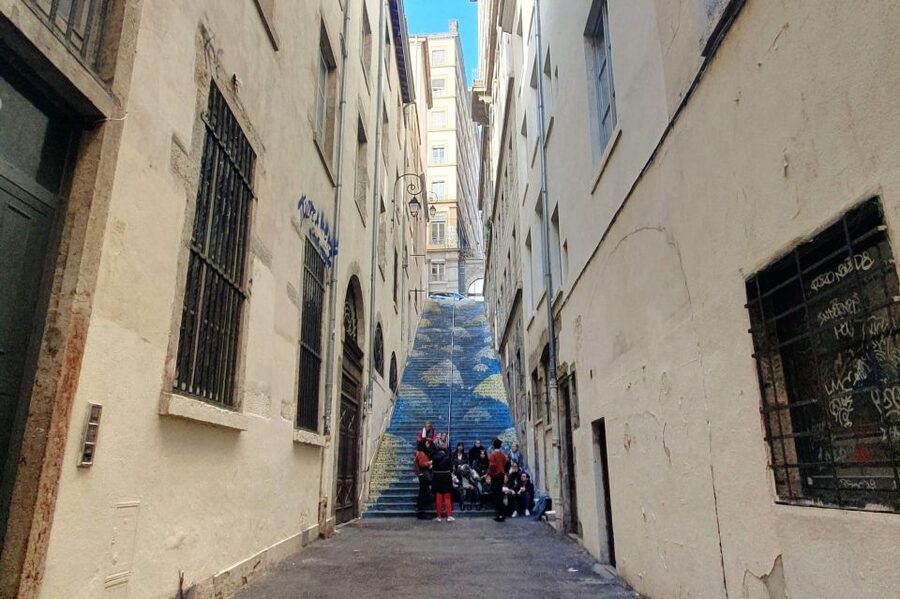
- Traboules that connect streets through courtyards and passageways
- Silk history in Lyon told through the daily life of canuts
- 1831 revolt context centered on Jérôme Roquet and Tony the grand gognant
- French-only storytelling, so plan for listening time
Where Croix-Rousse turns history into a walking story
Croix-Rousse has a reputation for being atmospheric, but this tour gives you a job: you’re not sightseeing from a map, you’re following a narrative through the hillside neighborhood. The story takes place during the turmoil of barricades on the morning of the first canut revolt of 1831. Your guide then ties what you see around you back to the silk trade and the people caught inside it.
The tour works because it uses characters to organize the information. You’re not just learning that workers rebelled, you’re watching the revolt unfold through the eyes of Jérôme Roquet and his apprentice, Tony the grand gognant. That framing makes it easier to understand the origins of the revolt and why it spread, without turning the whole experience into a lecture.
One more thing I appreciate: it’s explicitly based on historical context, with a fictional adventure threaded through real characters. That means you get story momentum, but you’re still learning the real bones of what happened in Lyon’s silk economy.
Finding the start point on Rue du Bon Pasteur
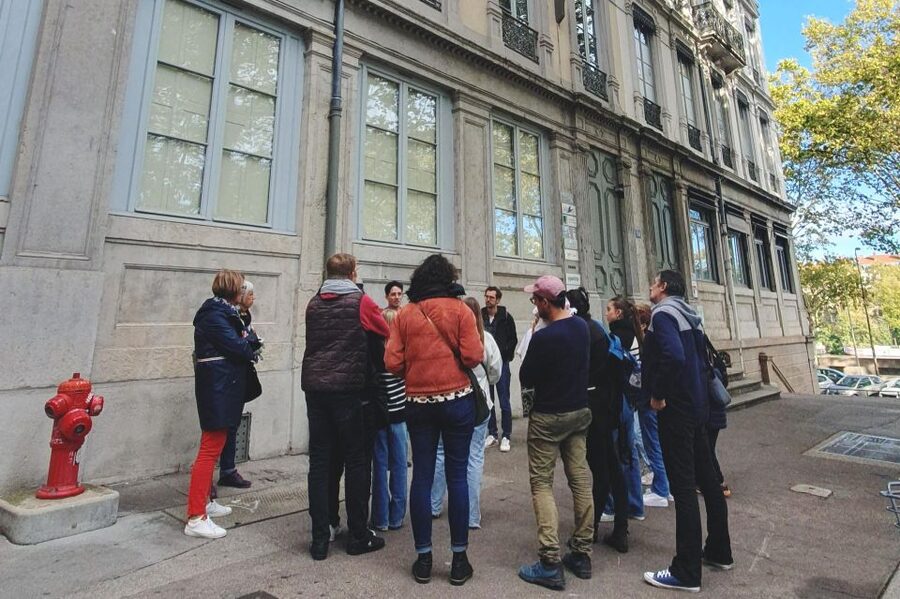
The tour meets on the esplanade in front of 51 rue du bon pasteur. You’ll recognize your guide by the Cybèle badge.
This matters more than it sounds. Croix-Rousse streets can tangle together fast, and you don’t want to waste the first 10 minutes doing a scavenger hunt. If you arrive early, take a moment to locate that badge, then settle in with your comfortable shoes ready. You’ll be moving on foot for 90 minutes, and there’s no point arriving underprepared.
More Things to Do in Lyon
- Lyon: Guided Sightseeing Cruise
★ 4.5 · 3,126 reviews - Lyon City Hop-on Hop-off Sightseeing Bus Tour
★ 4.0 · 1,614 reviews - Lyon: Musée de l’illusion Entrance Ticket
★ 3.9 · 1,023 reviews
The traboules, and why people used them
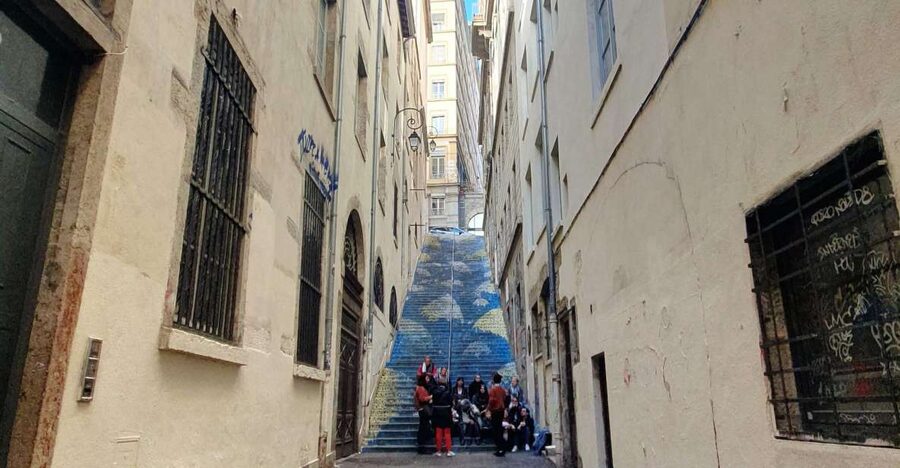
The big visual payoff is the famous system of traboules, the passageways that cut through courtyards and connect streets. On a walking tour like this, traboules aren’t just architecture trivia. They become functional space inside the story.
Think about why this neighborhood developed passage networks in the first place. When you’re telling a revolt story, movement and hiding matter. The route through traboules helps you feel how a neighborhood could support quick routes, shortcuts, and sudden crowding, even when streets looked separate from each other on the surface.
And you’ll understand this in a grounded way. The tour isn’t only showing you pretty corridors. It’s using those corridors to connect back to the canuts’ daily life and to what changed when tensions escalated. By the time you step through multiple passageways, you’ll start to see the neighborhood as a set of connected tools, not isolated streets.
Croix-Rousse slopes: built for work, built for stair legs
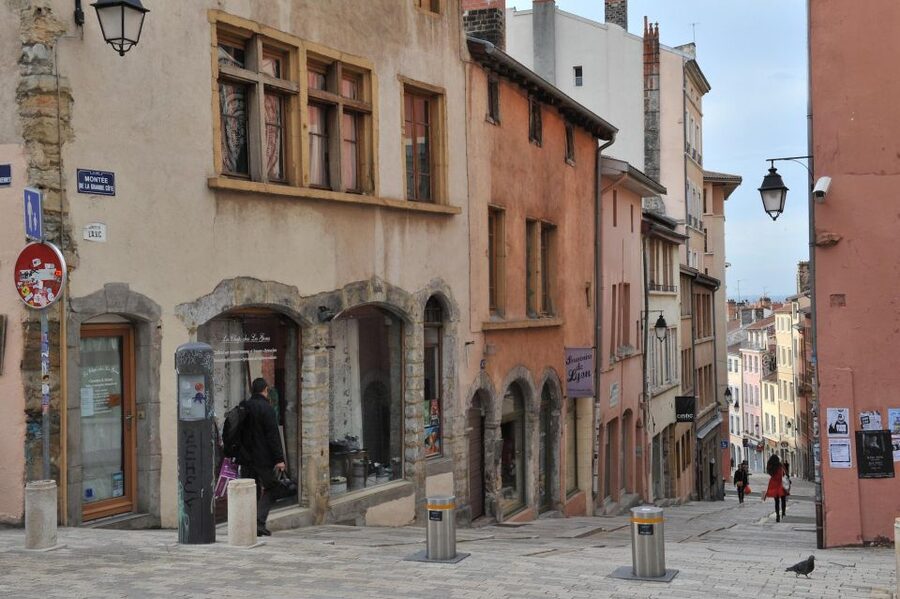
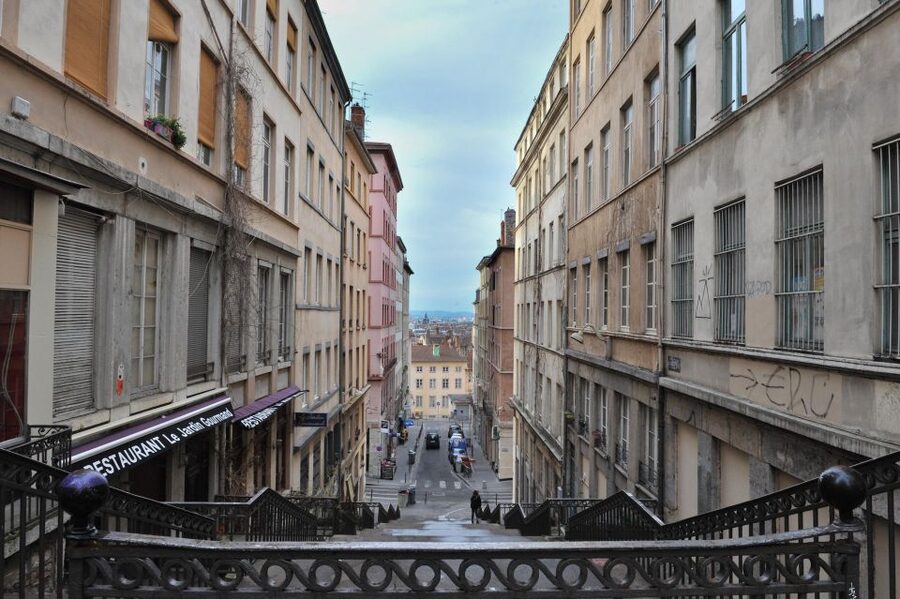
Croix-Rousse is hillside, and this tour leans into that reality. Expect stairs and slopes. The good news is that the hill and the stair-heavy route are part of what makes the narration land. As you go up and down, the neighborhood’s layout starts to make sense in terms of where people lived and worked.
The canuts, silk workers who shaped this area’s identity, weren’t living in a flat, easy-to-access world. Their workshops and daily routines were tied to the geography. On this tour, the stairs stop being a chore and start becoming context, especially when your guide is actively connecting what you’re walking through to how the silk industry worked and how people organized during unrest.
If you’ve got knee issues or limited mobility, this is the one thing to be honest about. The tour goes through many stairs, and it is not suitable for people with mobility impairments.
Jérôme Roquet and Tony the grand gognant: what you actually learn
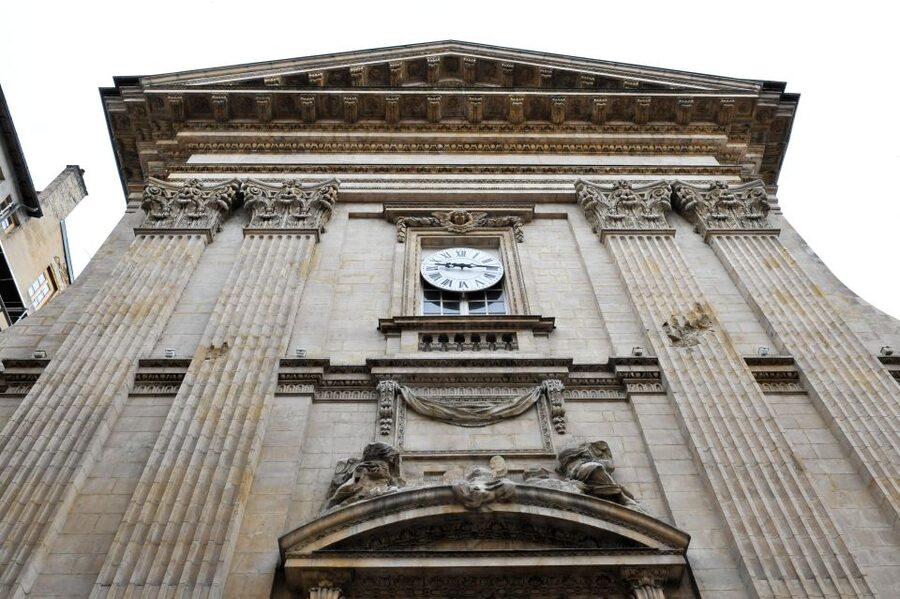
The storyline centers on Jérôme Roquet and his apprentice Tony the grand gognant. That gives the tour a clear through-line: you follow a point of view as the morning of the first revolt builds.
What you learn from that setup is practical understanding of several big themes:
- the origins of the revolt, in the sense of what drove conflict in the first place
- how the silk factory system worked as part of daily life
- what routine could look like for canuts, before the neighborhood became a battleground
One of the best parts is how your guide brings the neighborhood to life by acting out characters from history. In other words, the story doesn’t sit beside the streets, it uses the streets as stage space. You’ll start noticing how doorways, courtyards, and passage entrances fit the narrative rhythm.
And the experience is built to keep you following. The tour is described as easy to follow and dynamic, even when it gets a little unusual in how characters are portrayed. That helps if you’re not a die-hard history buff. You still come away with real context.
The Lyon dossier continues:
Silk in Lyon: from workshops to revolt pressure
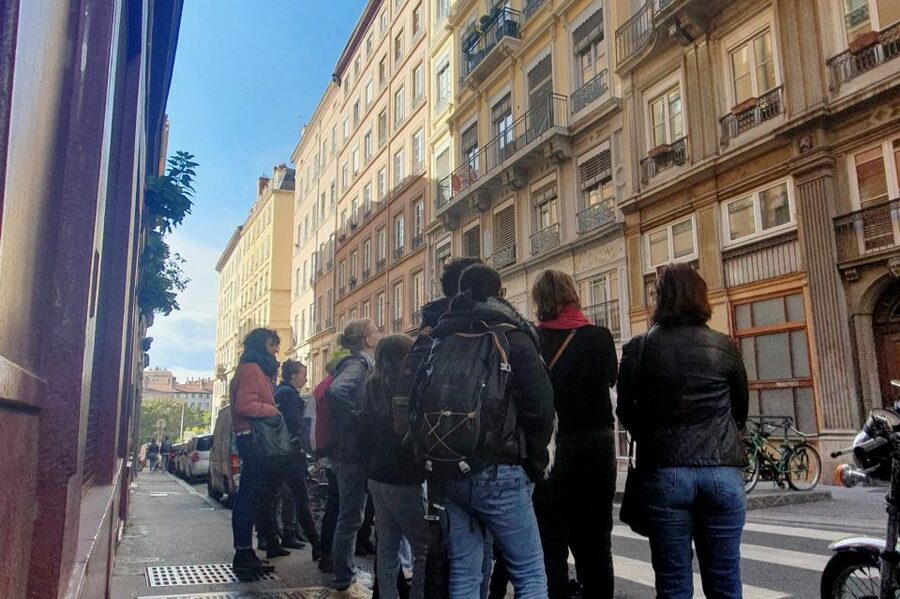
When the tour reaches the topic of silk in Lyon, it does it through real-life implications. You get a sense of the daily workings of silk production, and how that production fed into tensions. The goal isn’t to overwhelm you with jargon. It’s to show why the system mattered so much that workers were willing to risk everything during the 1831 revolt.
If you’ve ever visited a city museum and thought, I get the concept, but I can’t picture the job, you’ll like this approach. It turns silk manufacturing from abstract industry into something you can connect to movement through the neighborhood.
The tour ties this to the canuts’ experience, so you understand the revolt not as random chaos, but as a reaction to a workplace and a system that affected everyday life. That is the “why” behind the uprising, delivered in story form.
What makes the actor guide feel different
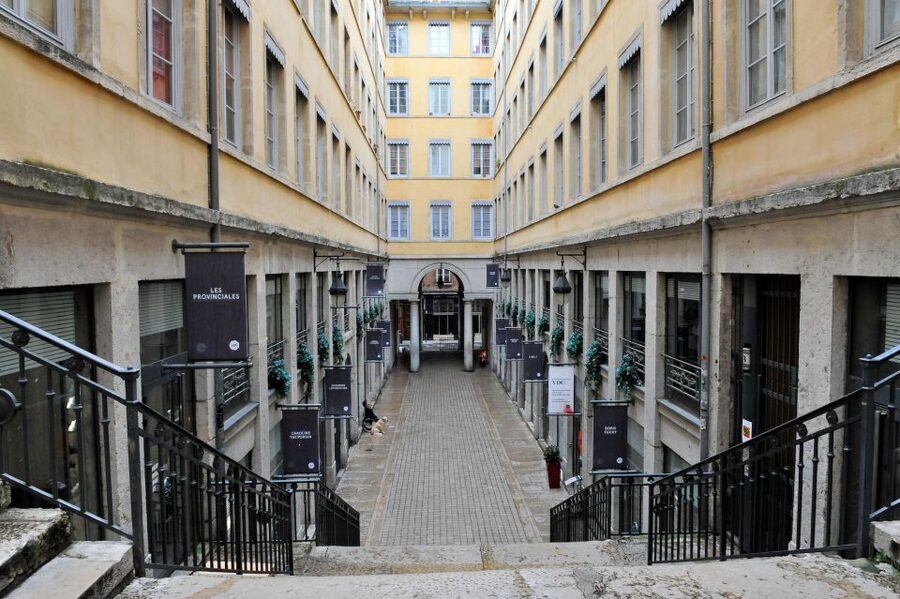
Your guide is a professional actor. That’s not a marketing line, it changes how you experience the information. Instead of reading facts off a wall, you get performance-based storytelling that guides your attention from one spot to the next.
The strongest feedback for the guides often comes down to engagement and emotion. For example, multiple named guides have been singled out for captivating storytelling and actor talent. Alexandre, also referred to as Agent A in one account, is praised for being particularly brilliant and for even using a song during the experience. Clémence and Lucie also receive specific praise for helping people feel the past and connect it to emblematic places in Croix-Rousse.
What you should take from that, as a practical traveler, is simple: if you like your history delivered with energy and character, you’ll likely find this tour more satisfying than a standard walking lecture. You’ll also find it easier to remember details, because they’re tied to a scene, a character, and a place.
What to bring, and what to skip
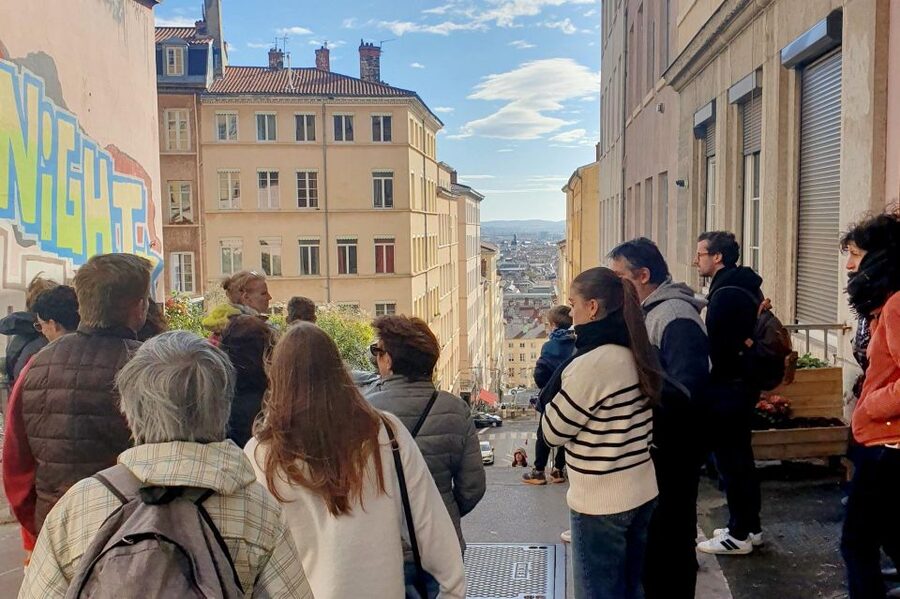
Bring comfortable shoes. You’ll want grip for stair sections and uneven stone or cobbled surfaces that often show up in old neighborhoods.
Know before you go: the tour goes through many stairs. Plan around that, not around the tour being 90 minutes. Even if you can physically handle stairs, it helps to arrive rested so the pacing feels fun instead of exhausting.
Skip this tour if you have mobility impairments. It’s specifically not suitable for that, and you’d be fighting the physical design of the route rather than enjoying the storytelling.
Pricing value: $23 for 90 minutes of real character work
At $23 per person for a 90-minute tour, you’re paying for a few things at once: a guide who’s a professional actor, an experience focused on movement through traboules and stair-heavy passages, and French-only storytelling built around a specific historical theme.
For me, the value comes from how the price matches the format. If you’re going to spend time in Lyon anyway, this gives you a structured way to see Croix-Rousse’s hidden passages while learning about the canuts revolt in a way that sticks. It’s not a “just walk around” experience. It’s guided and narrated, and the story framework keeps the information organized.
So if your travel style leans toward neighborhoods you can walk through, and you enjoy storytelling, this price feels reasonable for what you get.
Who this tour is best for
This is a strong fit if:
- you want Lyon history tied to actual places, not just museum panels
- you like performances, dialogue, and guided storytelling
- you’re comfortable walking a route with plenty of stairs
- you speak or understand enough French to enjoy a live narrative
It might be a weaker fit if you:
- need accessibility friendly routes, since it is not suitable for people with mobility impairments
- are traveling with children under 10
- want an English tour or a self-paced option
If you’re on your first visit to Lyon and want one focused experience that connects Croix-Rousse to the wider story of silk and labor, this tour gives you a clear entry point.
The bottom line: should you book Croix-Rousse in story form?
I’d book this tour if you want Croix-Rousse to feel like something more than postcard streets. The combination of traboules, hillside walking, and a professional actor guide makes the 1831 canut revolt easier to understand because you experience it through characters, settings, and motion.
Pass on it if stairs are a deal-breaker for you, or if your French listening comfort is limited. Also, if you hate performance-style storytelling and prefer strict facts only, this might feel too theatrical. But if you like your history with scenes, emotion, and real neighborhood geometry in play, this one is a great use of 90 minutes.
FAQ
Is the Croix-Rousse storytelling tour offered in French only?
Yes. The tour is in French only.
How long is the tour?
The tour duration is 90 minutes.
Where does the tour start, and how do I recognize the guide?
The meeting point is the esplanade in front of 51 rue du bon pasteur. Your guide will wait for you with a Cybèle badge.
How much does it cost?
The price is $23 per person.
Is there free cancellation?
Yes. You can cancel up to 24 hours in advance for a full refund.
Is the tour suitable for children or people with mobility impairments?
No. It is not suitable for children under 10 and it is not suitable for people with mobility impairments. The route also includes many stairs, so comfortable walking shoes are important.
Latest Lyon entries, notes attached







Things to Do in Lyon, compared.


Lyon City Hop-on Hop-off Sightseeing Bus Tour
Read our review →
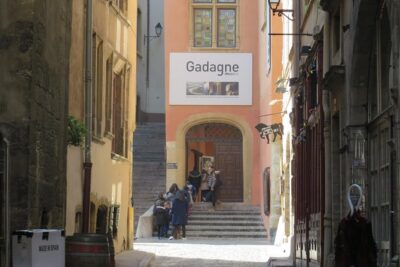
Vieux Lyon Cultural & Historical Walking Guided Tour (English)
Read our review →
Private Walking Tour of “Traboules” in the Old Town
Read our review →

Lyon Highlights & Secrets Walking Guided Tour (small group) including Funicular
Read our review →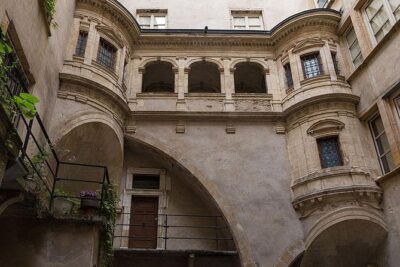
Highlights and Hidden Gems of Lyon Guided Walking Tour (English)
Read our review →This tour also appears in