
Reviewed · THINGS TO DO IN LYON
Storytelling tour of the Vieux-Lyon in French
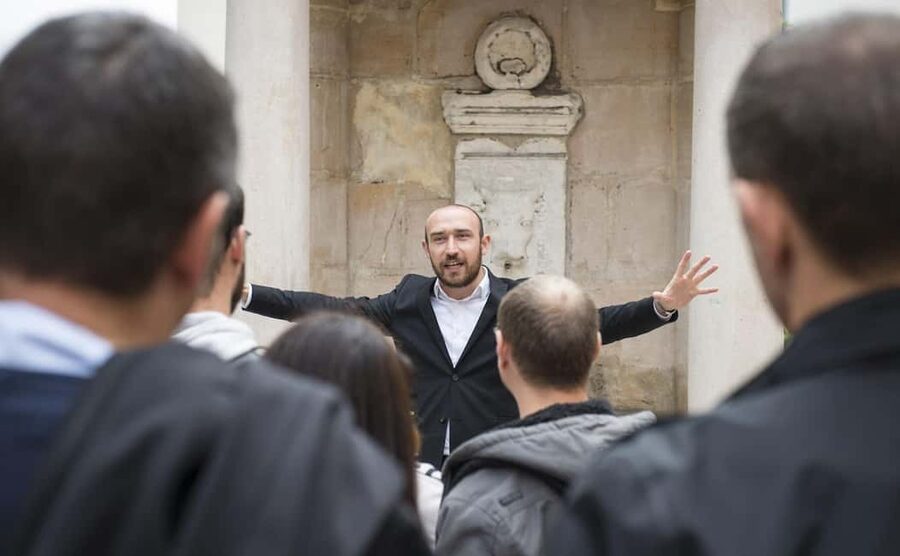
Printing secrets live in Lyon’s old lanes. In this 90-minute French storytelling walk, you move through UNESCO Vieux-Lyon while a professional actor turns the Renaissance world of a woman printer, Catherine, into a suspenseful, scene-by-scene story.
I especially love the theatrical guide approach, because it makes the places you pass feel meaningful, not just scenic. I also love that you get to experience the famous traboules, those hidden passageways that explain why this neighborhood worked so well for trades like printing.
One possible drawback: it is French only, so it will be tough if you do not read and listen comfortably. And even though it covers a lot of ground, it still clocks in at a tight hour and a half, so you may want more straight, extra historical detail.
In This Review
- Key highlights worth your time
- Where the story starts at Vieux-Lyon metro, avenue du Doyenné
- Vieux-Lyon’s cobblestones and why you should wear the right shoes
- Catherine the printer: the plot that makes Renaissance facts stick
- Traboules of Lyon, explained through movement not lectures
- Renaissance printing industry, with real stakes behind the scenes
- A guided performance, not a studio lecture
- What you do not get: no printing house visit
- How long is 90 minutes, and where it feels short
- Price and value: about $20 for story-driven access
- Who should book, and who might want a different option
- Should you book this Vieux-Lyon storytelling tour?
- FAQ
- Where is the meeting point?
- Is the tour available in English?
- How long is the Vieux-Lyon storytelling tour?
- What should I bring or wear?
- What is the cancellation policy?
- Is it suitable for children or mobility needs?
Key highlights worth your time
- Professional actor guide who delivers the story with strong timing and emotion
- Traboules of Vieux-Lyon, the hidden links between courtyards and streets
- Renaissance printing in Lyon, framed through Catherine’s challenges and rivalries
- UNESCO-listed Old Lyon architecture made easy to understand through a plot
- Catherine vs. an unscrupulous competing printer, adding real tension to the history
Where the story starts at Vieux-Lyon metro, avenue du Doyenné
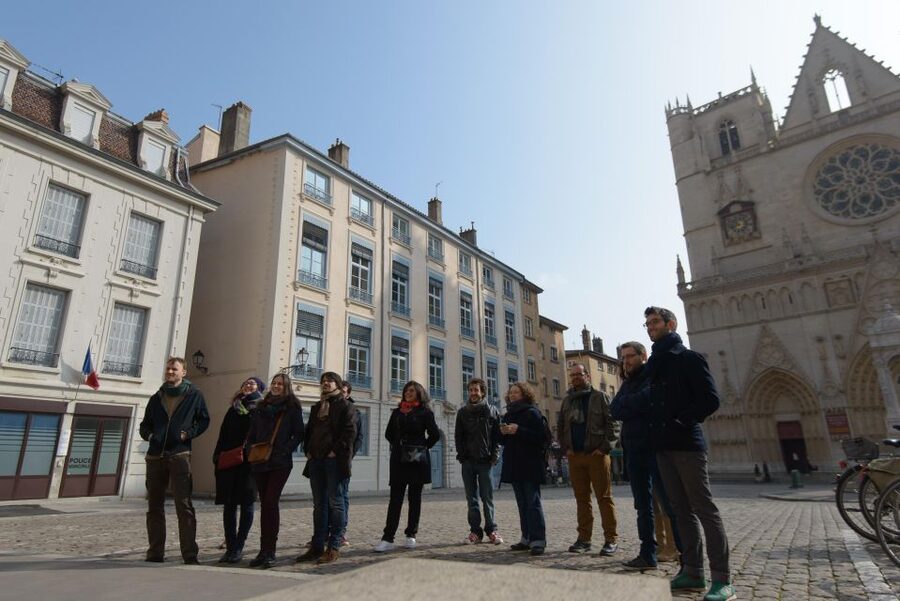
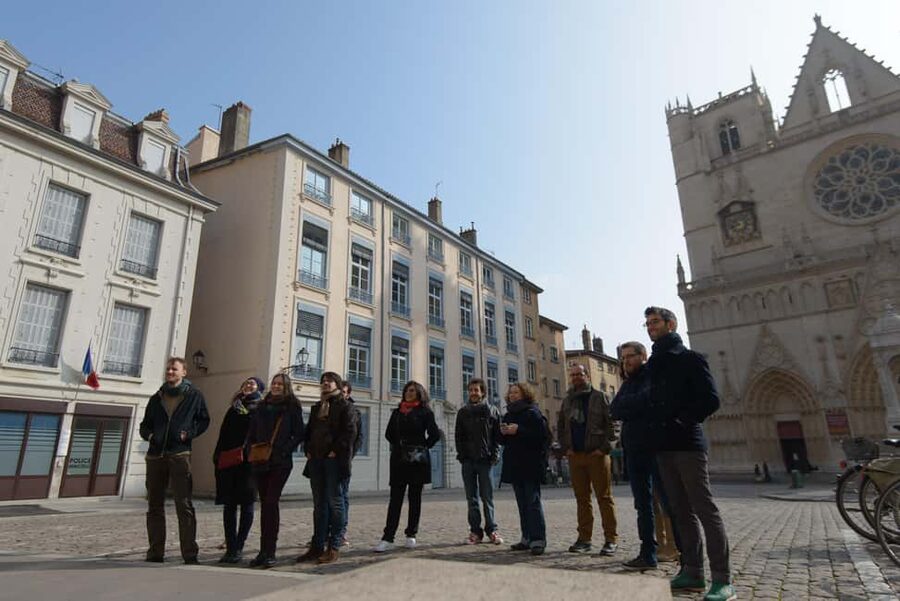
Plan to start at the main exit of the Vieux-Lyon metro station on avenue du Doyenné. Your guide will be waiting there and you can recognize them by the Cybèle badge.
This matters more than you might think. Old Lyon is a maze, and the traboules are the same kind of maze, just smarter. Getting your bearings early helps you enjoy the story instead of spending the first few minutes trying to locate the next turn.
If you are arriving by metro, this is straightforward. If you are coming on foot, give yourself a little buffer, because the pavements in this part of Lyon are not forgiving. I’d treat comfortable shoes as part of the ticket, not an optional extra.
Vieux-Lyon’s cobblestones and why you should wear the right shoes
The tour takes place in Old Lyon, with cobblestones underfoot. That sounds like a small detail, but it controls your comfort for the whole 90 minutes.
You will be walking and changing pace, and the story has you moving through a mix of open streets and more enclosed passageways. If your shoes are already worn thin, or if you prefer flat, grippy soles, this is where you will feel it.
A good rule: wear shoes you could stand in for a while, not just “look nice” shoes. When the cobbles start to feel annoying, the performance and history start to slip into the background, and that’s the opposite of what you want from a storytelling tour.
More Things to Do in Lyon
- Lyon: Guided Sightseeing Cruise
★ 4.5 · 3,126 reviews - Lyon City Hop-on Hop-off Sightseeing Bus Tour
★ 4.0 · 1,614 reviews - Lyon: Musée de l’illusion Entrance Ticket
★ 3.9 · 1,023 reviews
Catherine the printer: the plot that makes Renaissance facts stick
What I like most about this experience is how it uses story to organize information. You do not just get dates and names. You follow Catherine, a woman printer, as the tale moves from the busy energy of a print shop to darker, moodier spaces like taverns.
The plot also introduces a competitor printer who is not playing fair. You feel the pressure Catherine is under, including the stakes around her printing press and her sons. That tension gives the Renaissance context a human shape, so the “history” becomes something you can track in your mind, like characters you actually care about.
And the scenes are timed to match what the neighborhood looks like. When the story shifts to moments such as preparing sets for a royal entrance and the parade welcoming the king, you start noticing how public events and skilled crafts would have been connected in 16th-century Lyon.
A small caution: because it is French only, the emotional beats matter. If you are solid with listening, you will catch the turns that make the performance land. If you are only at a basic level, you may still enjoy the walking and the traboules, but the full effect depends on understanding the spoken story.
Traboules of Lyon, explained through movement not lectures
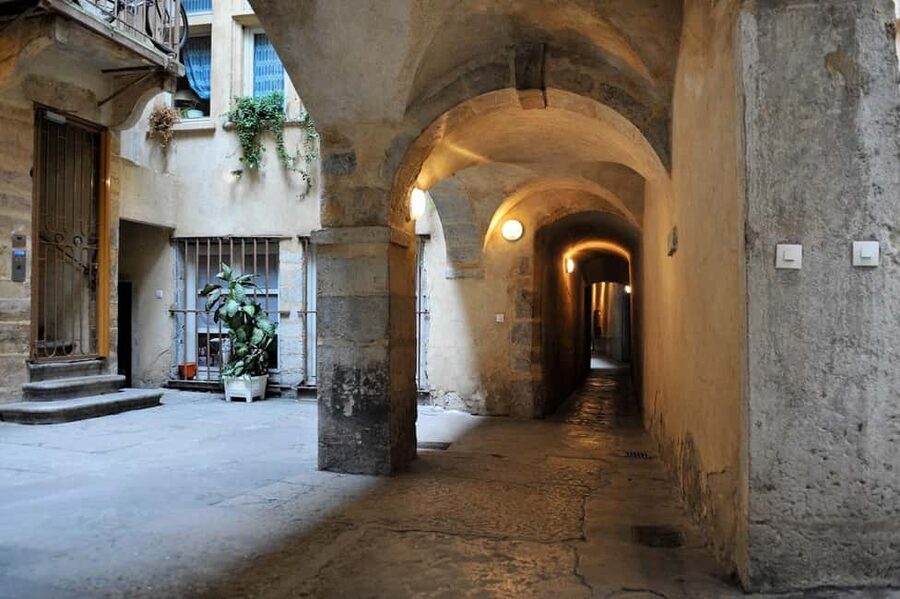
You will discover the Vieux-Lyon district and its famous traboules, those hidden passageways linking streets and courtyards. On a normal self-guided walk, they can feel like neat architectural oddities.
On this tour, they feel functional. The story of Catherine and the printing world gives you a reason to care about how spaces connect. Printing in the Renaissance was not a solitary hobby, it was a trade that depended on logistics, access, timing, and people moving through the city.
As you go, notice how traboules change the rhythm. You go from a more open street to a more enclosed route, and the transition is part of the experience. That is exactly why traboules earned their reputation. They are not just shortcuts, they are built for moving efficiently in a dense old district.
Even if you have visited other European historic centers, Lyon has a different feel because these passageways were practical, not just decorative. The tour makes that practical side click.
Renaissance printing industry, with real stakes behind the scenes
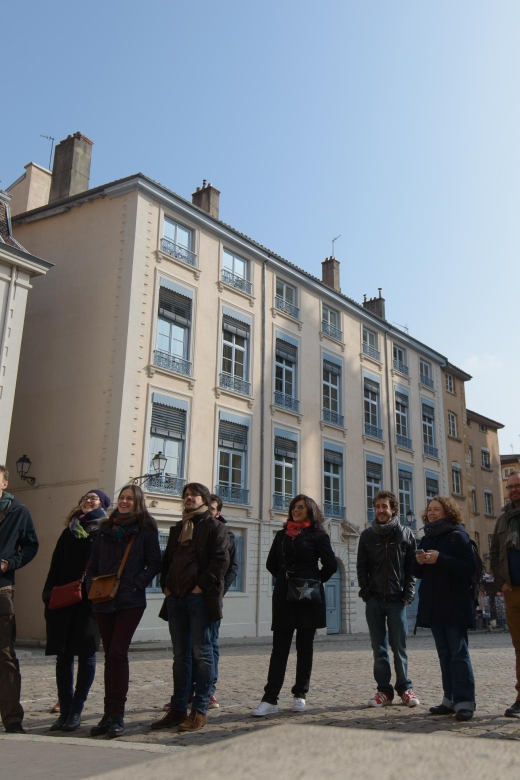
The big promise here is that you learn about the history of the printing industry in Renaissance Lyon, with the narrative grounded in real historical context. What makes it work is that printing is treated as a world, not a single invention story.
You get scenes that mirror the pressures of a trade: workrooms and the flow of production, social settings that shaped business relationships, and the public spectacle around royal events. When the story mentions the sets for the royal entrance and the parade welcoming the king, it is pointing you toward how printing could tie into major civic moments.
Then comes the rivalry. The competing printer is unscrupulous, and Catherine has to navigate threats to her livelihood. That conflict is not just melodrama. It frames what a “golden age” could mean, alongside the friction and competition that come with success.
Also, you are not being asked to mentally translate architecture into a history lesson. The buildings are brought to life through the narrative, so you start linking specific spaces to what the people inside those spaces might have been doing.
That is also where this tour tends to score highly. People usually remember the story, then later realize they learned something accurate without it feeling like studying.
The Lyon dossier continues:
A guided performance, not a studio lecture
The guide is a professional actor, and that shows. The tour reads like a performance that is paced for walking, not a monologue that traps you in one spot.
In the experience you will likely see actors do the kinds of things that keep attention: quick emotional shifts, clear character voices, and adaptation when the route or timing changes. Performances that handle real-world movement well are rare, and that is a big reason people feel the tour is worth the money.
One thing I’d watch for is your own expectations. If you come for strict, detailed facts only, you might want more. But if you come for a story that helps you remember the shape of Renaissance Lyon, you will probably feel like you got much more than a typical “walk and talk.”
And if you do enjoy it, there is a bonus. Acting-based storytelling makes it easier to look at Old Lyon after your tour and instantly remember what you learned in each corner.
What you do not get: no printing house visit
This is a big point for planning. The tour includes walking the ancient streets and traboules in Old Lyon, plus the guided storytelling. It does not include a visit of a printing house.
That affects how you should mentally prepare. You will experience the setting and context, but you are not going behind the scenes into a functioning print workshop or museum production space.
If your dream is to see a press up close or watch printing methods in action, you may want to pair this with a separate stop later. But if you want the neighborhood and the historical context to make sense first, this tour is a strong match.
How long is 90 minutes, and where it feels short
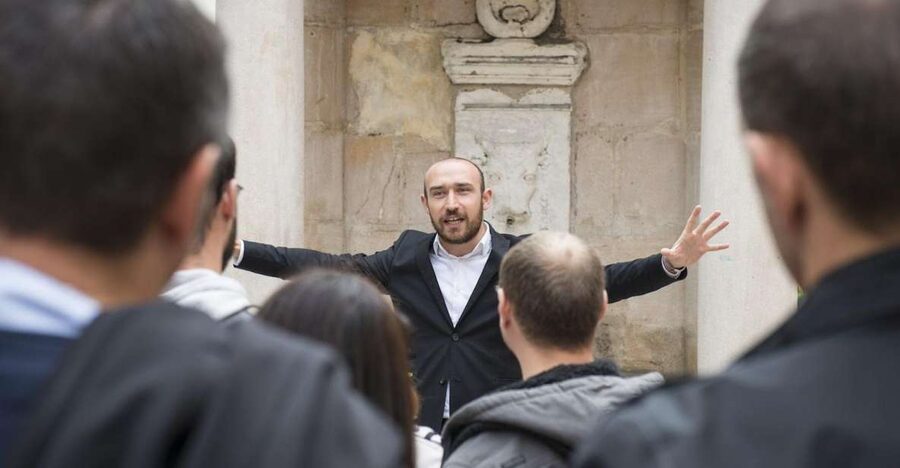
Ninety minutes is enough time to take you through the core vibe of Vieux-Lyon and get you meaningfully into the story. It is not enough time to do a full, slow museum-style walk.
So the experience works best if you treat it like a focused introduction. You will leave with names, themes, and mental images, especially about how printing connected to everyday life and major public moments.
If you are the type who loves extra side stops and off-the-map streets, you might feel the route is compact. That does not mean it is light on value, just that it is intentionally tight. You are paying for performance energy and story momentum, not an all-day deep wander.
Price and value: about $20 for story-driven access
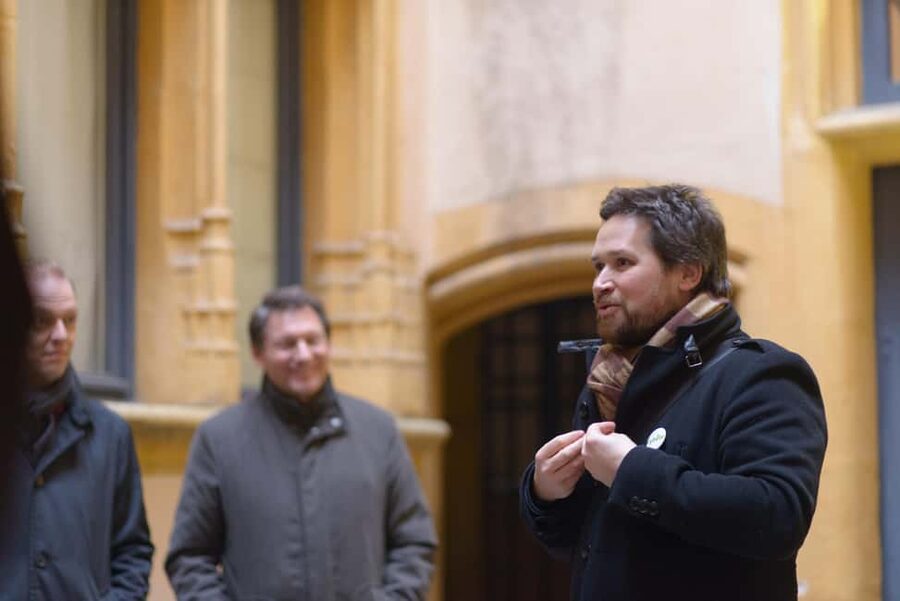
At $20 per person, this tour is priced in a way that feels reasonable for what you get: a guided walkthrough of a UNESCO area plus traboules plus a professional actor delivering Renaissance printing history through a plot.
Value here comes from two places. First, traboules are specific to Lyon, and getting access through a guided narrative is more satisfying than just spotting them from the outside. Second, the acting turns “Renaissance printing” from a topic into a lived scenario you can remember.
You should also consider what you would pay for alternatives. If you were to book a standard historical walking tour, you might get facts. Here, you get facts you can hold onto because the story carries them.
So if you like your history presented with emotion, conflict, and a clear point of view, this price tends to feel like a good deal.
Who should book, and who might want a different option
This is a strong fit for you if you enjoy:
- Storytelling tours that connect people and places
- Walking through historic neighborhoods and noticing details you would otherwise miss
- Lyon history beyond postcards, especially Vieux-Lyon and its traboules
- Renaissance themes, especially printing and trade rivalry
It is not a good fit if:
- You want a French-only tour but you cannot follow spoken French well
- You are traveling with children under 10
- You have mobility limitations that make cobblestones and old passageways hard
One more practical note: the tour is listed as wheelchair accessible, but it is also marked not suitable for people with mobility impairments. If you fall into that category, it is worth checking carefully before you go, because the tour takes place on cobblestones and includes traboules.
Should you book this Vieux-Lyon storytelling tour?
If your goal is to understand Vieux-Lyon in a way that sticks, I think you should book it. The combination of professional acting, Catherine’s story, and the traboules connection is exactly how to turn an old neighborhood into something you can picture instantly later.
Choose it when you want a high-energy, story-first intro to Renaissance Lyon printing culture, in a tight 90 minutes that respects your time. Skip it if you need a language-flexible tour, want a printing house visit, or you are sensitive to cobblestones and the physical constraints of old passageways.
If you want the history to feel like a living narrative instead of a checklist, this is one of those bookings that makes Lyon click.
FAQ
Where is the meeting point?
Meet at the main exit of the Vieux-Lyon metro station on avenue du Doyenné. Your guide will be recognizable by the Cybèle badge.
Is the tour available in English?
No. The tour is in French only.
How long is the Vieux-Lyon storytelling tour?
It lasts 90 minutes.
What should I bring or wear?
Wear comfortable shoes, because the streets in Old Lyon are paved with cobblestones.
What is the cancellation policy?
You can cancel up to 24 hours in advance for a full refund.
Is it suitable for children or mobility needs?
It is not suitable for children under 10. The activity is listed as wheelchair accessible, but it is also marked as not suitable for people with mobility impairments, so it is important to consider the cobblestones and the traboules route.
Latest Lyon entries, notes attached







Things to Do in Lyon, compared.

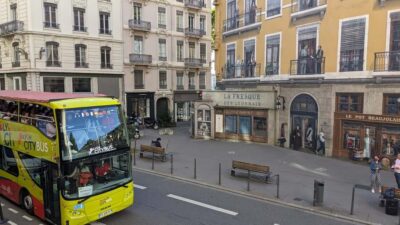
Lyon City Hop-on Hop-off Sightseeing Bus Tour
Read our review →
Vieux Lyon Cultural & Historical Walking Guided Tour (English)
Read our review →
Private Walking Tour of “Traboules” in the Old Town
Read our review →
Lyon Highlights & Secrets Walking Guided Tour (small group) including Funicular
Read our review →
Highlights and Hidden Gems of Lyon Guided Walking Tour (English)
Read our review →This tour also appears in