
Reviewed · ALSACE TOURS
Strasbourg: Guided Bike Tour with a Local Guide
Strasbourg clicks faster when you ride. This guided bike tour links Petite France and the Old Town with the bigger, more modern Neustadt and then onto the European Institutions, all in about 2.5 hours. I love that the route feels like a guided storyline, not a checklist.
Two things I especially like are the smart pacing and the chance to learn details you would miss on your own. You get stops at major sights like Notre Dame de Strasbourg Cathedral, plus quieter lanes around Place Saint Etienne, and you also get context for why Strasbourg looks the way it does. And if you choose the German tour, one guide (Katinka) was noted for simplifying language when needed, which makes the history easier to follow.
One thing to consider: this is a street ride. Even though Strasbourg is known for being easy to bike, you do weave in and out of pedestrians at times, so it helps if you feel comfortable riding in traffic-adjacent areas. Helmets are available, and that extra confidence matters.
In This Review
- Key Highlights You Should Know
- Why a 2.5-Hour Bike Loop Works in Strasbourg
- Where You Meet: Café Lové or La Pépinière
- Petite France, Old Town, and the Vauban Dam Moment
- Pont du Corbeau, Gutenberg Place, and the Cathedral Front-and-Center
- Neustadt: 19th-Century Streets and the Imperial-Era Story
- European Parliament and Friends: When Strasbourg Becomes Part of Europe
- Back Through Town: 14th-Century Wall and Place d’Austerlitz
- Bike Comfort, Group Pace, and the Role of the Guide
- Price and Value at Around $46 for 150 Minutes
- Who This Tour Is Best For
- Should You Book This Strasbourg Bike Tour?
- FAQ
- How long is the bike tour?
- What languages are the guides?
- Is a bicycle included?
- Where do I meet the guide?
- Where does the tour drop off?
- What major sights are included?
- Are helmets available?
- What is the cancellation policy and can I pay later?
Key Highlights You Should Know
- Petite France + covered bridges for classic Strasbourg scenery fast
- Neustadt’s 19th-century streets to see the city’s imperial-era side
- European Institutions stop so the modern story clicks into place
- Notre Dame de Strasbourg Cathedral as a major photo and context moment
- Parc de l’Orangerie for a breather before you head back
Why a 2.5-Hour Bike Loop Works in Strasbourg
Strasbourg rewards slow wandering, but most of us do not have that kind of time. This tour is built for a short stay, because it strings together the big zones that tourists usually see as separate trips. You start with orientation, then you ride a circuit that moves from the old river canals and bridges into the Neustadt district, and finally toward the European Institutions.
The bike format does something walking tours cannot. You can cross river areas and cover long stretches of straight-line streets without burning your day on Transit Times and dead ends. For me, that is the core value: you get the map-making benefits fast, then you can explore on your own afterward with way less guesswork.
Also, the duration is perfect for a history-and-architecture tour without feeling trapped. At 150 minutes, you are not stuck doing hours of narration. You get enough explanation to understand what you are seeing, and then you move on.
Where You Meet: Café Lové or La Pépinière
You will meet your guide at one of three starting options, and the exact spot depends on the departure you book. The listed options include Café Lové (there are two entries for that location) and La Pépinière.
What I like about this setup is that it gives you options that may line up better with where you are staying. If you are basing yourself in the center, you can often pick the start that minimizes your pre-tour travel. It also makes it easier to match the tour to your day plan, especially if you have trains or other commitments.
At the start, expect a short introduction to Strasbourg. It is not a long lecture. It is more like a mental framework: what to look for, why the architecture changes across neighborhoods, and how the old and new stories connect.
Other Strasbourg bookings in the margin notes
- Strasbourg: Bike Tour with a Guide bikes included
★ 4.4 · 278 reviews - Versailles Palace Bike Tour with Market & Marie-Antoinette hamlet
★ 5.0 · 2,680 reviews - Paris: Charming Nooks and Crannies Bike Tour
★ 4.8 · 2,585 reviews
Petite France, Old Town, and the Vauban Dam Moment
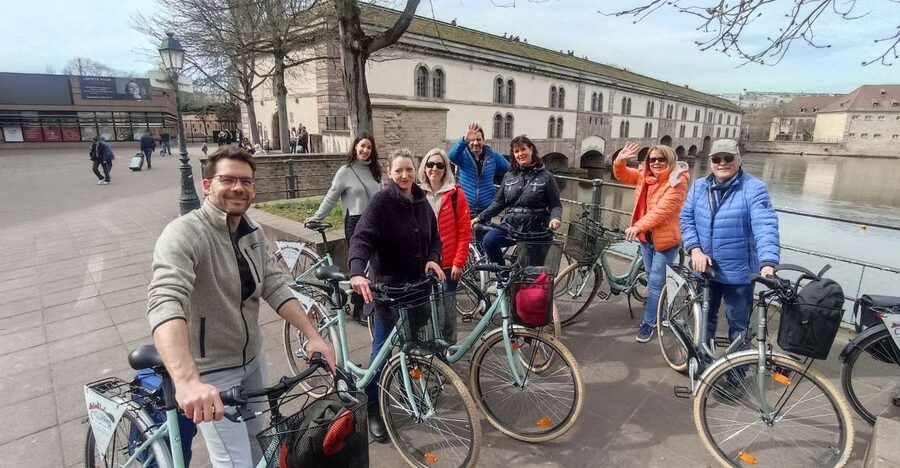
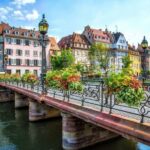
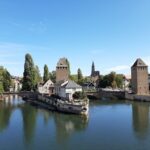
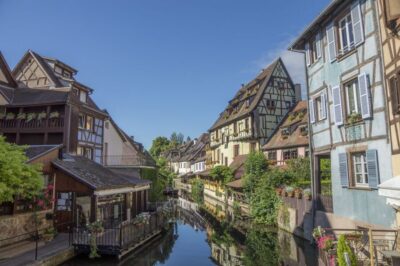
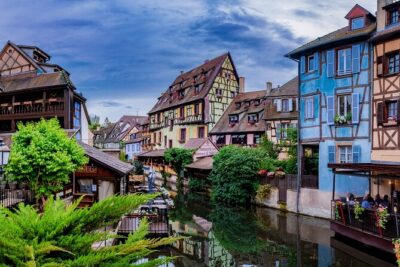
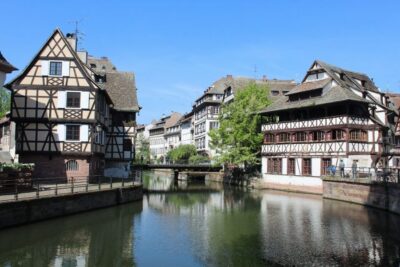
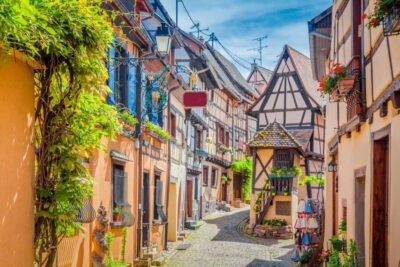
The ride begins with the classic Strasbourg postcard area: Petite France and the Old Town. This is where the city feels most medieval, tied to the canals, bridges, and that distinct Alsace feel.
You will also cycle past the Vauban Dam, which helps explain why Strasbourg’s water areas matter to the city’s shape. The Vauban Dam is one of those practical structures that also becomes part of the visual identity. When you see it from the bike route, it stops being an odd landmark and starts to look like a key piece of how this place functions.
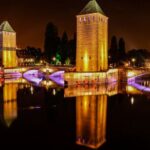
Another big win here is the covered bridges. Your route includes the river crossings and those iconic sheltered bridge views. You get to see them as moving scenery, not just as a single photo angle from one spot. That matters, because the surroundings shift as you pedal, and the perspective becomes more interesting.
The Old Town segment is also where you start learning the geography of Strasbourg. By the time you reach the next neighborhood, you have a sense of which streets connect and how the river lines the city like a guide.
Pont du Corbeau, Gutenberg Place, and the Cathedral Front-and-Center
After the river and bridge area, you cross Pont du Corbeau and then pass Gutenberg Place. This sequence is a nice transition. You go from the water-focused scenery into a more civic, landmark-heavy rhythm.
Soon after, you arrive in front of Notre Dame de Strasbourg Cathedral, which is one of the highlights of the tour. The value of getting here on a bike tour is that you arrive with context, not just as a stop on a map. Your guide ties the cathedral to the city’s broader identity, so you are not staring at details without knowing what they mean.
From there, you also see the Opera house at Place Broglie. That is another good reminder that Strasbourg is not only about Gothic spires. It also has grand, formal spaces that grew as the city changed and expanded.
Then comes a smart part of the route: cycling along small streets around the cathedral. This is where you can spot hidden-feeling corners near Place Saint Etienne. These lanes are easy to miss if you only do the main sights. On a bike, you move through the area efficiently, and you get nudged toward specific side streets that feel like local shortcuts.
Neustadt: 19th-Century Streets and the Imperial-Era Story
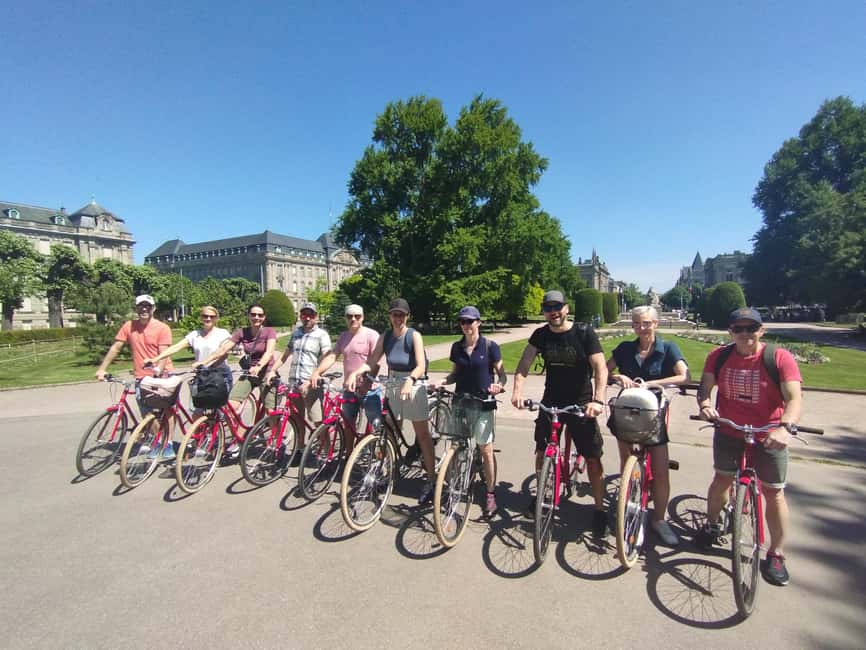
Once the tour shifts into the Neustadt, Strasbourg starts telling a different kind of story. This district is tied to 19th-century ambition and influence, and it visually contrasts with the older river-quarter feel.
The route has you cycle through the Neustadt and then head toward the European District. That structure matters because it prevents the European Institutions from feeling random. You experience them as the next chapter of a city that has long been shaped by cross-border forces and political change.
Also, the way the tour transitions helps you notice patterns in architecture. In Neustadt, buildings often feel more planned and monumental, and you can start comparing styles without having to hunt for explanations yourself. For history buffs, that makes the ride more than just sightseeing.
For cyclists, Neustadt also usually feels manageable. You are riding through urban streets, not hiking hills or dealing with long stretches of rough paths. It is not a wilderness ride, and that is a plus when you want a controlled, comfortable pace.
The Strasbourg dossier continues:
European Parliament and Friends: When Strasbourg Becomes Part of Europe
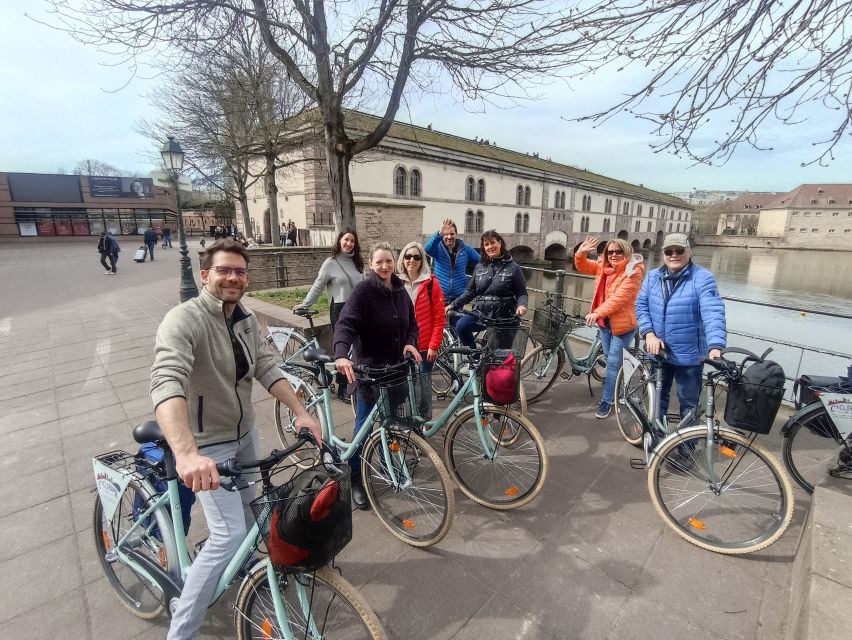
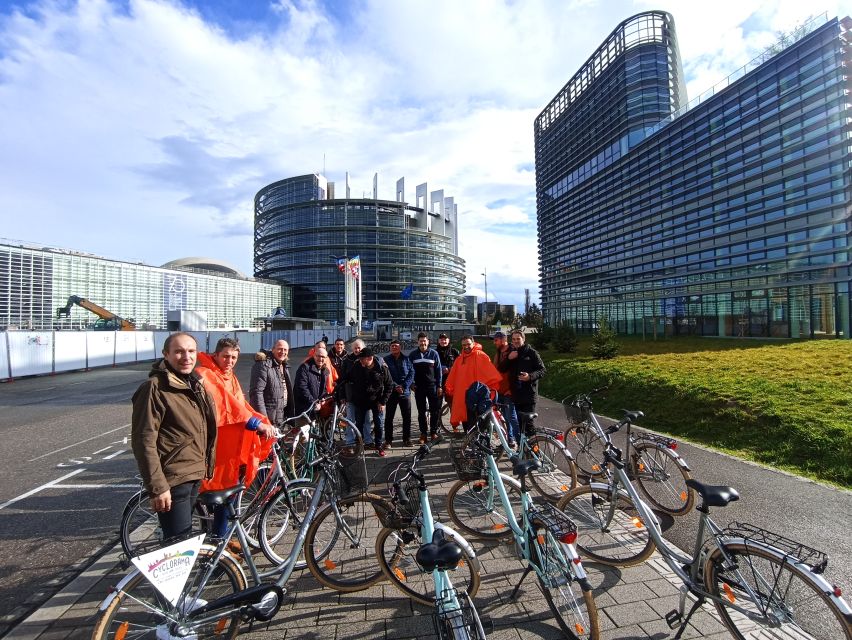
This is the segment many people do not expect to feel so relevant. The tour takes you into the heart of the European District, where you can see the European Parliament, the Council of Europe, and the European Court for Human Rights.
The value here is understanding why these institutions exist in this place. Strasbourg has long been a city where ideas and governance travel across borders. Seeing these buildings after you have already viewed Petite France and the Neustadt makes the modern story land differently. It stops being abstract.
Even if you are not a policy person, you will probably still enjoy this section because it gives you a “why Strasbourg matters” answer in real time. You are not just walking past monumental architecture. You are also seeing how the city’s identity has become international.
Then, before the ride ends, you get a breath of fresh air at Parc de l’Orangerie. That park break is useful. It gives your legs a moment and helps the tour feel like an experience, not a nonstop sprint between landmarks.
Back Through Town: 14th-Century Wall and Place d’Austerlitz
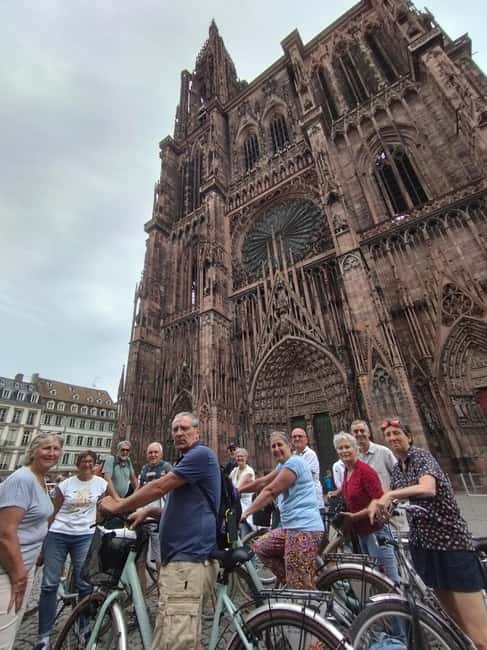
On the way back, you pass Place d’Austerlitz and then cycle along a section of the 14th-century wall. This is a great closing note because it returns you to the idea of defensive boundaries and city planning, which ties back to everything you saw at the river and in the old streets.
What I like about this ending is that it gives your brain a final “map check.” You can often look back at where you started and feel like you understand the city’s layout much better. You know where the cathedral sits relative to the river routes, you know what direction the Neustadt shift came from, and you have a sense of how the European District fits in.
If you have energy to keep exploring afterward, this is the perfect kind of tour to do first or mid-trip. It sets up your self-guided time with less wandering and more intentional stops.
Bike Comfort, Group Pace, and the Role of the Guide
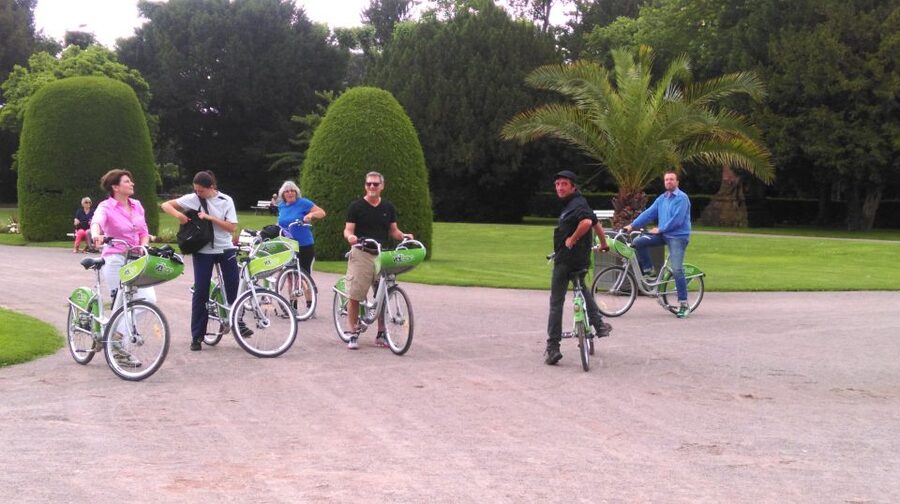
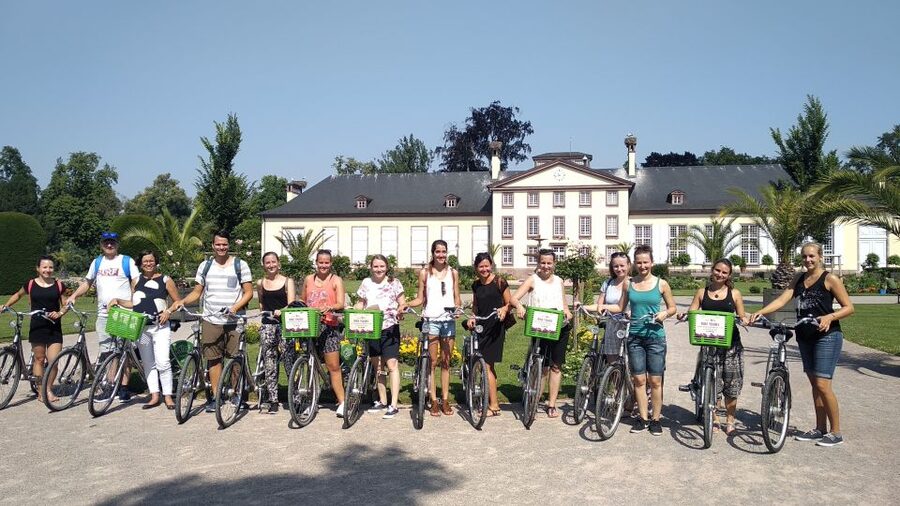
The tour includes a bicycle, and you also ride with a live guide in German, Dutch, or English. Reviews frequently highlight guides by name, including Katarina, Josh/Joshua, Vivienne, Barbara, and Jean, and the consistent theme is that the guidance is friendly and easy to follow.
Pacing shows up in the feedback too. Several people note that they were not rushed and that there were regular stops for photos. That is important in a city with lots of small details, because you want time to look closely at façades and not just glance and roll on.
There is also a practical realism to the ride experience. One review mentions helmets being available and baskets for small bags. If you have sunglasses, a light rain layer, and a small camera, you will be set.
One last practical note: if you are riding with less experience, pay attention at busy intersections and where you weave around pedestrians. This does not have to be stressful, but it is not a slow parade either. It is a guided city ride, and your confidence level will shape how much you enjoy the in-between streets.
Price and Value at Around $46 for 150 Minutes
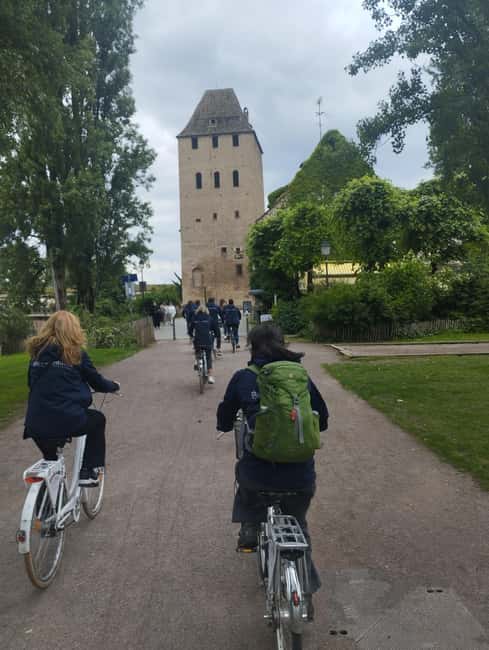
At $46 per person for a 150-minute guided bike tour, the value comes from three things you get together: a real local guide, a provided bicycle, and a focused route across multiple major zones.
If you have ever tried to cobble together your own city bike time, you know the hidden costs. Bike rental, navigating safely, and figuring out which streets actually connect big sights can burn time and energy. Here, you pay once and get a structured circuit that hits Petite France, the Neustadt, the cathedral area, and the European Institutions in one pass.
It also pays off if you only have a couple days. The tour is long enough to matter, but short enough to leave room for your own favorites afterward. That mix is what makes the price feel fair.
Who This Tour Is Best For
I think this works best for three groups.
First, it is ideal if you are in Strasbourg briefly and want a fast orientation. If you already plan to explore on foot later, this gives you a head start.
Second, it suits people who like history and architecture but do not want to spend the day reading placards. The guide helps you connect what you see to why it looks the way it does.
Third, it is great if you want language practice. If you book the German option, guides have been known to adapt and repeat in simpler German when needed, which is a relief if you are not fluent.
Should You Book This Strasbourg Bike Tour?
Yes, if you want to cover the city’s big contrasts in one guided ride. This tour is a strong choice for first-timers who want Petite France, the cathedral area, the Neustadt, and the European Institutions, without turning the day into a logistical puzzle.
I would skip it or reconsider if you know you will feel uneasy riding through busier pedestrian zones. It is not physically hard in the “climb a mountain” sense, but it does require city-riding comfort.
If you do have decent bike confidence, this is one of the best ways to get your bearings in Strasbourg quickly, while learning enough context to make your later self-guided stops feel sharper and more meaningful.
FAQ
How long is the bike tour?
The duration is 150 minutes, about 2.5 hours.
What languages are the guides?
The live guide is available in German, Dutch, and English.
Is a bicycle included?
Yes, the bicycle is included.
Where do I meet the guide?
The meeting point may vary depending on the option booked, with listed starting locations including Café Lové and La Pépinière.
Where does the tour drop off?
There are listed drop-off locations that include Café Lové and La Pépinière, and the exact end point depends on the option booked.
What major sights are included?
The tour includes stops and viewing around Petite France, covered bridges, the Vauban Dam, Pont du Corbeau, Gutenberg Place, Notre Dame de Strasbourg Cathedral, Place Broglie (Opera house), Parc de l’Orangerie, and the European District including the European Parliament, Council of Europe, and the European Court for Human Rights.
Are helmets available?
Helmets are available, based on traveler feedback.
What is the cancellation policy and can I pay later?
You can cancel up to 24 hours in advance for a full refund, and you can reserve now and pay later.
Latest Strasbourg entries, notes attached


Alsace Tours, compared.
Colmar, Medieval Village & Castle Small Group from Strasbourg
Read our review →
Strasbourg Food Tour – A Taste of Tradition by Do Eat Better
Read our review →
This tour also appears in