
Reviewed · ALSACE TOURS
Strasbourg: Walking Tour with a Local Guide
Strasbourg feels like a movie set you can walk. I loved getting up close to the Strasbourg Cathedral and then drifting through Petite France with its canals and colorful houses, all while a local guide made the details make sense. One thing to consider, though, is that this can be a German and English tour at the same time, so you may get a bit less focus if you are hoping for only English.
This is a solid first-visit kind of tour because it helps you orient quickly on Grande Île, the historic center that’s part of a UNESCO World Heritage area. You will get photo advice, practical pointers for what to look for, and a route that stitches together big landmarks with the cozy corners locals actually enjoy.
The walk is meant to be fun and easy, about 2 hours, but it is still a city stroll. Bring comfortable shoes and some water, especially if the weather is warm or you plan to linger after the tour.
In This Review
- Key highlights that make this walk worth your time
- Getting oriented at Place Gutenberg, the tour’s smart starting point
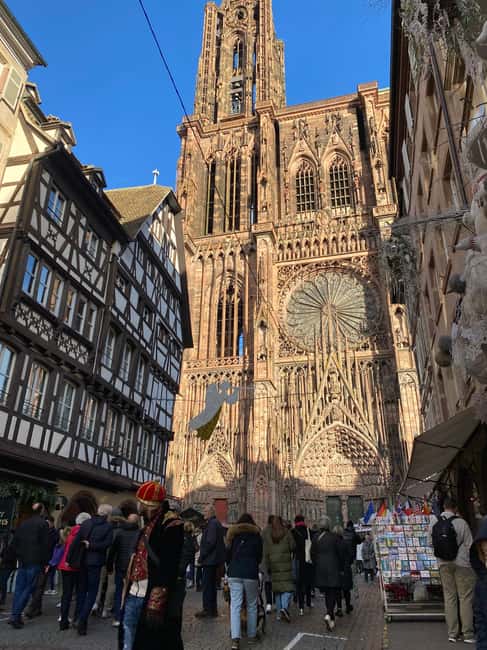
- Strasbourg Cathedral: seeing the details up close, with real photo help
- Grande Île streets and why this walk feels like stepping back
- Petite France: canals, bridges, and the neighborhood stories
- Tanners’ Quarter: a calmer stop with local dining energy
- Place Gutenberg to Place Kléber: printing press to revolution
- Notre Dame Cathedral on the route: another classic photo moment
- Price and timing: is $28 worth two hours on foot?
- What to bring so you enjoy every minute
- Language matters: German and English in the same group
- Who this tour suits best
- Should you book Strasbourg: Walking Tour with a Local Guide?
- FAQ
- How long is the Strasbourg walking tour?
- How much does the tour cost?
- Where do I meet the guide?
- What language is the guide?
- What will I see during the walk?
- Are cathedral entry tickets included?
- Are food and drinks included?
- Is the tour wheelchair accessible?
- What should I bring for the tour?
- Can I cancel and get a refund?
Key highlights that make this walk worth your time
- Strasbourg Cathedral first stop with close-up details and photo tips
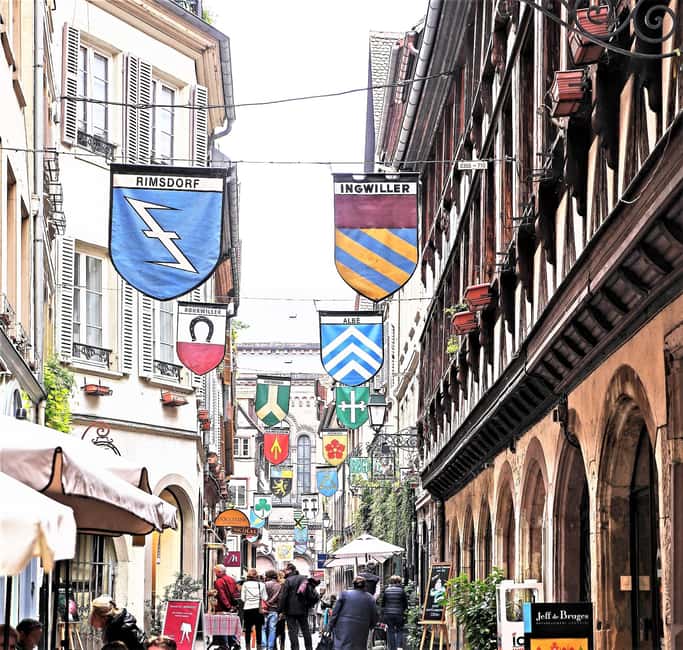
- Petite France canal stroll through colorful houses, bridges, and classic views
- Place Gutenberg explained, including why the printing press matters here
- Tanners’ Quarter passing moments for that lived-in, relaxed neighborhood vibe
- Place Kléber stop with Jean-Baptiste Kléber and French Revolution context
- Where to eat and explore after so you do not waste your free time
Getting oriented at Place Gutenberg, the tour’s smart starting point
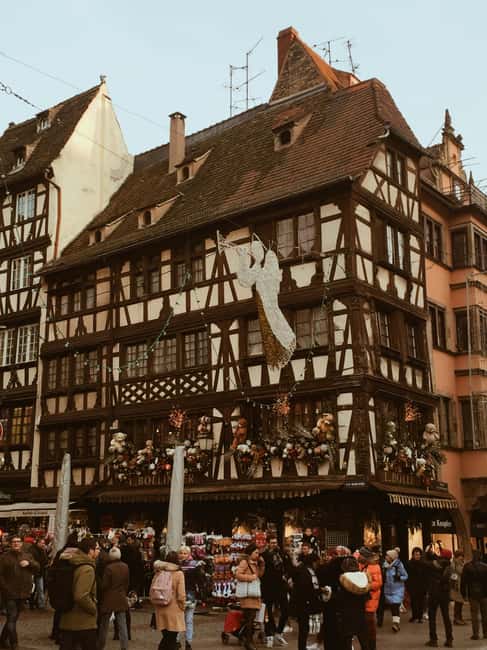
I like tours that begin in a place you can also find again later, and Place Gutenberg fits that bill. This is the heart of the historic area, and it is also an easy landmark to meet at: you gather near the statue and the tree, and your guide wears a blue UTG Experience badge.
If you are arriving in Strasbourg for the first time, this kind of start helps you “get” the city fast. The route is designed to move you from the public historic center into the river and canals zone, so by the end you feel like you can navigate on your own.
And because this tour is only two hours, it is a good match for limited time. It also works well as the first activity of your trip, when you still need the big-picture map in your head.
Strasbourg Cathedral: seeing the details up close, with real photo help
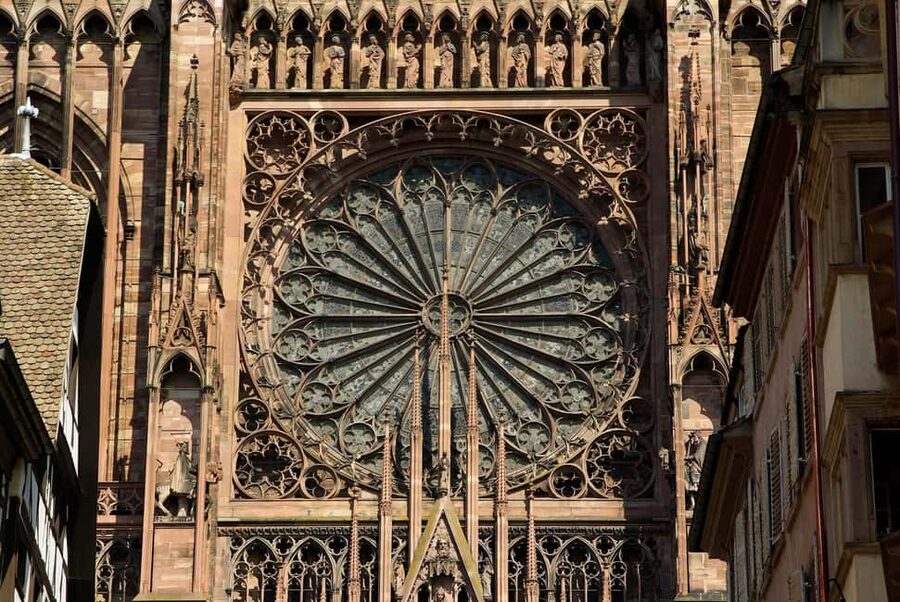
The tour’s big draw is how it handles the Strasbourg Cathedral. You do not just pass by it. You stop, look closer, and get facts that help you see what you are looking at.
What I find most useful here is that your guide also gives photo tips as you go. That matters because cathedral photos can easily turn into “I was there” snapshots. A good guide helps you pick angles, anticipate where the best lines and details appear, and learn what to zoom in on.
You also hear background that turns the building from a famous postcard into something more specific. You will get a feel for the cathedral’s decorations and why locals care so much about it.
One practical note: cathedral viewing areas can be busy. If you want photos without shoulder-to-shoulder crowd pressure, you will do better keeping a little awareness of where the flow is moving and moving with your guide when you get your shot.
More France at boulevard pace:
- Strasbourg: Walking Tour with Local Guide
★ 5.0 · 598 reviews - Strasbourg: Guided Historical Neighborhoods Walking Tour
★ 4.9 · 275 reviews - Strasbourg: Traditional Food Walking Tour with Tastings
★ 4.8 · 219 reviews
Grande Île streets and why this walk feels like stepping back
Between the major stops, you will walk through narrow lanes and older streets that give Strasbourg its storybook rhythm. This is the part I enjoy most, because it is where the city’s layout starts to click.
You will be moving across the historic center on Grande Île, where the mix of old buildings and waterways creates a distinct atmosphere. Even when you are not hearing a big speech every minute, the guide’s way of pointing out details helps you understand why Strasbourg looks the way it does.
If you love architecture and street-level texture, you will probably find this portion more satisfying than tours that only hit the most famous “pose for a photo” sites. You get enough walking pace to stay energized, but the stops keep it from feeling like a trek.
Petite France: canals, bridges, and the neighborhood stories
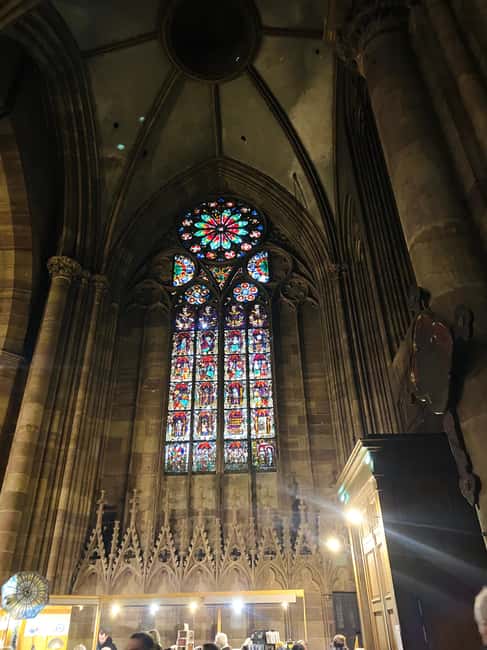
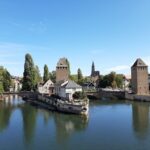
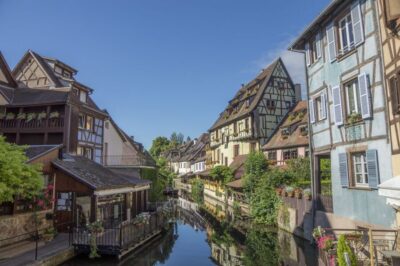
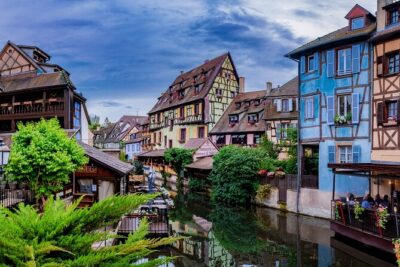
Next comes Petite France, and this is the stretch that turns the tour from “highlights” into “I want to linger.” The area is known for its canals, bridges, and colorful houses, and the guide helps you slow down just enough to notice what makes the views work.
I also like that this stop comes with people-focused storytelling. You are not only hearing dates and names. You hear about the people who used to live here, which makes it easier to picture everyday life in the past.
The guide also actively points out photo locations. That is where the tour earns its small price tag. If you have ever taken canal photos that look flat, you know how much angle and timing matter. Here, the guide’s tips can save you time and help you capture what you actually came for.
Finally, this is where you start hearing what Strasbourg feels like beyond the monuments. When you are done, you will have a sense of where to return for a longer walk or a scenic evening stroll.
Tanners’ Quarter: a calmer stop with local dining energy
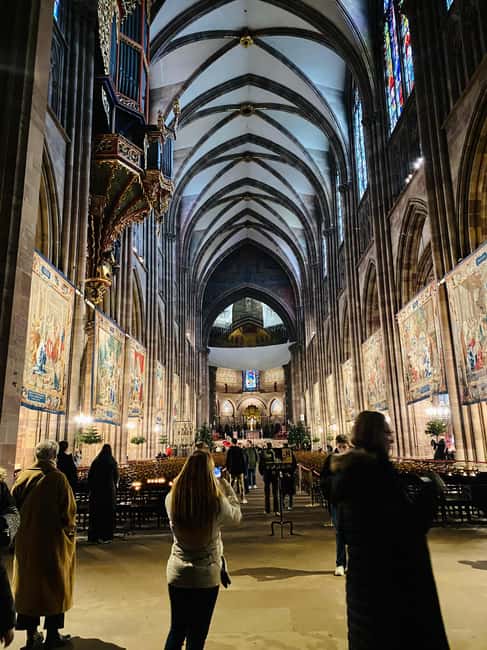
As you continue through the canal-side area, you will pass through the Tanners’ Quarter. This part of the route is less about monumental scale and more about the day-to-day feel of the neighborhood.
The vibe is exactly what you want after you have been looking at big sights. You get to see the kind of cozy spots where locals relax and dine. It also helps you later, because your guide can steer you toward where it makes sense to eat, instead of relying only on whatever looks busiest.
This is the kind of stop that pairs well with a simple plan after the tour: grab something nearby, then circle back for pictures after crowds shift.
Other Strasbourg bookings in the margin notes
Place Gutenberg to Place Kléber: printing press to revolution
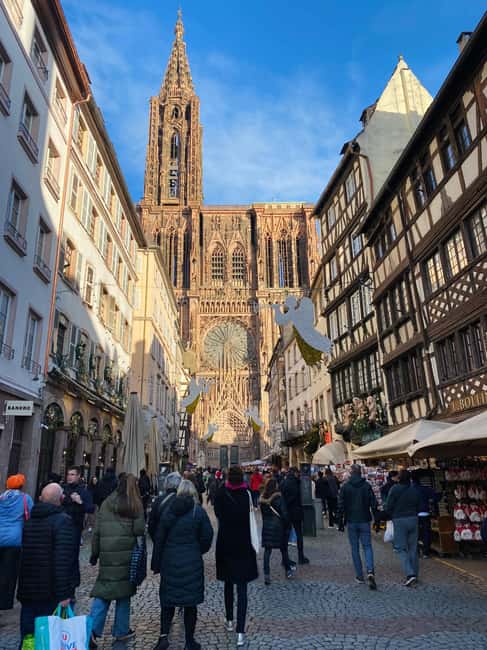
From Petite France, the tour routes you toward two major civic points that explain how ideas shaped the city: Place Gutenberg and Place Kléber.
At Place Gutenberg, your guide connects the square to the man who invented the printing press. Even if you do not read French Revolution or early publishing history, this context gives you a more meaningful way to understand why places get named, and why a city celebrates its intellectual moments as proudly as its cathedrals.
Then you move to Place Kléber, the main square. Here, your guide talks about Jean-Baptiste Kléber, a prominent figure from the French Revolution. I like this stop because it adds a different layer of meaning. You are not only learning how Strasbourg looked, you are also learning why it mattered.
If you are the type of traveler who tends to skip squares because they feel too open and too ordinary, do not. This one is short but focused, and it helps you connect Strasbourg’s identity to the broader story of France.
Notre Dame Cathedral on the route: another classic photo moment
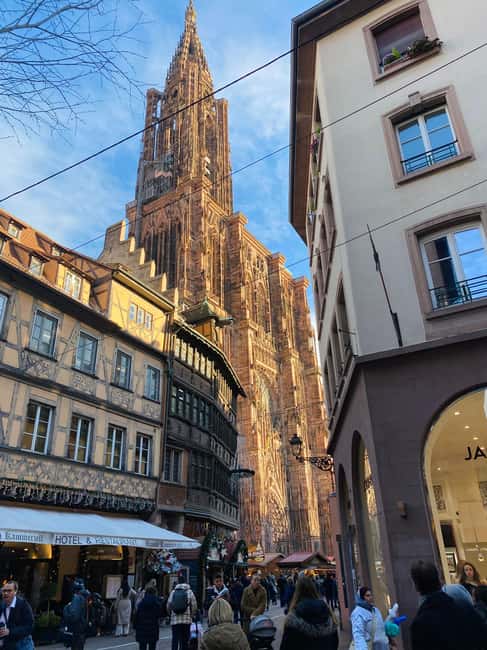
The route also includes a pass by Notre Dame Cathedral in Strasbourg. You can treat this as a bonus viewing moment, especially if your timing gives you a quiet corner to look at details and snap a photo.
The key word here is pass by. This is not presented as a long stop, so manage your expectations accordingly. Use it to grab a second perspective on the area’s historic architecture and keep moving with your guide.
Price and timing: is $28 worth two hours on foot?
For $28 per person and 2 hours, I think this is good value if you want three things: orientation, storytelling, and practical tips.
First, you are paying for someone local to connect landmarks into a route you can actually remember. Without that, cathedral photos, Petite France selfies, and square spotting can feel like separate items, not a coherent city.
Second, the tour includes help with photo tips and offers where to eat and explore after. Those are the extras that often save you money and time later, because you stop guessing.
Finally, the small scope matters. Two hours is long enough to feel you got something real, but short enough to still enjoy the rest of your day on your own. You can book this, then do a longer independent walk once you know the streets.
Just be aware of what is not included: cathedral entry tickets and food and drinks are not part of the price. So budget extra if you plan to go inside or stop for a meal right after.
What to bring so you enjoy every minute
This tour is easy walking, but it still asks for comfort. I would pack with three goals in mind: feet, sun, and photos.
Bring:
- Comfortable shoes for cobblestones and uneven sidewalks
- A camera (and take advantage of the guide photo advice)
- Water
- Sunscreen
- A hat
If it is cold, dress in layers. If it is hot, plan to hydrate. You will be standing around for cathedral viewing and street photography, so the small discomforts can add up.
Language matters: German and English in the same group
The tour runs with German and English. Some groups may be mostly one language, but it can be multi-lingual, meaning your guide might shift between languages during the walk.
From a practical point of view, this can change the pacing of explanations. If you strongly prefer one language only, it is worth paying attention when you book. If you are flexible and just want the experience, this format is often still enjoyable, especially because the guide’s stops are visually clear and the stories are about places you can see.
If you get a guide like Alex or Emmy, people consistently highlight strong energy and friendly presentation. If you hear a more narrative style from Natalie or Catalina, you might also get a very personal tone tied to the city.
Who this tour suits best
I think this walking tour is perfect for:
- First-time visitors who want Strasbourg highlights in a short window
- Travelers who like photo guidance more than random landmark hopping
- People who enjoy history when it is tied to streets, buildings, and daily life
- Anyone who wants a simple plan for meals and next stops without doing all the research
It is also a good choice for moderate mobility, and it is listed as wheelchair accessible. That said, sidewalks in older city centers can still require some flexibility, so choose comfortable shoes and go with the flow.
Should you book Strasbourg: Walking Tour with a Local Guide?
Yes, if your goal is a fast, friendly orientation to Strasbourg with smart stops. For $28 you get a guide-led route that hits the Strasbourg Cathedral, sails you through Petite France, and gives you enough context at Place Gutenberg and Place Kléber to feel like you understand the city, not just toured it.
Book it especially if you want practical extras, like photo tips and where to eat and explore afterward. Skip it or consider a different format if you want a deep, long sit-down history lecture, or if you need a strictly single-language tour.
If you are pairing this with other sightseeing, do it early. You will walk differently after, because you will recognize the streets and squares instead of just walking through them.
FAQ
How long is the Strasbourg walking tour?
It runs for 2 hours, which makes it a good fit for a half-day schedule and a first look at the city.
How much does the tour cost?
The price is $28 per person.
Where do I meet the guide?
Meet at Place Gutenberg, 67000 Strasbourg, France, near the statue and the tree. The guide wears a blue company badge with the name UTG Experience.
What language is the guide?
The tour is offered in German and English. It may be multi-lingual depending on the group.
What will I see during the walk?
You will see and stop for the Strasbourg Cathedral, walk through Petite France, pass by Place Gutenberg, Tanners’ Quarter, and Place Kléber, and the route also includes a pass by Notre Dame Cathedral.
Are cathedral entry tickets included?
No. Entry tickets for the Strasbourg Cathedral are not included.
Are food and drinks included?
No. Food and drinks are not included. Your guide will share recommendations, but you will need to purchase them separately.
Is the tour wheelchair accessible?
Yes, the tour is listed as wheelchair accessible.
What should I bring for the tour?
Bring comfortable shoes, a hat, a camera, sunscreen, and water.
Can I cancel and get a refund?
Yes. Free cancellation is available up to 24 hours in advance for a full refund.
Latest Strasbourg entries, notes attached



Alsace Tours, compared.

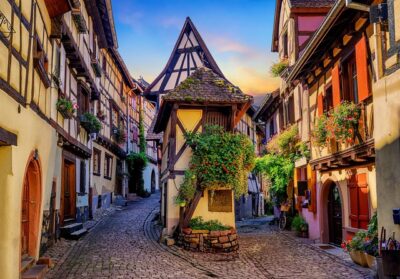
Colmar, Medieval Village & Castle Small Group from Strasbourg
Read our review →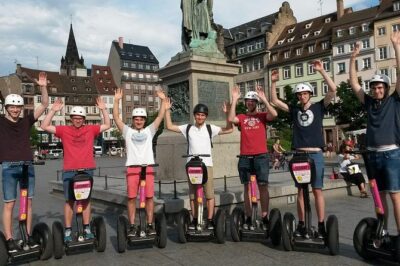
Strasbourg Food Tour – A Taste of Tradition by Do Eat Better
Read our review →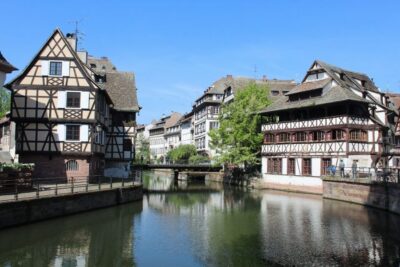
This tour also appears in