
Reviewed · MONTMARTRE WALKS
Paris Jewish Heritage: Le Marais & Montmartre Guided Walking Tour
Jewish Paris has two different moods. This guided walk links Le Marais and Montmartre, so you see tradition and art side by side, not just random sightseeing. I love the small-group pace and the story-first guidance that ties streets and buildings to real people. One thing to watch: most of the key stops are outdoors, so if you want synagogue interiors or ticketed monument time, this tour will feel a bit limited.
You also get a short public transport transfer between districts, with tickets included, which helps you keep your energy for the two very different neighborhood chapters. Starting at L’Elephant du Nil (2:30 pm) and ending near Sacré-Cœur at Square Louise-Michel, the route moves from medieval-era Jewish life in the Marais to the artistic magnet of Montmartre, ending with a major Paris viewpoint. If you’re expecting a light, purely scenic stroll, plan for a moment of seriousness at the Holocaust Memorial area.
In This Review
- Key things I’d pay attention to
- Le Marais to Montmartre, two Jewish chapters in one route
- Starting at L’Elephant du Nil, then easing into the Marais
- A small planning note on pacing
- Agoudas Hakehilos, and why that Art Nouveau detail matters
- What’s not included (so you won’t be surprised)
- The Holocaust Memorial area: exterior viewing, heavy context
- A heads-up on tone
- Rue des Rosiers: what a street can teach
- Food moments, if your guide adds them
- Ending the Marais segment near Hôtel de Ville, then a transport break
- Montmartre’s Jewish artists, cafés, and the modernism story
- The point you should walk away with
- Sacré-Cœur steps and Square Louise-Michel for the final connection
- Price and value: what $102.12 buys you in real terms
- The guide effect: small group, big difference in how it feels
- Two possible mismatches to consider
- Who should book this Jewish Heritage walk?
- Should you book this tour or not?
- FAQ
- How long is the Paris Jewish Heritage walk?
- What is the meeting point and where do we end?
- What time does the tour start?
- Is the tour offered in English?
- Is public transport included between Le Marais and Montmartre?
- Do we get to go inside synagogues?
- Does the tour include the Holocaust Memorial museum interior?
- What’s the group size?
- Can I get a refund if I cancel?
Key things I’d pay attention to
- Le Marais core stops focused on what’s still visible today, plus careful context for what was lost
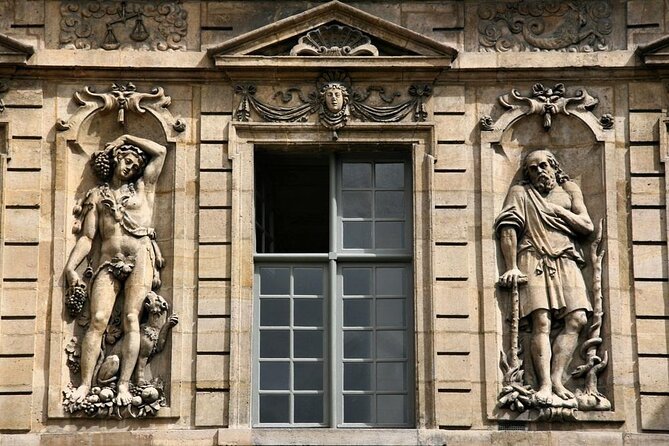
- Agoudas Hakehilos exterior and its Art Nouveau synagogue design by Hector Guimard
- Mémorial de la Shoah exterior view as a focused remembrance stop, not a museum detour
- Rue des Rosiers walk with explanations of how the street’s role changed across the 20th century
- Montmartre Jewish artist thread tied to figures like Modigliani, Max Jacob, and Marc Chagall
- Sacré-Cœur finish at the steps and Square Louise-Michel, for a payoff viewpoint and reflection
Le Marais to Montmartre, two Jewish chapters in one route
This tour is built around contrast. Le Marais gives you Jewish Paris shaped by centuries of settlement, community institutions, religious life, and everyday business streets. Montmartre then reframes Jewish life through creativity and modernism, where immigrant artists found community in cafés, studios, and literary circles.
That setup is more useful than you might think. Many “neighborhood walks” stay stuck in one era or one theme. Here, you’re encouraged to notice how the same city can support different forms of identity, and how Europe’s political shifts pushed those identities into new directions.
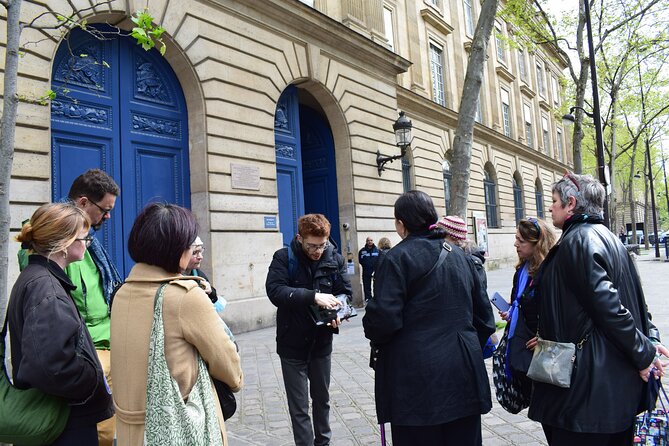
I also like that the experience is paced for conversation. It’s small-group, with a maximum of 12 people, and it’s designed as an up-close walk where you can ask questions as you go. Guides you might encounter, such as Benjamin, Thomas, Adrian, or Pierre Louis (often called PL), are mentioned for being story-driven and for answering questions clearly.
Starting at L’Elephant du Nil, then easing into the Marais
You meet at L’Elephant du Nil, 125 Rue Saint-Antoine (near public transport), and the tour begins at 2:30 pm. Getting started at this part of Paris is practical because it sets you up to enter Le Marais without rushing across the whole city.
The first hour in Le Marais is where the guide does important groundwork: what “Jewish quarter” really means here, and how centuries of community life left traces in street patterns, institutions, and shops. Even if you already know the basic outline of Jewish history in France, this opening helps you read what you’re walking past, instead of seeing it as just attractive old streets.
More Walking Tours in Paris
- Paris Top Sights Half Day Walking Tour with a Fun Guide
★ 5.0 · 2,893 reviews - Montmartre Hidden Gems and Scenic Highlights Walking Tour
★ 5.0 · 2,684 reviews - Montmartre Hill French Gourmet Food and Wine Tasting Walking Tour
★ 5.0 · 2,588 reviews
A small planning note on pacing
Some people expect instant “wow” landmarks right away, then wonder why there’s more explanation at first. If you want the tour to feel like a straight sprint from one famous site to the next, you may need a little patience for the first segment to click.
Agoudas Hakehilos, and why that Art Nouveau detail matters
One stop is the exterior of Agoudas Hakehilos Synagogue, known for being an unusual example of Art Nouveau synagogue architecture designed by Hector Guimard. Because the tour is outdoor, you focus on form, not inside rooms.
Still, it’s not a throwaway photo stop. The guide uses the building to explain how waves of Eastern European Jewish immigration, especially in the late 19th and early 20th centuries, transformed this part of the city. The point is not just that people arrived, but that institutions and everyday culture followed, including schools and community networks.
Why it’s worth your attention: Guimard’s style is a reminder that Jewish life in Paris was not stuck in one look or one century. It interacted with mainstream French design and city change, even while building its own support systems.
What’s not included (so you won’t be surprised)
Interior visits aren’t part of this tour. So if seeing inside synagogues is a top priority, plan separate time for that.
More climbs through Montmartre:
The Holocaust Memorial area: exterior viewing, heavy context
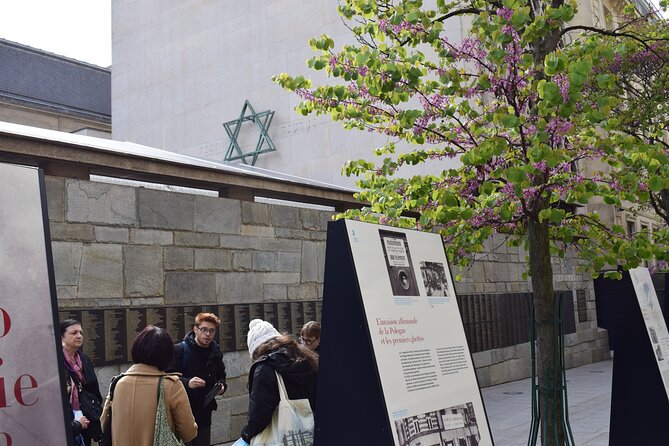
Next comes a stop at the Holocaust Memorial (Mémorial de la Shoah), seen from the exterior. This isn’t a long museum-style visit, and the tour doesn’t position it as a quick history checkbox. The guide provides context about occupation, resistance, and remembrance, and then you move on.
I find this format can work well if you want to keep the neighborhood walk coherent. You’re not hopping between buildings that require extra ticketing. You’re also not reducing memory to a photo. Even from outside, the stop signals that this story is not only cultural. It includes survival, loss, and the way Paris keeps memory in public space.
A heads-up on tone
You should expect sensitivity and care here. The best guides keep the conversation respectful and focused, with tact when dealing with painful material. If you’re traveling with kids, this stop can still work, but it helps to be ready for a serious moment in the middle of a walking tour.
Rue des Rosiers: what a street can teach
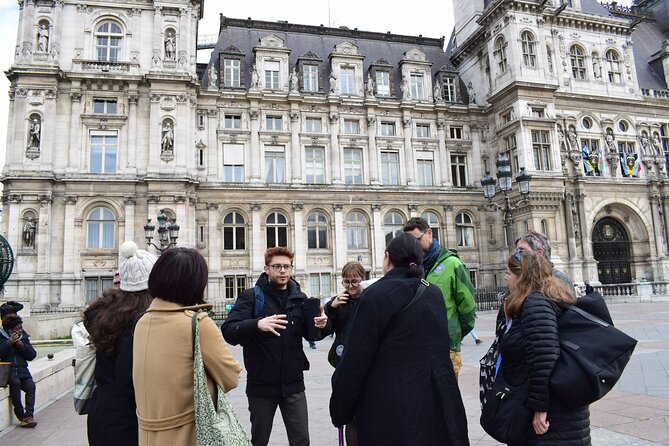
From the Holocaust Memorial area, you continue along Rue des Rosiers, historically the heart of Jewish commercial and community life in Le Marais. Today the street still feels unmistakably tied to Jewish culture, with bakeries, delis, and specialty shops that echo traditions preserved over generations.
The guide’s job is to stop this from becoming a simple food-and-shop walk. You learn how Rue des Rosiers developed, how it changed over the 20th century, and how the neighborhood rebuilt after destruction. That “before and after” framing is key. It turns a lively street into an interpretive map of community resilience.
Food moments, if your guide adds them
The tour isn’t listed as a formal tasting menu, but there can be small food touches. One example that shows up in guide approaches is a quick falafel taste stop such as L’As du Falafel. If you care about snacks, keep your expectations flexible. Either way, you’re walking where you can easily pick up a bite right after the tour ends.
Ending the Marais segment near Hôtel de Ville, then a transport break
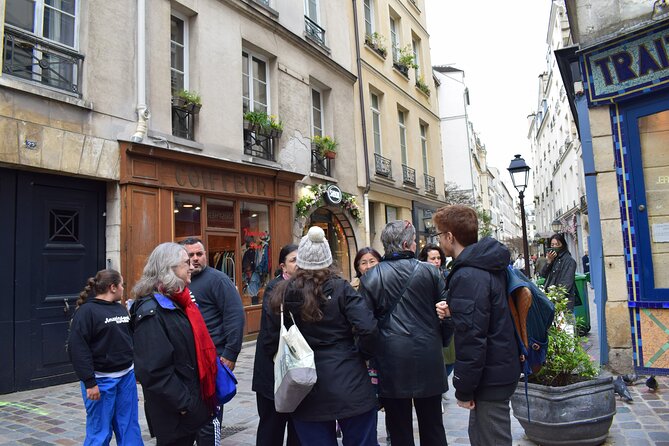
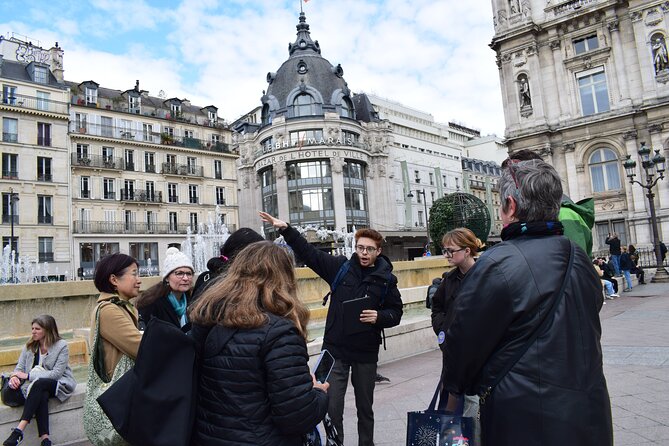
After the Marais stops, you end that segment near Hôtel de Ville and then continue to Montmartre by public transport. The tickets are included, which matters because it saves time and hassle.
This transfer is also a psychological reset. Le Marais is dense and story-heavy. Montmartre changes the view, the street atmosphere, and the kind of Jewish legacy you’re about to talk about. That short ride lets your brain catch up before the tour shifts gears.
Montmartre’s Jewish artists, cafés, and the modernism story
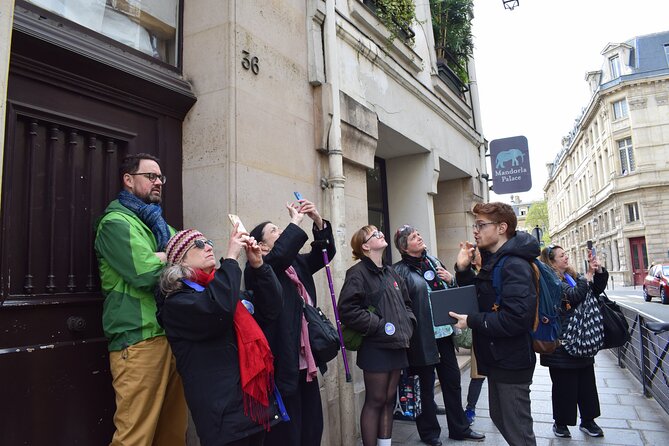
In Montmartre, the tour turns to the artistic chapter of Jewish Paris. The guide explains how immigrant artists, writers, and musicians drew creative energy from the district. The names you’ll hear include Amedeo Modigliani, Max Jacob, and Marc Chagall.
What I like about this section is the balance. Yes, it’s about art and ambition, with cafés and literary circles providing community. But it also places those creative lives against a looming background of rising nationalism and antisemitism across Europe, and the political uncertainty of the era.
That sets up a poignant contrast with Le Marais. In the Marais, you’re looking at rooted community institutions and tradition. In Montmartre, you’re watching creativity reinvent itself, then collide with history later on.
The point you should walk away with
The takeaway is not just that famous artists passed through. It’s that the city offered a home-like social space, even when the broader future became dangerous. Then, during the Second World War, many people connected to that scene faced exile, persecution, or rupture. Their legacy helped shape modern art, and Paris kept telling the story.
Sacré-Cœur steps and Square Louise-Michel for the final connection
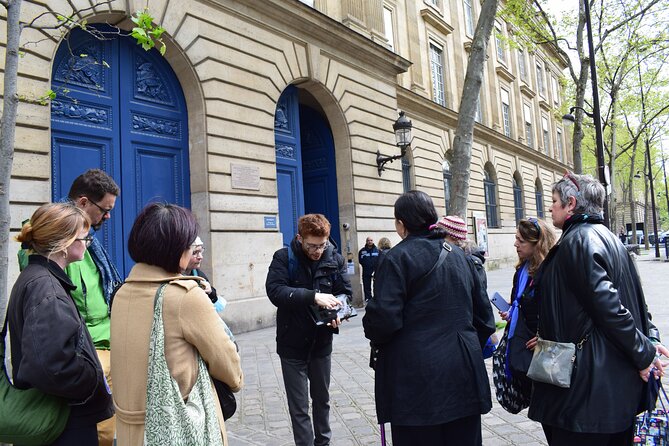
The tour finishes at the steps of the Basilique du Sacré-Cœur in Montmartre. If you care about views, this is a payoff moment, with one of Paris’s most recognizable panoramas.
Then you wrap at Square Louise-Michel with a renewed perspective on the layers you just walked through. After Le Marais and Montmartre, Sacré-Cœur can feel less like a generic must-see and more like a symbol of how Paris keeps stacking eras on top of each other.
This ending is also practical. You’re done with the structured guided route, so you can decide what you want next: linger for photos, browse nearby streets, or head toward a museum or dinner on your own.
Price and value: what $102.12 buys you in real terms
At $102.12 per person for about 3 hours 30 minutes, you’re paying for three main things: a local guide who can connect streets to people and events, a focused route that covers two districts, and the small-group format that supports questions.
If your goal is a high-volume checklist, this price might feel steep compared to self-guided walking. But if your goal is understanding, the value shifts. This tour includes the interpretive glue: architectural explanation for Agoudas Hakehilos exterior, context for the Holocaust Memorial area, and the cultural and historical thread from Rue des Rosiers into Montmartre’s artistic community.
Also, the public transport tickets included reduce friction. Little savings matter in Paris, where getting across neighborhoods can eat time. And because you’re walking with a guide, you spend less time figuring out where to go next and more time learning why the places matter.
The guide effect: small group, big difference in how it feels
With a maximum of 12 and a design aimed at meaningful interaction, the guide can keep the walk from turning into a lecture you can’t ask questions about.
In the experiences people share, guides like Benjamin, Thomas, and Pierre Louis (PL) are praised for blending street-level guidance with context, and for answering questions with clarity. That’s the real advantage here. Jewish heritage in Paris can turn abstract fast, especially if you’re standing outside buildings with no interior access. A strong guide helps you “read” what you’re seeing.
Two possible mismatches to consider
First, if you want a walking tour that points out lots of physical remnants of everyday life in a very specific way, you might feel the route is more focused on key locations than on a long list of small sites. Second, if you strongly prefer one angle, like daily community institutions over wartime memory, you may find that the Holocaust Memorial stop takes substantial emotional weight in the flow.
Who should book this Jewish Heritage walk?
You’ll likely enjoy this tour if you:
- Want a guided story connecting Le Marais and Montmartre, not two separate random neighborhood walks
- Like learning from architecture and street context, such as Guimard’s Art Nouveau synagogue exterior
- Want a small-group experience where your questions actually fit into the walk
- Are interested in how Jewish Paris shifted from tradition and institutions to artistic modernism
You might consider another option if you:
- Want interior synagogue visits or ticketed monument time (this tour keeps interiors out)
- Prefer a long museum-style experience rather than short, outdoor, neighborhood-based stops
- Need a very light tone without heavier moments, since the Holocaust Memorial area is part of the route
Should you book this tour or not?
If you’re choosing between “see the neighborhoods” and “understand the neighborhoods,” this tour leans clearly toward understanding. For most people, that is exactly what they want when they come to Paris and realize the city’s beauty has a human story behind it.
Book it if you’re comfortable with a guided, story-focused walk that includes outdoor exterior viewing and a brief but serious remembrance stop. It’s also a good pick when you want the Montmartre chapter, because pairing it with Le Marais makes the contrasts click.
Skip it or plan extra time elsewhere if interior access and museum entries are your main goal. This isn’t that type of tour. It’s a smart, compact way to connect Jewish Paris across time, ending with a view that helps you hold the whole picture in your head.
FAQ
How long is the Paris Jewish Heritage walk?
It runs for about 3 hours 30 minutes.
What is the meeting point and where do we end?
You start at L’Elephant du Nil, 125 Rue Saint-Antoine, 75004 Paris. You end at Square Louise Michel, 6 Pl. Saint-Pierre, 75018 Paris.
What time does the tour start?
The start time is 2:30 pm.
Is the tour offered in English?
Yes, it is offered in English.
Is public transport included between Le Marais and Montmartre?
Yes. The tour includes a short public transport transfer, and public transport tickets are included.
Do we get to go inside synagogues?
No. The synagogue stop is an exterior visit only, and interior visits are not included.
Does the tour include the Holocaust Memorial museum interior?
The stop at the Holocaust Memorial (Mémorial de la Shoah) is listed as a view from the exterior, and entry to monuments or historical sites is not included.
What’s the group size?
It’s a small group, with a maximum of 12 travelers, and it is described as an interactive experience for up to 9 persons.
Can I get a refund if I cancel?
Yes. You can cancel for free up to 24 hours before the start time for a full refund. If you cancel less than 24 hours before, the amount paid is not refunded.
Boulevard Pace
- Paris Île de la Cité and Notre-Dame Walking Tour With Crypt
★ 5.0 · 2,272 reviews - Paris in a Day: Louvre or Orsay, Eiffel Tower, City Walk & Cruise
★ 5.0 · 1,956 reviews - Paris City Center Free Walking Tour (Tip-Based)
★ 5.0 · 1,340 reviews - Paris: Dark History and Ghostly Guided Walking Tour
★ 4.7 · 1,000 reviews
Marais Doorways
- Award-Winning Paris French Bakery Experience — Le Marais, 4th Arr
★ 4.5 · 1,186 reviews - Paris Le Marais Food Tour With 10+ Tastings, Cheese, Wine & More
★ 5.0 · 985 reviews - Paris Le Marais District Original Food and Wine Tasting Tour
★ 4.5 · 880 reviews - Paris Bike Tour Hidden Secrets in the Latin Quarter & Le Marais neighborhoods
★ 5.0 · 766 reviews
Latest Paris entries, notes attached







Montmartre Walks, compared.
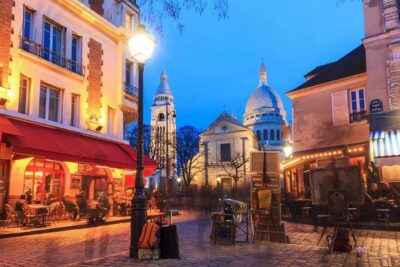
Montmartre Hidden Gems and Scenic Highlights Walking Tour
Read our review →
Montmartre Hill French Gourmet Food and Wine Tasting Walking Tour
Read our review →
Montmartre Highlights Walking Tour with a Local Guide
Read our review →
Montmartre Cheese, Wine & Pastry Guided Walking Tour
Read our review →
Private Montmartre Food Tour with Wine, Cheese & Pastries
Read our review →
Sacré-Coeur and Montmartre Tour with Expert Guide
Read our review →
Paris Montmartre Food Tour – A Full French Meal by Do Eat Better
Read our review →This tour also appears in