
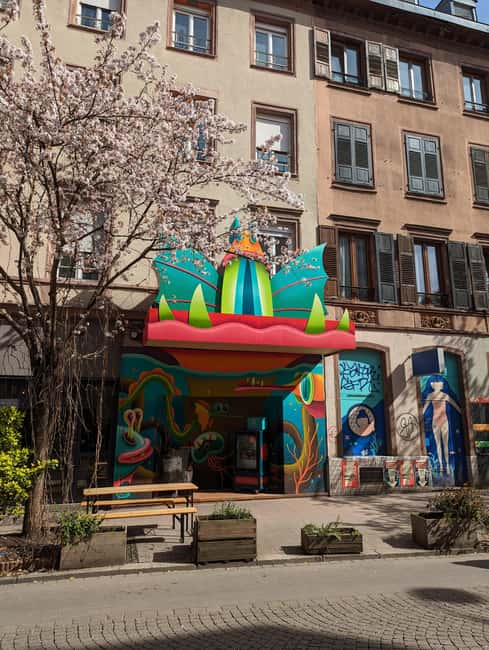
Reviewed · ALSACE TOURS
Strasbourg : Street-Art Tour
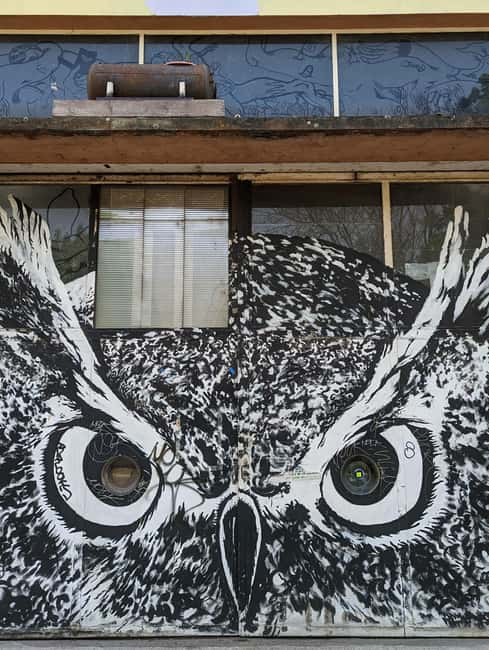
Street art in Strasbourg feels personal fast. This small-group walk through the Quartier Gare turns the area by the station into a living gallery, with a real guide explaining what you’re seeing and why it matters.
I love how the guide blends street-art technique with city context, so graffiti, frescoes, and mosaics stop looking random. I also love the sheer number of great walls packed into a short loop, plus the photo stops that make it easy to come away with more than blurry selfies. One consideration: it’s only 90 minutes, so you’ll see highlights, not every street corner worth a look.
In This Review
- Key highlights
- Why the Gare District Works So Well for Street Art
- From Place de la Gare to Quartier Gare: How the Walk Plays Out
- Murals, Graffiti, Frescoes, and Mosaics: What You Actually Learn to See
- Local Alsace Identity Meets International Artist Marks
- The Guide Factor: Small Group Energy and Street-Art Passion
- Price and Time: Is $35 Worth a 90-Minute Street-Art Fix?
- Best Times to Go and What to Bring (So You Don’t Hate Walking)
- Who Should Book This Strasbourg Street-Art Tour
- Should You Book This Tour?
- FAQ
- Where is the meeting point?
- How long is the street-art tour?
- How much does it cost?
- What languages are offered?
- How big is the group?
- What is included in the tour?
Key highlights
- A tight 6-person group for actual questions, not just listening to a headset
- Departure at Place de la Gare by the tram escalators, easy to find once you know the marker
- Graffiti plus frescoes plus mosaics explained with hands-on clarity
- Local Alsace pride and international artist work side by side on the same route
- Photo opportunities built into the walk so you can frame the art, not rush past it
- Stay advice for the Gare district including bars, restaurants, and clubs
Why the Gare District Works So Well for Street Art
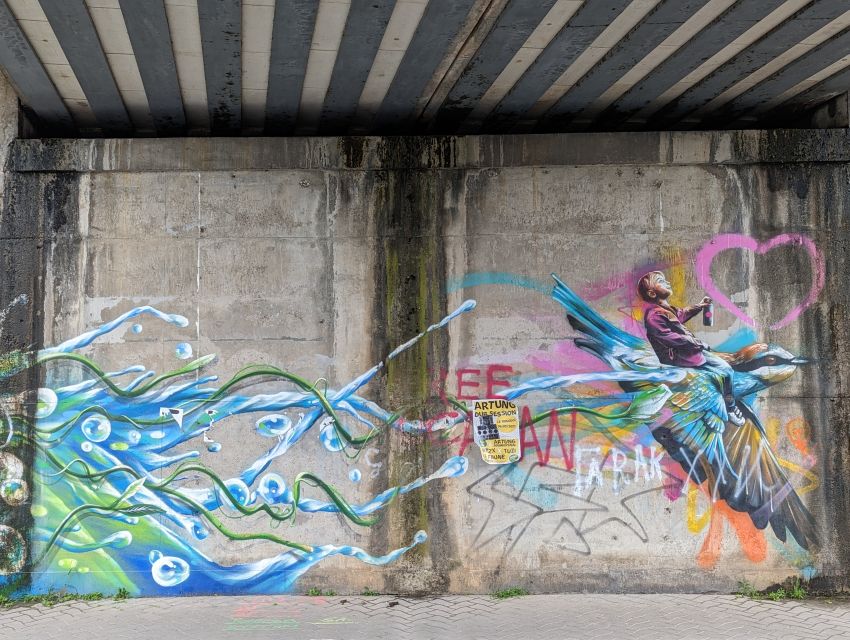
Strasbourg has a strong street-art culture, but the best part is that the city does not treat it like a guilty secret. In the Gare area, you can feel how graffiti and street art are given room to exist, with creative freedom taken seriously rather than pushed away. That means you see work that feels made for public view, not hidden in an alley only locals know.
And for you, that matters because street art is about more than style. It’s about messaging, technique, and the small choices artists make to communicate at street level. When a tour places you in the area where the culture is strongest, you get better comparisons, faster. You can see how different artists approach color, composition, lettering, and surfaces without waiting days for the next example.
From Place de la Gare to Quartier Gare: How the Walk Plays Out
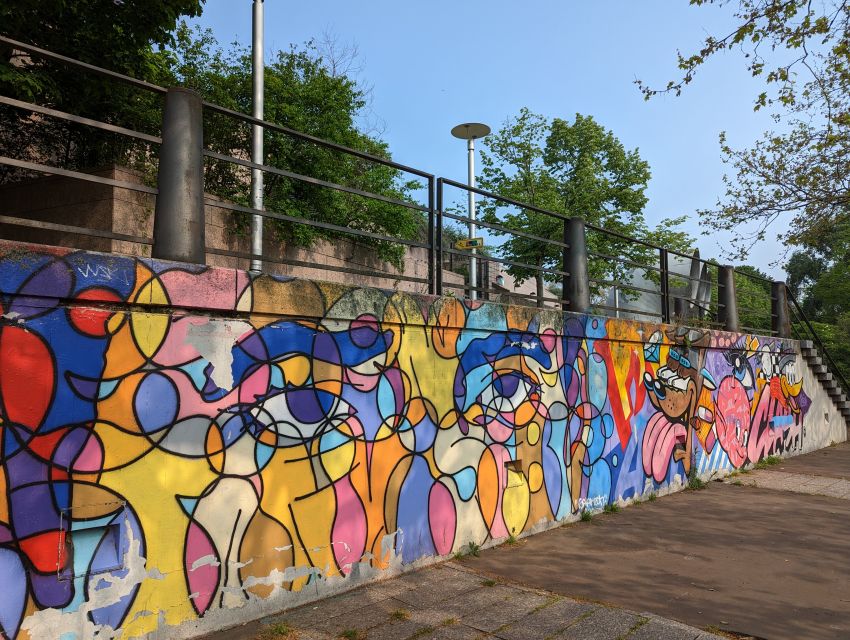
The tour starts in a very practical spot, right in front of the escalators of the tramway on Place de la Gare. The guide wears a black t-shirt with an orange logo, so you should be able to spot them quickly even if you are arriving from a platform with zero patience.
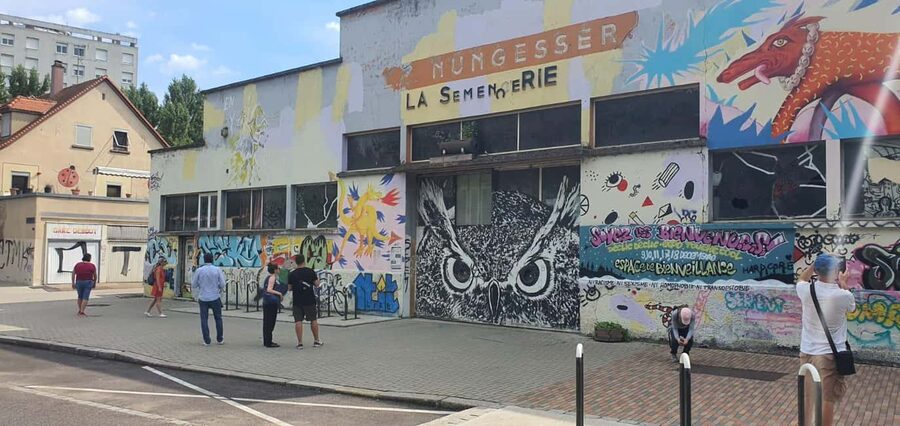
From there, you walk into the heart of the Gare district, the zone known for a dense mix of local and visiting artists. The pace is built for a 90-minute experience, so think of it as a concentrated “what to notice” walk. You will not wander for hours looking for one perfect wall. Instead, you get a sequence of stops that keeps your attention on how the art is constructed and how it fits the neighborhood.
In this area, the street-art scene also comes with everyday energy. Around the station you’ll find the bars, restaurants, and clubs that keep the district lively. That is useful even if you are not planning a late night. Knowing what the guide recommends helps you turn the art walk into a real plan for dinner or a casual drink afterward.
Other Strasbourg bookings in the margin notes
- Strasbourg: Euro Guided Tour by Segway
★ 4.7 · 808 reviews - Colmar, Medieval Village & Castle Small Group from Strasbourg
★ 5.0 · 769 reviews - 2-Hour Strasbourg Euro Tour by Segway
★ 5.0 · 642 reviews
Murals, Graffiti, Frescoes, and Mosaics: What You Actually Learn to See
This tour is not just about pointing at pictures on walls. You learn how these different forms work, and that changes the way you look.
You’ll encounter works linked to:
- graffiti, where letters and tags often carry identity and rhythm
- frescoes, where painted scenes rely on composition and placement
- mosaics, where pattern and texture do the heavy lifting
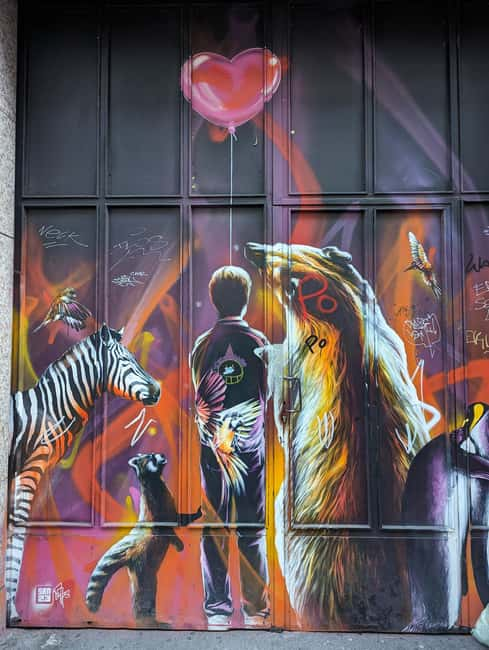
The value here is that the guide explains the artistic techniques in a way that connects visual effect to process. You start noticing things like how an artist treats the surface they get, how color decisions shift the mood, and how a mural’s design interacts with the space around it. That is the kind of information that is hard to pick up from photos online, because street art is always in scale, angle, and context.
And you get photo opportunities along the way. That sounds basic, but it’s actually smart. Street art is visual storytelling. If you take pictures from the wrong angle, you miss the details the guide is trying to show you. On this kind of walk, you are not fighting for a good spot while everyone else moves on. You have time to step back, frame, and understand.
Local Alsace Identity Meets International Artist Marks
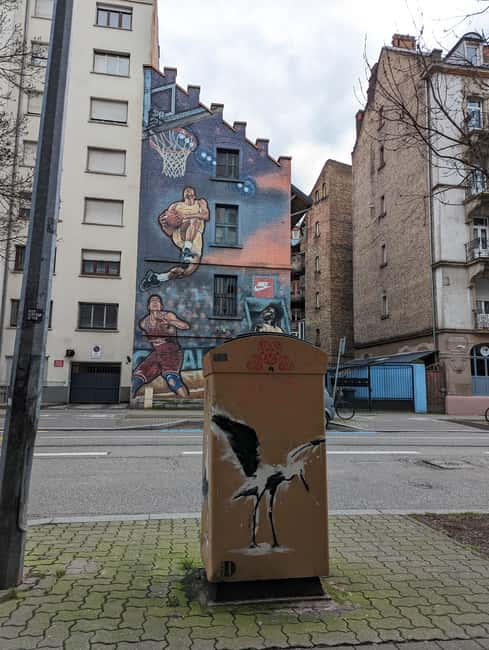
One of the neat themes of the route is that it does not treat street art as one-size-fits-all. Strasbourg is presented as both a local stage and an international stop. Many artists make the choice to represent the region through their art, and you can see how that local identity holds steady even when styles change.
At the same time, Strasbourg has become a prime location for artists from outside the region to leave their mark. That contrast is a big deal for you as a visitor. When you see local and international work together, you start to understand why the city matters to artists. It is not only the walls. It is the atmosphere that supports the practice.
Practically, this helps you interpret symbols and themes without needing a crash course. You learn to ask questions like: Is this work referencing local culture, or is it speaking to the street-art community at large? Is the piece reacting to the neighborhood it sits in, or arriving from somewhere else and adapting? The tour’s mix of works makes those comparisons feel natural.
The Guide Factor: Small Group Energy and Street-Art Passion
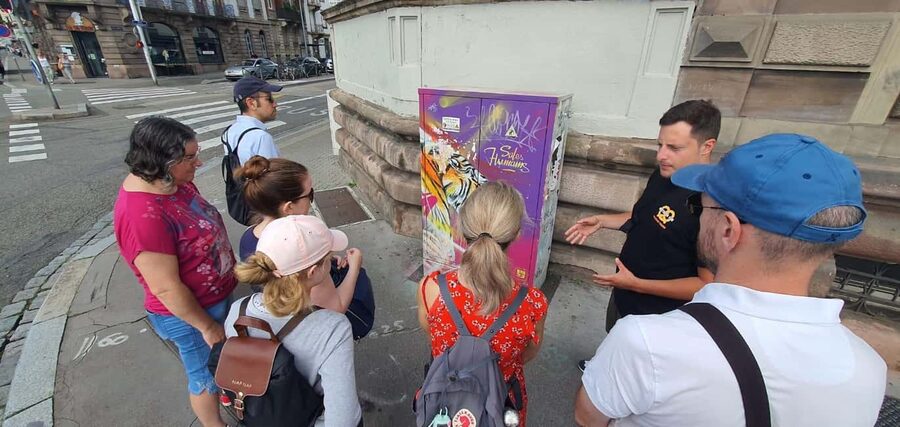
This is a live, guided experience with a small group, limited to 6 participants. That size is not a luxury detail. It changes the whole experience. You can ask what a symbol means, how a technique is done, or why a particular wall was chosen. You are not stuck listening to one-way commentary for 90 minutes.
Language options are also practical: the tour runs with a live guide in French and English. That means you can join without worrying that you will only get fragments of meaning. For street art especially, small explanation points matter. A single phrase can help you read a mural’s theme or understand what makes a tagging style distinct.
The guide’s style is repeatedly described as passionate, friendly, and connected to both city history and the street-art scene. Nicolas is one guide name that comes up in participant feedback, and the consistent thread is how he blends empathy with detail, so the art becomes part of Strasbourg, not just a photo stop.
The Strasbourg dossier continues:
Price and Time: Is $35 Worth a 90-Minute Street-Art Fix?
At $35 per person for 90 minutes, this is priced like a focused activity, not an all-day tour. For value, that is actually good. Street art works best when you see it in volume, quickly, with explanations that train your eye. If you paid for a long tour but only had a few stops, you would probably feel frustrated. Here, the goal is concentration.
Also, the group size matters in the math. A small group means you are more likely to get direct answers and clearer explanations. That turns the cost from a “seat on a walk” into something closer to a guided education you can take home with you.
One more value point: the tour includes best advice for your stay in the region. The guide also points you toward the station district’s bars, restaurants, and clubs. That kind of local suggestion often saves you the time and stress of hunting for a plan after the walk. You are not just buying street art, you are buying a shortcut to evening plans.
Best Times to Go and What to Bring (So You Don’t Hate Walking)
The tour duration is 90 minutes, which is short enough to fit into a day without ruining your schedule. You can treat it like a warm-up activity, especially if Strasbourg is new to you. Starting from Place de la Gare also makes it convenient if you arrive by train and want a quick orientation.
Because it’s a walking tour through outdoor streets, you should plan for comfort like you would for any city walk. Wear shoes that you trust, and bring a camera or phone you are ready to use. Street art is photo friendly, but it rewards patience. Take your time on the stops when the guide gives you the context.
If you are sensitive to crowds, the small group helps. Six people is manageable. If you like asking questions, this setup gives you space to do it.
Who Should Book This Strasbourg Street-Art Tour
This tour is a great match if you:
- want Strasbourg street art explained in plain language
- like mixing art with quick city context, not just captions
- enjoy short, high-impact walks instead of long tours
- prefer small groups where you can interact
It’s also a solid choice if you are staying near the station and want ideas for what to do next. You’ll leave with a stronger sense of the Gare district and better odds of landing in a good place for food or a drink.
If you are the type who wants to hunt street art for hours on your own, you might want more than 90 minutes. But that is exactly where this tour can still help. You can use it as your primer, then go back and explore the streets with a sharper eye.
Should You Book This Tour?
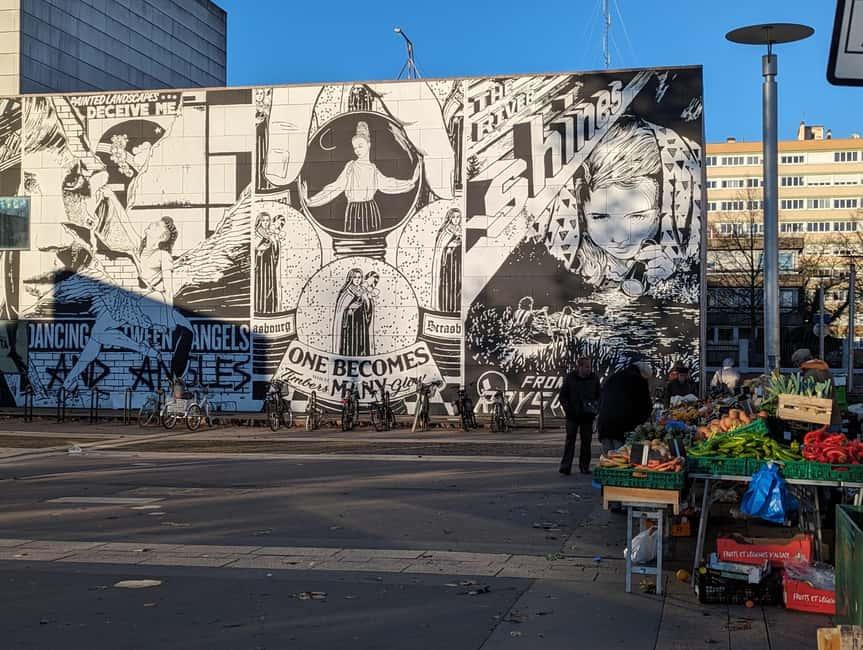
If you like street art and you want a guide to help you read it, book it. The combination of small group size, street-art technique explanations, and a route concentrated in the Gare district gives you a lot of learning per minute. The $35 price feels fair for a 90-minute guided experience that also feeds into your real-life plans afterward.
Only skip it if you already know you want a long, self-guided “see everything” day. For most people, this tour hits the sweet spot: enough stops to feel immersed in the scene, enough context to understand the choices behind the art, and enough local advice to turn the rest of your Strasbourg time into something smooth.
FAQ
Where is the meeting point?
Your guide will meet you in front of the escalators of the tramway on Place de la Gare.
How long is the street-art tour?
The tour lasts 90 minutes.
How much does it cost?
The price is $35 per person.
What languages are offered?
The tour is available with a live guide in French and English.
How big is the group?
The group is limited to 6 participants.
What is included in the tour?
You’ll join a local group walk that highlights the most beautiful street-art spots, receive advice for your stay in the region, and get photo opportunities.
Latest Strasbourg entries, notes attached


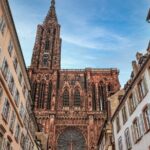

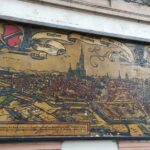
Alsace Tours, compared.

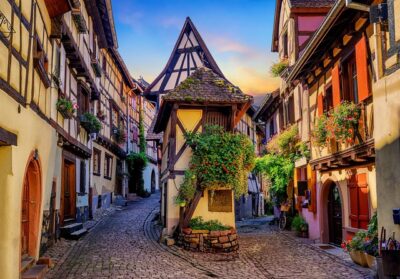
Colmar, Medieval Village & Castle Small Group from Strasbourg
Read our review →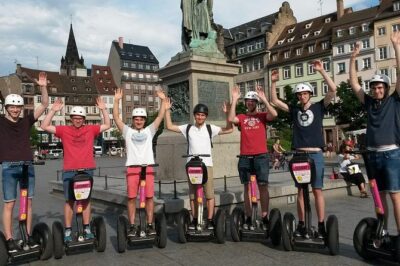
Strasbourg Food Tour – A Taste of Tradition by Do Eat Better
Read our review →
This tour also appears in