
Reviewed · CARCASSONNE TOURS
Carcassonne: 1h30 Walking Tour of the Medieval City
Early morning in Carcassonne feels like cheating, in the best way. This 90 minute guided walk gives you the medieval core before it gets crowded, with golden morning light and a very practical story of how the city worked.
I love that you start at Place du Prado and meet right by the bust of Dame Carcas, so you ease into the day without hunting around. I also like how the tour follows the fortress logic, from the drawbridge to the Narbonne Gate and ramparts, then into the big religious and political sites around the walls.
One drawback to plan for: it is not a short, sit down tour. You are walking the medieval streets and rampart paths, and it is not suitable for wheelchair users or people over 95.
In This Review
- Key things to know before you go
- Starting at Place du Prado, right by Dame Carcas
- The first photo stop: learn where to look
- Cross the drawbridge and head toward the Narbonne Gate
- Ramparts walk: the city’s defense story, told in motion
- Inquisition residence and the medieval Bishopric: power close to the streets
- Basilica of Saint Nazaire: pause, look up, and understand the setting
- Exteriors of the Count’s castle: see it, then keep your expectations realistic
- Pace and comfort: why 90 minutes is the right length
- Value for $17: what you’re really buying
- Who this tour suits best
- Practical tips so your morning goes smoothly
- Should you book this early Carcassonne walking tour?
Key things to know before you go
- Golden hour timing means better photos and more comfortable walking in warm months
- Narbonne Gate and ramparts help you understand Carcassonne’s defense system fast
- Aude Valley panoramic viewpoints give you context for why the city was built here
- Basilica of Saint Nazaire adds a major religious stop to the medieval story
- Inquisition residence and medieval Bishopric connect power, belief, and control
Starting at Place du Prado, right by Dame Carcas

Carcassonne is one of those places where orientation matters. If you arrive and try to wing it mid-morning, you spend too much time figuring out what’s what and who lived where. This tour fixes that by beginning outside the medieval walls area at Place du Prado, in front of the bust of Dame Carcas.
The early start also changes the mood. You get calmer streets, cooler feet, and a softer light on stone. Even if you are not a photo person, you will feel it because the city just looks better in the morning.
You are also set up for an easy first win: you are not jumping straight into a long climb without a warm up. The route builds from there, so you learn as you walk.
The first photo stop: learn where to look
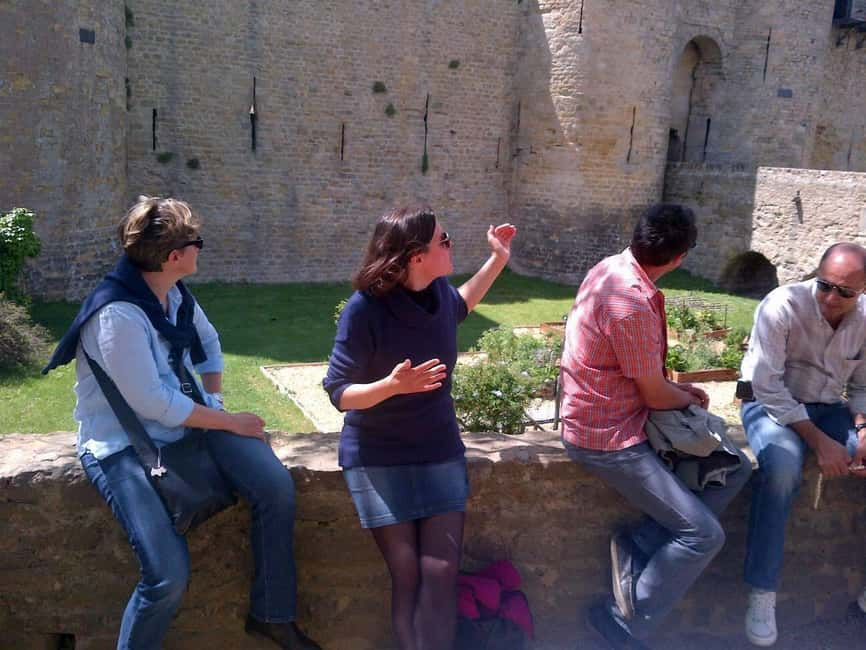
Before you rush into the medieval core, there’s a viewpoint photo stop that works like a quick orientation briefing. You pause, you look out, and your guide frames what you are about to see.
This matters more than it sounds. When your guide explains what you are looking at in terms of defense, gates, and surrounding terrain, the medieval city stops being just pretty stone. It becomes a system.
In practical terms, bring your hat and sunscreen even in the morning. Early tours can still turn bright fast, and you will be exposed while walking and stopping for views.
More rounds of the walled city:
- Carcassonne: Castle and Ramparts Entry Ticket
★ 4.6 · 2,884 reviews - Toulouse: Carcassonne Day Trip by Coach with Audioguide
★ 4.4 · 580 reviews - Carcassonne During World War 2
★ 5.0 · 127 reviews
Cross the drawbridge and head toward the Narbonne Gate
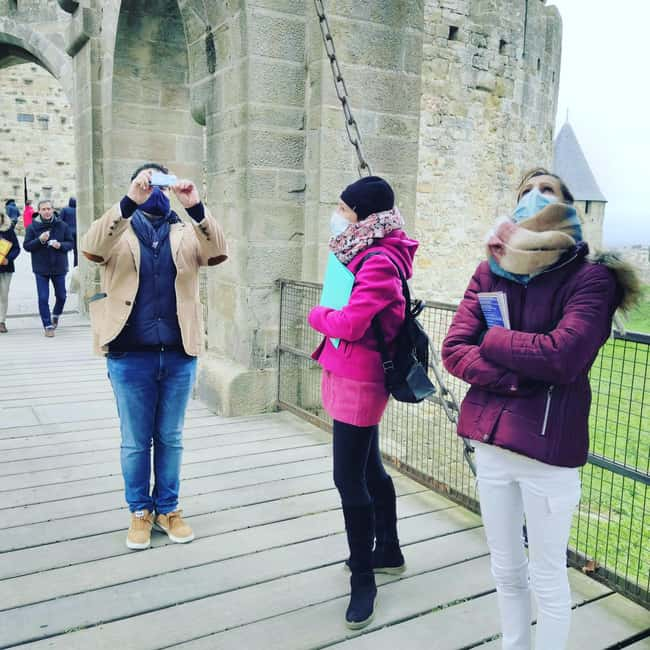
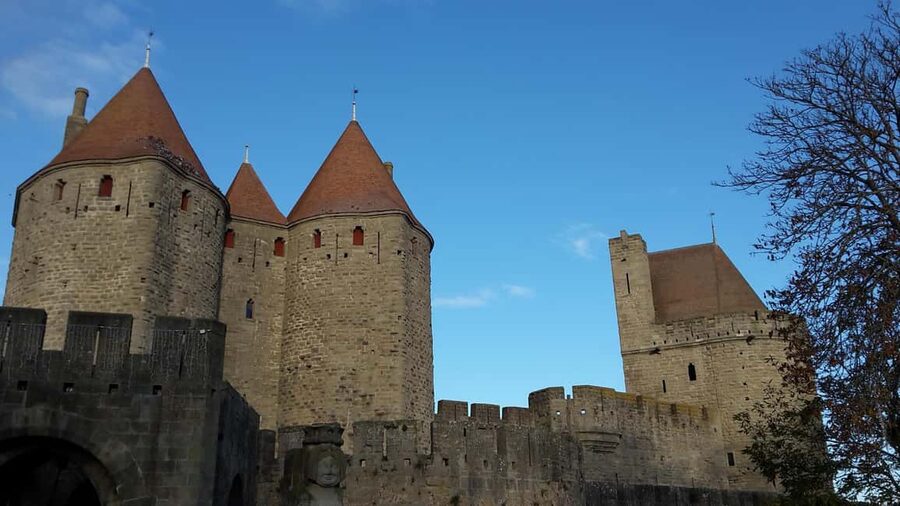
At a key moment, you walk through the drawbridge route and head toward the Narbonne Gate. This is the kind of stop that helps you picture Carcassonne as a fortified stronghold, not just a postcard.
Narbonne Gate is a natural anchor point in the story because gates were where risk lived. They were controlled entry points, designed to be defendable, and your guide uses that to explain how the city’s layout supported protection.
You’ll also notice how walking inside the walls changes your pace. Streets get narrower, turns come faster, and your sense of direction shifts. That is where having a local specialist guide helps you keep moving without feeling lost.
Ramparts walk: the city’s defense story, told in motion
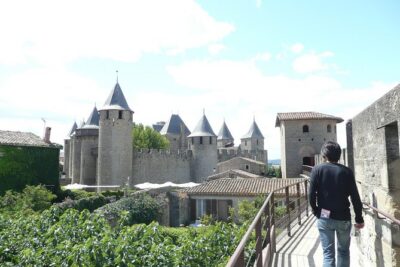
After the gate, the tour continues onto the ramparts for panoramic stretches and guided explanation. This is one of the most praised parts of the experience because it gives structure to everything else you see.
You are not only looking at stone walls. You are learning why they were built the way they were, and how the defense organization shaped movement through the city. Several guests specifically highlighted the guide’s ability to explain fortification details clearly, including the more specific architecture questions that are easy to miss when you travel on your own.
What I like about a ramparts segment on a morning tour is the balance. The views to the surrounding area, including the Aude Valley, are rewarding without the suffocating crowd pressure that shows up later in the day.
Just remember what is not included: access to battlements and the Count’s castle. So you will enjoy the rampart walk and exterior views, but you should not assume you will be going into every top level or tower area that you might see in other packages.
Inquisition residence and the medieval Bishopric: power close to the streets
Carcassonne is famous for its walls, but the real story is about power. As you continue, the route brings you to the area connected with the Inquisition’s residence and the medieval Bishopric.
This stop works well because you are still inside the same visual world as the gates and ramparts. The city’s religious and political centers are not isolated landmarks. They are part of the same medieval machine: control, influence, and authority placed right where people lived and moved.
If you like history that feels practical, this is a good angle. Instead of a lecture in one spot, you’re getting the context while you walk through the streets that shaped daily life.
More France at boulevard pace:


Basilica of Saint Nazaire: pause, look up, and understand the setting
Next comes the Basilica of Saint Nazaire. Even if you have limited time in Carcassonne, this is the kind of stop that gives the city a recognizable heart.
You will likely spend time looking at the basilica in the way a guide frames it, and you can catch the feel of why this religious building mattered inside a fortified city.
One important practical note: church schedules can affect what you can access. On a Sunday visit, access to the cathedral area was limited during mass around 11. Plan around this by arriving with the mindset that you might see the main areas the route allows, but you should expect that religious services can change entry timing.
Exteriors of the Count’s castle: see it, then keep your expectations realistic
The tour finishes with the exteriors of the Count’s castle. This is a smart move for a 90 minute morning walk because you get the silhouette and the connection to the medieval hierarchy without turning the day into a long ticket line and extra climbing.
You also get a natural next step. Once you’ve toured the city basics and fortified story, the castle exteriors make more sense. If you want to go deeper after, you can plan a separate visit focused on whatever areas open to visitors on your dates.
Since access to the castle grounds and battlements is not included, treat the castle portion as exterior viewing and context, not a full castle exploration.
Pace and comfort: why 90 minutes is the right length
Ninety minutes sounds short, but it is the sweet spot for Carcassonne. You get enough time to see the major spine of the medieval city and learn the logic behind it, without exhausting yourself before the rest of the day.
Your guide keeps things moving at an easy pace. Multiple reviews praised a pace that did not dawdle, while still letting everyone keep up comfortably. That matters because medieval streets can feel deceptively uneven and narrow.
It also helps that you start early. One key theme from the experience is avoiding the worst of the crowds and heat. If you go in the morning, you’re much more likely to enjoy the walking portion rather than rushing to escape it.
Value for $17: what you’re really buying
At $17 per person, this tour is a good value if you want orientation and context. You are paying for a licensed guide, a local specialist of Carcassonne and Cathar Country, and a route that focuses on the medieval core rather than a generic walk.
What is not included is equally important. Museum entrances are not included, and you also do not get included access to the battlements and the Count’s castle. If your main goal is museum time or ticketed castle areas, you might need separate plans.
But if your goal is to leave Carcassonne with a clear mental map, plus a better understanding of defenses, religious influence, and how the city is arranged, this is exactly the kind of ticket that pays off later when you explore on your own.
Who this tour suits best
This is ideal for:
- First time visitors who want the medieval city story early
- People who like guided explanations, especially around fortifications and how gates work
- Anyone who wants a manageable walking commitment before adding more sights later
It is not a great fit for:
- Wheelchair users
- People over 95
- Anyone expecting minimal walking or lots of long indoor time
If you are visiting with kids, it can still work well. One review noted the tour was enjoyable for a 12 year old, with history explained in a way that kept it fun even during warm weather.
Practical tips so your morning goes smoothly
Wear comfortable shoes. The medieval streets can be uneven, and you will be on your feet for the full 90 minutes.
Bring a hat, drinks, and sunscreen. Even if you start cool, the sun gets stronger quickly once the day moves forward.
If you want photos, aim to arrive with your phone or camera charged and ready, because the viewpoint moment and the early light are a real advantage of choosing the morning timing.
Should you book this early Carcassonne walking tour?
I think you should book this tour if you want your first experience of Carcassonne to be guided, focused, and calm. Starting early means you get the walls and gates when the city feels easier to take in, and the route gives you the defense and power story that makes self guided exploring afterward much more satisfying.
I would skip it only if you already know Carcassonne very well and you’re specifically hunting for ticketed access to battlements or the Count’s castle interiors. In that case, you might prefer a different plan built around those entries.
For everyone else, this is a smart buy: clear context, great timing, and a licensed local guide walking you through the medieval city before it gets too hot to enjoy the details.
Latest Carcassonne entries, notes attached





Carcassonne Tours, compared.


Carcassonne Day Trip by Coach with audio guides
Read our review →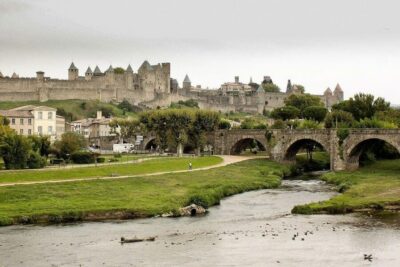
Languedoc: Tour and Tasting at Domaine de Baronarques
Read our review →
Winery Visit with Food and Wine in Carcassonne
Read our review →This tour also appears in