
Reviewed · CARCASSONNE TOURS
Carcassonne: Medieval Builder-Themed City Tour with a Guide
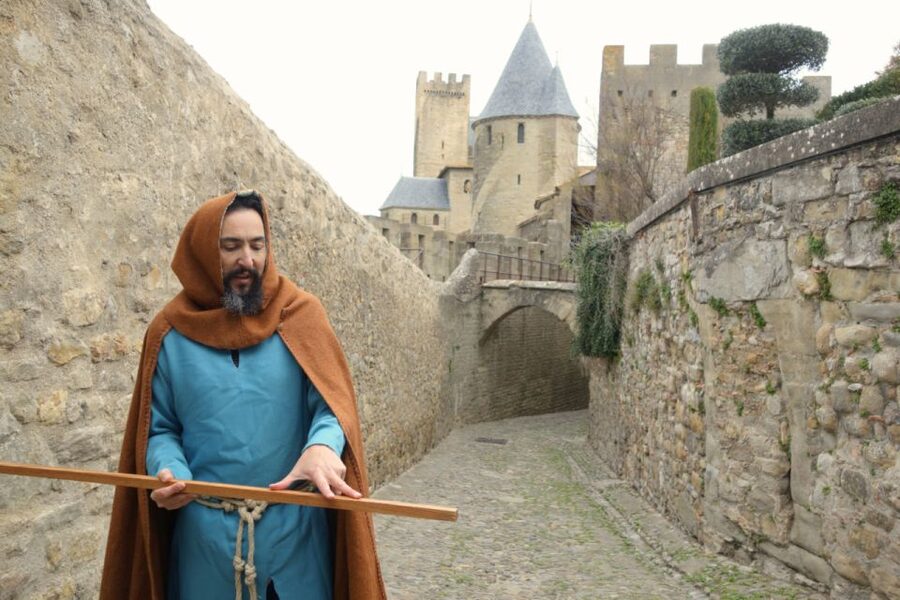
A builder in costume turns Carcassonne into a living workshop. This 90-minute, medieval-themed walk follows a 13th-century master builder, Guilhem, and uses period clothing plus hands-on style storytelling to make the city feel used, worked, and lived in. You’ll see the main defensive and religious landmarks, but more importantly, you’ll learn what those stones meant to the people building them.
I really like how the tour stays story-first. Instead of listing sights, you get day-to-day context, builder tools, and historical anecdotes that explain how a city like Carcassonne functioned in the 13th century. I also love the interactive objects element, which keeps the energy up for both adults and kids.
One consideration: the tour is in French and it is not suitable for children under 6, so it helps to have at least a basic level of French (or a strong interest in visuals and story) before you commit.
In This Review
- Key things that make this tour work
- Entering the story at Porte Narbonnaise
- Meeting Maistre Guilhem and getting the 13th-century lens
- How daily life and builder tools become the real tour
- Narbonne Gate: where stories meet city defenses
- Lices and the outer walls you can almost feel
- Comtal Castle moat: the boundary that shapes behavior
- The Basilica exterior: religion seen through builders’ eyes
- Catharism explained through Guilhem’s perspective
- What makes it fun for kids, without boring adults
- Wheelchair access and a realistic walking time
- Price and value: what $23 buys you in 90 minutes
- Tips so you enjoy the story more (no matter your French level)
- Should you book this builder-themed Carcassonne tour?
- FAQ
- Where does the tour start?
- How long is the tour?
- What language is the guide?
- Is the tour wheelchair accessible?
- Will the tour run in bad weather?
- Is it suitable for young children?
- What is included in the price?
- What is not included?
- Can I cancel or change plans?
Key things that make this tour work
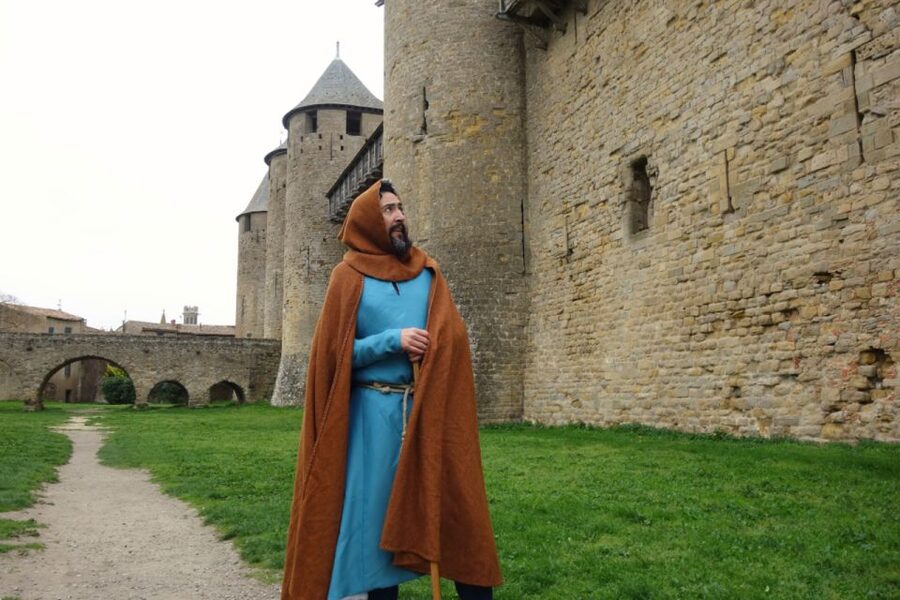
- Maistre Guilhem leads the show, with historical outfits that make the 13th century feel immediate
- Daily life and builder tools are the focus, not just architecture trivia
- Narbonne Gate, lices, Comtal Castle moat, and the Basilica exterior give you a clear city map
- Catharism history is explained through Guilhem’s perspective, so it connects to what builders understood
- Interactive historical objects help keep kids and adults engaged at the same time
Entering the story at Porte Narbonnaise
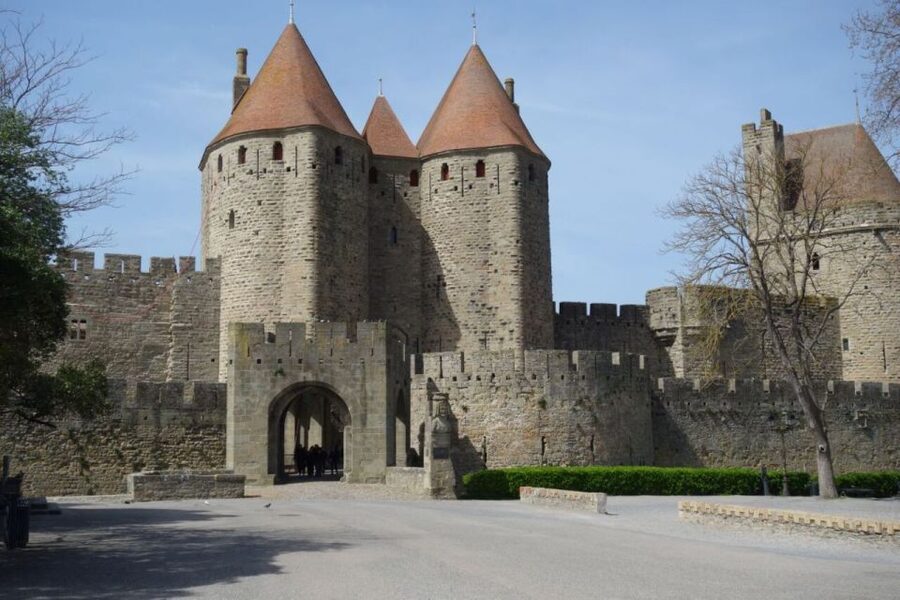
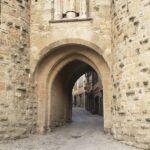
Carcassonne is famous for medieval walls, and this tour takes that advantage seriously. You start at the Porte Narbonnaise gate, right in front of the Dame Carcass statue, which makes it easy to find once you’re in the medieval core. You’re not wandering in aimless circles either, because the guide’s job is to guide your attention like a builder would, from point to point with purpose.
The tour runs about 90 minutes, and it goes rain or shine. That matters in Carcassonne because weather can shift fast. I’d plan on layers, and expect a steady walking pace for the full session, since the whole idea is to move through the city while the story stays connected.
One more practical angle: the tour guide speaks French. In one of the reviews, the performer is named Thomas, playing the role with energy that even children could follow. If your French is limited, don’t panic. You’ll still get a lot from the historical outfits, the objects you handle or see up close, and the way the guide frames each location as part of Guilhem’s working day.
Meeting Maistre Guilhem and getting the 13th-century lens
Guilhem is the core trick here, and it’s an effective one. This is not a standard lecture. The guide embodies a 13th-century master builder, described as the son of Pierre the builder, an engineer connected with King Louis IX, with an Occitan mother. That family background gives the character gravity, so when Guilhem talks about building, you feel like you’re hearing from someone who belongs in the walls.
What you should expect is a tour where history is tied to craft. You’re meant to see Carcassonne as a job site and a home base at the same time. The guide uses historical details and anecdotes to help you understand how construction shaped daily life, politics, and belief.
And since it’s a character-driven format, it can be funny without turning silly. In the reviews, people specifically point out the humor and the guide’s ability to keep children at their level, not just talking over them. That style is a real value if you’re traveling with mixed ages, because it reduces the usual split between adults who want facts and kids who want action.
More rounds of the walled city:
- Carcassonne: Castle and Ramparts Entry Ticket
★ 4.6 · 2,884 reviews - Toulouse: Carcassonne Day Trip by Coach with Audioguide
★ 4.4 · 580 reviews - Carcassonne During World War 2
★ 5.0 · 127 reviews
How daily life and builder tools become the real tour
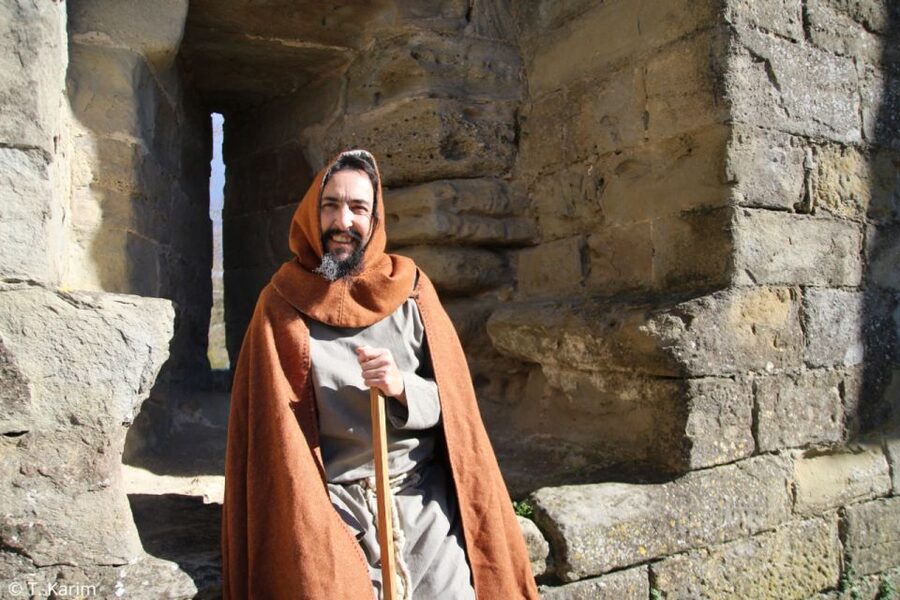
This tour’s best move is what it chooses to teach. Instead of focusing only on famous walls and towers, it zooms in on daily life and the tools of a builder in the 13th century. That shift changes how you look at everything you see afterward.
When you learn what builders used day to day, you stop thinking of Carcassonne as frozen scenery. You start thinking of it as a place where people measured, hauled, repaired, and planned. That is the connection that makes the walking tour feel more than a photo stop. It helps your brain build a “how did it work” model, and then the city landmarks start making practical sense.
The tour also uses historical objects to make those lessons tangible. Even if you’re not a history person, hands-on style learning tends to stick. For kids, it’s a natural hook. For adults, it keeps you from drifting into “yes, yes, medieval walls” mode. The tour feels more like a guided workshop talk than a museum audio track.
Narbonne Gate: where stories meet city defenses
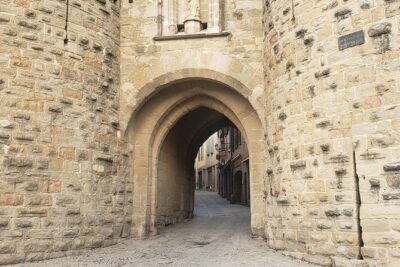
You’ll pass through and spend time at the Narbonne Gate, one of the points highlighted on the route. Gates are more than entrances. In a medieval city, they’re decision points. They control flow, help protect important access routes, and often signal how authority wants the city to look and operate.
In this tour, the guide uses the gate to connect building and security. You’re not just looking at stone. You’re listening for what a builder would care about: access, protection, and the work needed to keep a key boundary functional.
A smart way to enjoy this stop is to watch for the guide’s emphasis on why this location matters within the wider defenses. If you’re used to wandering solo through Carcassonne, you might feel overwhelmed by the scale. This tour helps you focus on the role of each spot, which is exactly what you want from a 90-minute experience.
Lices and the outer walls you can almost feel
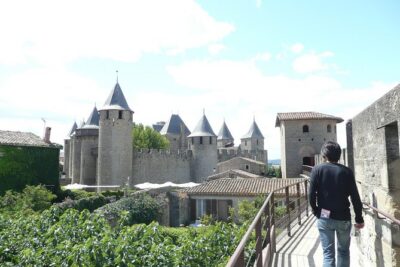
Next up are the lices, meaning the outer walls. The term can feel unfamiliar, but the concept is easy once you’re there: outer defenses act like the city’s first working layer. They take hits, manage movement, and create space where defenders can respond.
What I like about including the lices on a builder-themed tour is that the walls stop being decorative. They become systems. You’ll get the sense of how an outer layer supported the city’s larger plan and how work on walls would have been ongoing rather than finished forever.
This is also a good stretch of time for kids, because outer-wall views tend to create instant “wow.” The key is that you’re not left with only visuals. The guide ties the sight back to construction and daily life, so the experience doesn’t turn into a simple look-and-go photo stop.
Other Carcassonne bookings in the margin notes

Comtal Castle moat: the boundary that shapes behavior
You’ll also see the moat of the Comtal Castle, another named highlight. Even without going into technical detail, a moat communicates a lot. It creates separation, slows approaches, and changes how people move around the city.
From a storytelling angle, the moat is a goldmine. It lets the guide talk about the practical reality of defense, not just the romantic idea. It’s one more place where “building” becomes “strategy,” and strategy becomes daily life because everyone who lived there had to adapt to the city’s structure.
If you like history that connects to real-world constraints, this stop will land well. It’s one thing to admire medieval walls. It’s another thing to understand how a builder’s decisions shape behavior around you, even centuries later.
The Basilica exterior: religion seen through builders’ eyes
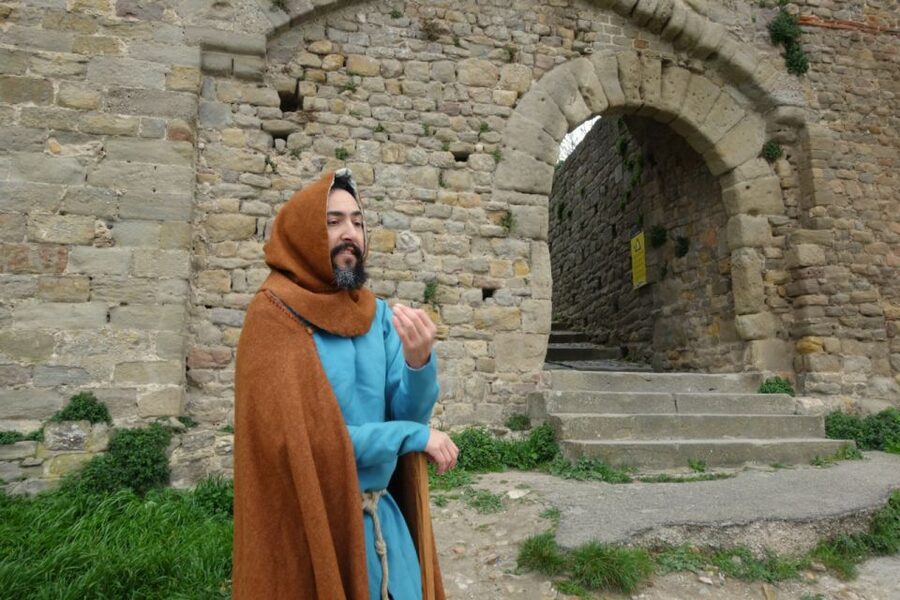
The tour also includes the exterior of the Basilica. You won’t be treated as if you’re only there to see a famous building. Instead, Guilhem’s perspective reframes it as part of the city’s construction world, not just a monument for worship.
That angle matters. Builders in the Middle Ages did not work in a separate universe. Religious sites were major projects, and the same skills and constraints applied. When the guide connects the Basilica to the broader construction story, it helps you see Carcassonne as one interconnected set of priorities: safety, work, belief, and status.
Even if you’re not fluent in French, the emphasis on objects and place-based storytelling should help you stay oriented. You’ll still get what’s happening where, and why the guide pauses at each point.
Catharism explained through Guilhem’s perspective
One of the most interesting parts of the tour is the history of Catharism, shared through Guilhem’s point of view. This is where the tour shifts from construction as a craft to construction as a cultural force.
You’ll hear anecdotes and historical framing that connect faith and conflict to the broader world of 13th-century Carcassonne. The value here is how the guide tries to make ideas feel human. Instead of dropping abstract terms, the story approach ties Catharism to the social reality a builder would have had to navigate.
Balanced note: topics like this can vary in how much detail you’ll get. Here, it’s presented as part of a story-led walk, not as a long academic lecture. If you want deep scholarship, you might treat this as a helpful orientation and then read more on your own afterward. If you want context that makes your city visit smarter, this format should work well.
What makes it fun for kids, without boring adults
A good family tour does two things at once: it gives kids a reason to pay attention, and it gives adults enough substance to feel satisfied. This one aims for exactly that.
The reviews highlight historical outfits, humor, and the guide meeting children at their level. One comment praises the way the performer interacts with kids aged 5 and 8, keeping their focus. That lines up with the tour design, which uses objects and story moments rather than long stretches of talking.
Still, there’s a boundary: it is not suitable for children under 6. That’s worth taking seriously. A story and walk format can work for older kids, but younger children may struggle with time on their feet and attention span during a character-driven history session.
For adults, the payoff is that you’re not stuck with only one tone. You’ll move between visuals, hands-on style learning, and clear explanations that help you remember what you saw.
Wheelchair access and a realistic walking time
This tour is listed as wheelchair accessible, which is a big deal for Carcassonne because uneven medieval streets can be tricky. The tour itself is about 90 minutes, so plan for a solid, steady outing.
I’d also assume you will be outside for the full session since the experience runs rain or shine. If you’re someone who hates being out in bad weather, this is where you’ll need to decide. But if you’re okay with a forecast-proof attitude, the payoff is that you still get a guided structure rather than wasting your time waiting for better weather.
Price and value: what $23 buys you in 90 minutes
At $23 per person for about 90 minutes, this tour can be good value if you want more than a self-guided wander. You’re paying for three things that matter in a place like Carcassonne: story, setup, and a guide who can connect multiple sights into one understanding.
A casual self-walk is free, sure. But it won’t explain why the guide stops at specific points, what builder tools teach you, or how Catharism fits into the 13th-century worldview. This tour tries to compress that context into a short, entertaining format.
The rating is also telling: it sits around 4.9 out of 5 from 57 reviews, with repeated praise for the guide’s performance, humor, and the sense that the tour could run longer because people want more story. While ratings are not everything, consistent comments about the guide’s ability to hold attention are a strong sign you’re buying a real guide, not just a badge and a map.
Tips so you enjoy the story more (no matter your French level)
If you want to get the most out of Guilhem’s perspective, show up ready to watch and listen closely. These small prep habits help:
- Wear comfortable shoes. You are walking through the medieval core for about 90 minutes.
- Bring a layer or rain protection. The tour runs in bad weather.
- If your French is limited, focus on the objects and the guide’s gestures. The format is designed to be visual and interactive.
- If you’re traveling with kids, remind them that they’ll see building-related items and that the guide will use humor. That helps reduce the usual “we’re just sightseeing” complaint.
Also, plan to arrive a few minutes early at the meeting point by the Dame Carcass statue near the Porte Narbonnaise. Starting on time matters for a character-led tour, because the whole story depends on keeping momentum.
Should you book this builder-themed Carcassonne tour?
Book it if you want Carcassonne to feel like a place people worked, argued, believed, and repaired, not just a skyline of pretty stone. I’d especially recommend it if you enjoy history explained through real-world craft, and if you like tours that use costumes and interactive objects to keep attention.
Skip it if you only want a quiet, purely visual walk through the sights, because the tour is clearly built around a live character and a spoken narrative in French. And if you are traveling with children under 6, it’s not the right fit.
If your goal is value for a short time in Carcassonne, this one makes sense. For a little over an hour, you get construction-focused storytelling plus named highlights like Narbonne Gate, the lices, the Comtal Castle moat, and the Basilica exterior, all connected by Guilhem’s builder viewpoint.
FAQ
Where does the tour start?
It starts in front of the Dame Carcass statue, at the Porte Narbonnaise gate in Carcassonne.
How long is the tour?
The tour is about 90 minutes.
What language is the guide?
The live tour guide speaks French.
Is the tour wheelchair accessible?
Yes, the tour is listed as wheelchair accessible.
Will the tour run in bad weather?
Yes, it takes place rain or shine.
Is it suitable for young children?
No, it is not suitable for children under 6.
What is included in the price?
You get a 1.5-hour guided tour in Carcassonne led by a professional guide wearing historical outfits.
What is not included?
Hotel pickup and drop-off and food and drinks are not included.
Can I cancel or change plans?
Free cancellation is available up to 24 hours in advance for a full refund, and you can reserve and pay later.
Latest Carcassonne entries, notes attached




Carcassonne Tours, compared.


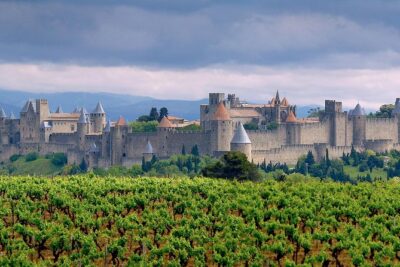
Carcassonne Day Trip by Coach with audio guides
Read our review →
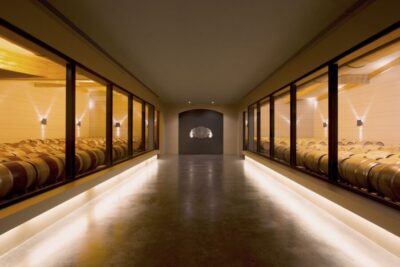
Languedoc: Tour and Tasting at Domaine de Baronarques
Read our review →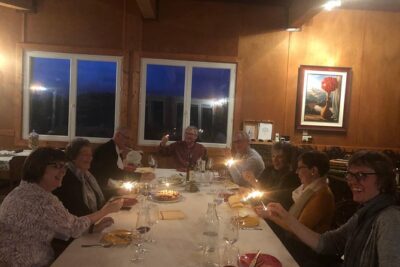
Winery Visit with Food and Wine in Carcassonne
Read our review →This tour also appears in