
Reviewed · CARCASSONNE TOURS
Medieval Carcassonne: Interactive Ghost Story & City Game
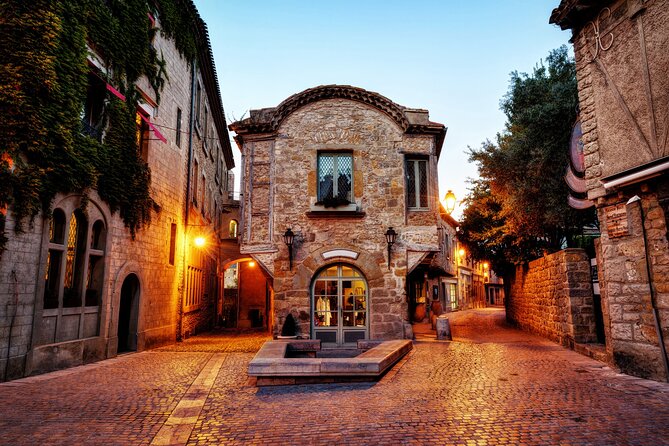
Ghost story meets city puzzles in Carcassonne. This interactive mobile game sends you along about 3 km of medieval streets, with 10 phone puzzles that turn famous landmarks and quieter corners into clues. I love that you can start anytime and play at your own pace, taking breaks and resuming later.
I also like that it feels contactless and private, with step-by-step directions inside the Questo app and no need to sync with a guide or a tour group. One thing to consider: the whole experience runs on your phone, and if your app setup or access details are off, it can waste time at the start, so plan for a smooth launch.
In This Review
- Quick Reasons This Walk Works
- Carcassonne Citadel Clues, With a Phone Instead of a Guide
- Price and Value for a 1 Hour 40 Minute Phone Quest
- How the Questo App Walk Works (and How to Set Yourself Up)
- Square Gambetta and La Bastide de Saint Louis: The Story Opens Across the River
- Notre Dame de la Santé Chapel: Plague-Era Care in a Tight Passage
- Pont-Vieux Area and the Colbert Cloth Legacy: Follow the Money Through Stone
- Saint-Gimer Church by Viollet-le-Duc: Modesty Meant in Design
- Porte de l’Aude: The Iconic Gate Overlooking the River
- The Romanesque Cathedral and Château Comtal Build Layers
- The Inquisition Museum: Dark Themes in a Real 17th-Century Building
- What I Like Most for Different Types of Travelers
- Should You Book This Medieval Carcassonne Ghost Story City Game?
- FAQ
- How long does the Medieval Carcassonne Interactive Ghost Story & City Game take?
- Can I start at any time?
- What language is the experience offered in?
- Where does it start and end?
- Are entry tickets to monuments included?
- Is this experience private for my group?
Quick Reasons This Walk Works
- Start when you want: you can begin at any hour within the day and pause whenever you need
- 10 puzzles over ~3 km: enough structure to keep moving, not so much that it feels rushed
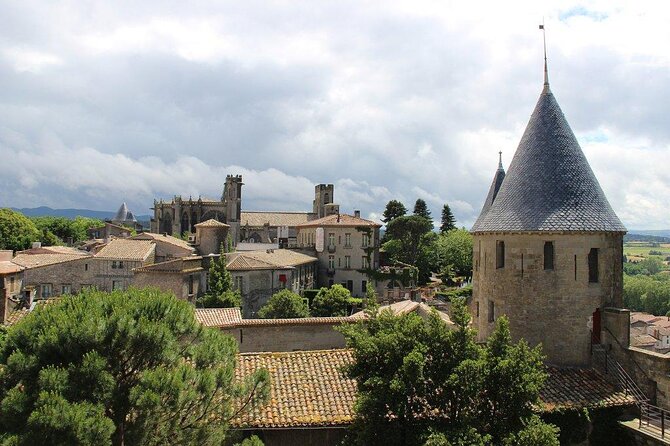
- Real places, real stories: the game points you to Porte de l’Aude, Château Comtal, and more
- Tragic history themes: medieval persecutions and the Inquisition Museum add weight to the plot
- No tickets included for monuments: you are walking the city, but entry may be separate depending on what you choose
Carcassonne Citadel Clues, With a Phone Instead of a Guide
This is a self-guided city game built around the medieval heart of Carcassonne. You follow instructions on your phone and answer a set of interactive puzzles along the way, covering around 3 km. Expect a mix of big landmark moments and smaller, story-rich details you might otherwise miss on a quick stroll.
What makes it interesting is the way the game turns history into a scavenger hunt. You are not just looking at stone and walls, you are hunting for answers that connect those places to darker chapters, including plague-era care and later persecutions tied to the Inquisition. The result is that Carcassonne feels active, not static.
You should also know the tone. This is not a light Halloween-style game. The content includes torture-instrument history in the Inquisition Museum, and the medieval backstory includes suffering and persecution. If you are traveling with sensitive kids, you may want to preview the vibe first and adjust how long you spend at darker stops.
Price and Value for a 1 Hour 40 Minute Phone Quest
At about $6 per person, the value is mostly in what you get for so little cash: 10 interactive puzzles, step-by-step guidance, and the freedom to start and stop. For a short time investment of roughly 1 hour 40 minutes, you are covering multiple key sights without paying for a conventional guided tour.
The tradeoff is that it is still a phone-first experience. There is no physical guide here, and entry tickets to monuments or attractions are not included. That means you should treat this as city walking with app-based prompts, and then decide separately if you want to pay for any paid interior visits.
If you like to wander, but also like a game to keep you moving, this price point is friendly. If you want a classic narration experience with a human guide, you may feel underwhelmed because the phone is doing the work.
More rounds of the walled city:
- Carcassonne: Castle and Ramparts Entry Ticket
★ 4.6 · 2,884 reviews - Toulouse: Carcassonne Day Trip by Coach with Audioguide
★ 4.4 · 580 reviews - Carcassonne During World War 2
★ 5.0 · 127 reviews
How the Questo App Walk Works (and How to Set Yourself Up)
You start at Square Gambetta and end at Château Comtal. The route is guided by the Questo app step by step, with the phone acting like your navigation, your puzzle hub, and your storyline guide. You can play anytime and pause and resume later, which is a big deal if you are managing schedules or battery life.
Plan for a stress-free start:
- Download and open the app before you go, so you are not fighting with installs in the middle of your walk.
- Keep the access details your booking provides handy, especially anything linked to unlocking the quest. A few guests reported major delays when access details did not line up.
- Bring a charger or power bank, because a single long day or an app that needs a lot of screen time can drain a battery faster than you expect.
Also, language is listed as English. Some people wanted more language options, so if English is not your strongest language, you may be relying on translation during the game.
Square Gambetta and La Bastide de Saint Louis: The Story Opens Across the River
Square Gambetta is where your walk begins, on the far side of the river Aude, facing the famous Cité. It is more than just a starting point. This area marks the edge of the old walled city called La Bastide de Saint Louis, built by King St. Louis of France.
In the game, this stop acts like your warm-up. You are encouraged to look around and find answers to move forward. Practically, it helps you get your bearings quickly: you learn the direction of travel early and you start noticing city features the game expects you to spot.
A drawback to keep in mind: because it is a phone puzzle route, you will be looking for clues constantly. If you prefer pure sightseeing with minimal screens, you might find yourself splitting attention between the view and the phone. Still, this first section is a useful way to ease into the rhythm.
Notre Dame de la Santé Chapel: Plague-Era Care in a Tight Passage
Next you get a quieter, more specific stop: Notre Dame de la Santé, a small chapel tied to the plague years. The chapel was built in 1527 using money from the legacy of Jean de Saix, and it served as a hospital for people suffering from the plague. The location matters too. It sat strategically in a narrow passage between fortified buildings.
In a normal tour, a chapel like this can blur into the background. In this game, it becomes plot. The puzzle at this stop asks you to look closely around the area to find the answer, which pushes you to read the space rather than just pass it.
If you travel with kids, this kind of historical micro-stop can be both a plus and a challenge. It is fascinating when you can connect the story to what you see. It can also feel like a lot of reading and spotting with a smaller payoff than the bigger gates.
Other Carcassonne bookings in the margin notes

Pont-Vieux Area and the Colbert Cloth Legacy: Follow the Money Through Stone
At the foot of the Pont-Vieux, you reach another stop where the game uses buildings as evidence. A facade here points to a prosperous period for the city. The building was once home to a noble Carcassonnaise family. In 1694, it was bought by someone close to Colbert, who founded a cloth factory on site.
That factory received the title Manufacture Royale in 1696. The game nudges you toward the key detail that survives from this era: the owners’ residence is the only building dating from that period still visible. From a sightseeing standpoint, this is a great reminder that the medieval city did not freeze in time. Wealth, industry, and royal influence continued shaping Carcassonne long after the original walls went up.
One practical note: this stop is more about reading and noticing than taking big photos. If you like architecture and civic history, it will land well.
Saint-Gimer Church by Viollet-le-Duc: Modesty Meant in Design
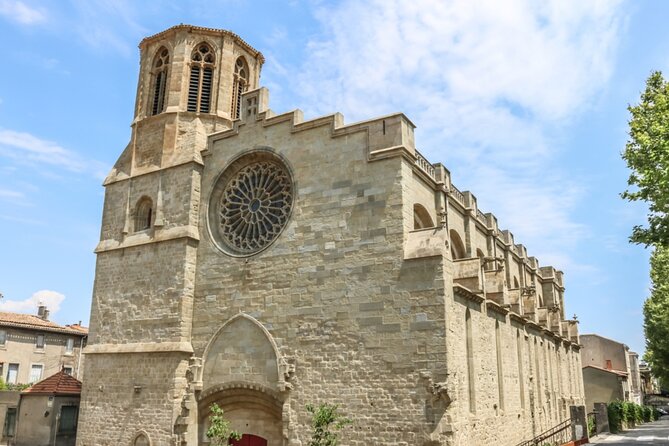
Then you step into religious architecture with a specific 19th-century fingerprint. Church Saint-Gimer was built between 1854 and 1859 by architect Eugène Viollet-le-Duc. The design goal included modesty, so it is not trying to outshine the older medieval world by sheer drama.
The church layout is described with a level of detail that the game uses to guide your attention: it has a nave and two aisles, plus a polygonal apse placed on two vestries, and it is preceded by a porch.
This stop is one of the better examples of why the app works for more than one kind of traveler. If you like medieval, you still get the medieval setting. If you prefer to mix eras and understand how cities evolve, this church gives you a real time marker of the 1800s.
Porte de l’Aude: The Iconic Gate Overlooking the River
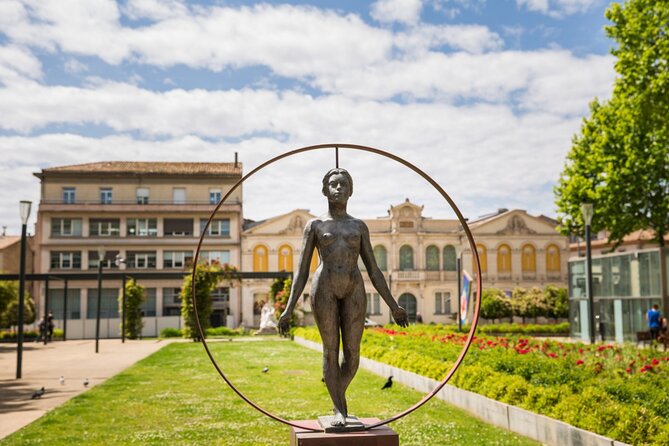
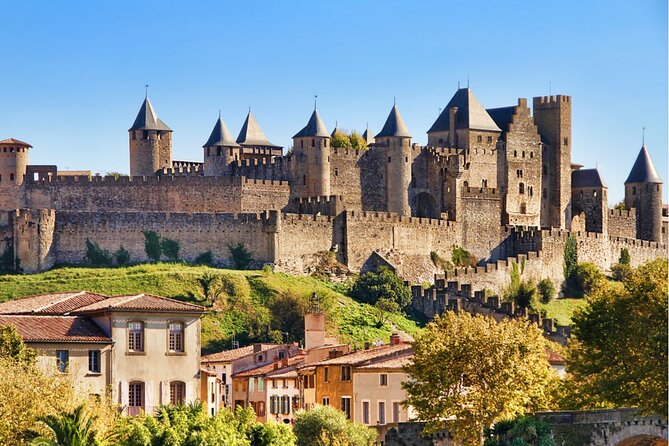
Porte de l’Aude is a preserved medieval walled-city gate, and it overlooks the river. Gates are powerful in any city because they tell you where movement was controlled. In Carcassonne, seeing it from the right angle helps you understand how the city faced outward to travel routes and water.
In the game, this stop again becomes a puzzle moment. You are encouraged to look around and find the answer tied to the gate. That turns a photo-op into a comprehension exercise, which helps you remember the place later.
If you want a small tip: watch how the gate frames the river view. Even without any paid entry involved, it is one of those moments where the scenery gives context to the architecture.
The Romanesque Cathedral and Château Comtal Build Layers
From here, the route connects into two of the most meaningful structural anchors in the upper area: the Romanesque cathedral complex and Château Comtal.
The Romanesque cathedral build started in June 1096. Later additions shaped the complex: a lady chapel was added in the early 15th century. You also have references to an infirmary and chapel built by Bishop Radulph in the 1260s. If you like tracing history by construction phases, this is a solid section because the game’s story gives you dates to attach to what you see.
Then you reach Château Comtal, built in the 12th century by Bernard Aton Trencavel over the western part of the Roman walls. This pairing is smart because you end in the castle with a sense of layers already in your mind. You are not just finishing at a pretty destination. You are finishing at a key power symbol, built on older foundations.
The Inquisition Museum: Dark Themes in a Real 17th-Century Building
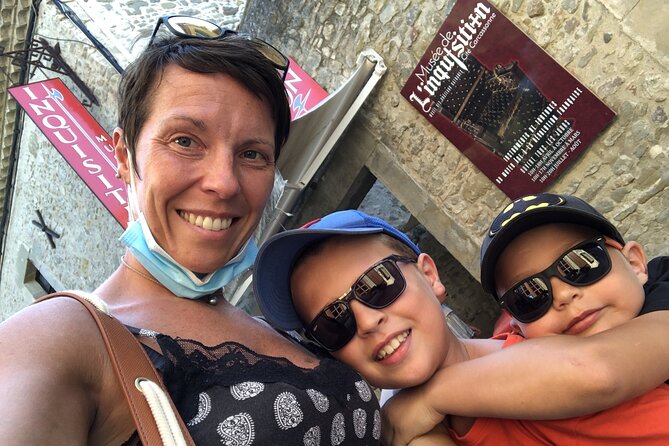
Your walk also links you with the Inquisition Museum, located in a large 17th-century building. The museum presents a collection of instruments of torture ranging from the 12th century up to the French Revolution. The experience is also completed by characters who played important roles, with biographies and explanations tied to the period.
It also includes history of the main Cathar castles, connected to the broader story of the Inquisition. If you came for atmosphere and puzzles, this is where the game becomes more serious and more historically heavy.
Two practical considerations:
- Decide in advance how long you want to spend at the museum, because the content is not light.
- Remember that monument or attraction entry tickets are not included, so if the museum requires a separate ticket, you may need to pay on top of the $6 game price.
If you are interested in medieval power struggles and why religious conflict mattered politically, this section can be the most memorable part of the whole walk.
What I Like Most for Different Types of Travelers
This game fits best when you want history with structure. The puzzle format helps you move through the city rather than getting stuck at only the biggest sights. And because you can pause and resume, it works well for people who travel with slower mornings or tight logistics.
Here is how I’d place it by travel style:
- Couples and solo travelers who like self-guided exploring: ideal. It gives you direction, without forcing you into a group schedule.
- Families: it can work as a family moment, but the game can be more complicated with younger kids who lose patience or energy. If your kids can handle reading and simple problem-solving on a phone, you are more likely to enjoy it.
- Architecture and city-history fans: very strong match. Stops include specific creators like Viollet-le-Duc and specific historical links like Manufacture Royale.
On the flip side, if you came expecting a traditional audio guide or a tour narration, you may feel disappointed. The experience is puzzle-led through the app, not a classic audio sightseeing format.
Should You Book This Medieval Carcassonne Ghost Story City Game?
Book it if you want a low-cost way to see Carcassonne with more attention than a basic walk. At around $6, the combination of 10 puzzles, a guided phone route, and the freedom to start and pause makes it good value, especially for travelers who like active learning.
Consider skipping or pairing it with another plan if:
- You dislike tech puzzles or you know your phone battery struggles on long days.
- You want a human guide for context and smooth storytelling. This is contactless and guide-free by design.
- You are not comfortable using English, since English is the only listed language and some visitors asked for more.
If you do book, give yourself time at the start to get the app working and double-check your access details. Once you are rolling, this kind of game is one of the easiest ways to make Carcassonne feel like a living story instead of a static postcard.
FAQ
How long does the Medieval Carcassonne Interactive Ghost Story & City Game take?
It takes about 1 hour 40 minutes.
Can I start at any time?
Yes. You can start at any hour, and you can pause and resume later.
What language is the experience offered in?
The mobile escape game is offered in English.
Where does it start and end?
It starts at Square Gambetta and ends at Château Comtal.
Are entry tickets to monuments included?
No. Entry tickets to monuments or attractions are not included.
Is this experience private for my group?
Yes. It is a private, contactless experience, and only your group participates.
Latest Carcassonne entries, notes attached






Carcassonne Tours, compared.


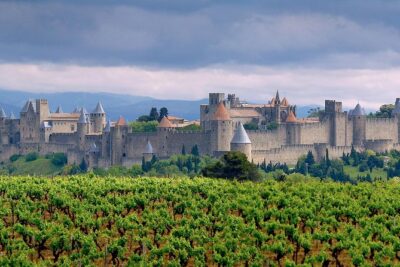
Carcassonne Day Trip by Coach with audio guides
Read our review →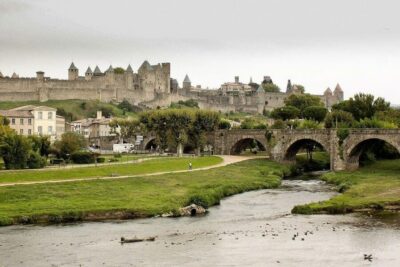
Languedoc: Tour and Tasting at Domaine de Baronarques
Read our review →
Winery Visit with Food and Wine in Carcassonne
Read our review →This tour also appears in