
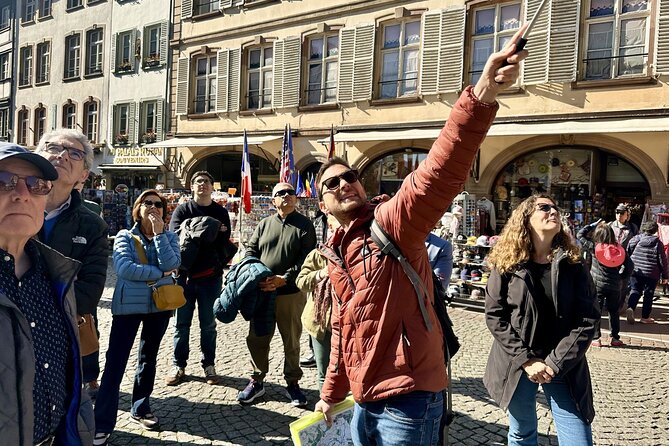
Reviewed · ALSACE TOURS
Strasbourg Historic Two-Hour Walking Tour with Local Guide
Strasbourg clicks into focus fast on this walk. It is a 2-hour guided route that helps you see the big signatures and a few easy-to-miss corners, all in English. I like that it’s paced for first-timers, with stops that build a clear mental map. I also like the guide style that can handle real weather and still keep the group moving, including sound that actually works. One thing to plan for: some major sights you’ll pause at are not included for entry, so you may want to decide on the spot what you tackle.
You get to choose morning or afternoon timing, which is handy if you want this tour as your first or second day plan. Expect a central walk with a satisfying arc, starting around Rue des Grandes Arcades and ending in Petite-France. If it is truly cold, rainy, or windy, the tour still runs only when conditions allow, so bring a layer and shoes you trust.
In This Review
- Key highlights you will feel immediately
- Why this 2-hour Strasbourg walk is such a smart first move
- The route flow, from Rue des Grandes Arcades to Petite-France
- Place Kléber to Cathedrale Notre Dame, the skyline lesson
- Maison Kammerzell and Palais Rohan, power and craft in one corridor
- Place du Marché aux Cochons de Lait and why the river matters
- Barrage Vauban, terrace views that pay off your steps
- Place Gutenberg back into Place Kléber, city life between photos
- La Petite France, the neighborhood that makes the whole tour click
- Tickets and entry reality check, what is free versus paid
- The guide experience in English, and why the style matters
- Pacing, weather, and comfort for a 2-hour walk
- Is the $22.93 price actually good value?
- Who should book this tour, and who might want a different option
- Should you book the Strasbourg Historic Two-Hour Walking Tour with Local Guide?
- FAQ
- How long is the Strasbourg Historic Two-Hour Walking Tour?
- What is the price per person?
- Is the tour offered in English?
- Is there a mobile ticket?
- Where does the tour start and where does it end?
- Are there any entrance fees during the tour?
- How big is the group?
- What weather is required?
Key highlights you will feel immediately
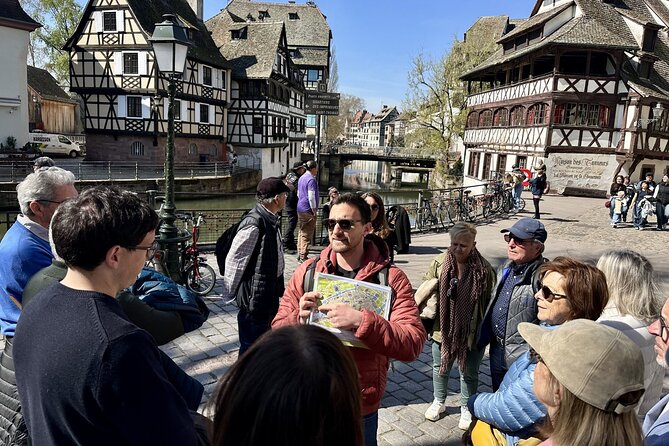
- A tight highlights circuit in 2 hours that helps you orient the whole city fast
- Cathedrale Notre Dame’s scale, detail, and ever-changing rose window colors
- German Renaissance and classic power in Maison Kammerzell and Palais Rohan
- Views that reward your walking from Barrage Vauban toward Petite-France
- A practical ending in La Petite France where you can keep exploring on foot
Why this 2-hour Strasbourg walk is such a smart first move
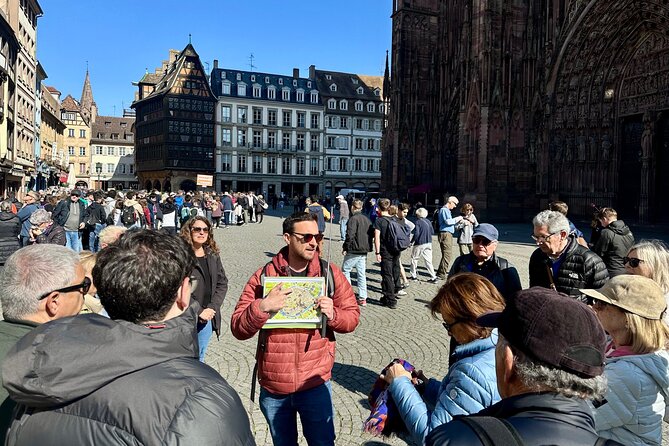
If Strasbourg is your first stop in Alsace, this kind of tour is pure value. In two hours, you are not trying to “do everything.” You are doing the right things in the right order so the old town starts making sense.
What makes it work is the mix of sight types. You get the headline architecture, like the cathedral, but you also get the river, bridges, and neighborhood textures that make Strasbourg feel different from other French cities. That matters because Strasbourg is all layers: French, German, Catholic, Protestant, trade, defense, and craft. Even when you are not going inside every building, the exterior details tell that story.
This is also a good choice if you have limited time and want one “anchor plan” for the day. You can schedule it early to guide the rest of your sightseeing, or later to help you connect dots you missed on your own.
The route flow, from Rue des Grandes Arcades to Petite-France
The walk starts at the Sapin de Noël de Strasbourg, 15 Rue des Grandes Arcades. Yes, that name screams Christmas, but it is a real central landmark in the heart of the historic core. Ending in Petite-France is a smart finish because it drops you exactly where you likely want to wander next, with canals and half-timbered houses close at hand.
Also, the group size stays small, with a maximum of 30 people. That keeps the pacing manageable and helps the guide keep track of everyone. And since it is an English tour, you can spend your energy looking up, not translating in your head.
One practical plus: the ticket is mobile, so you are not hunting for paper.
More France at boulevard pace:
- Strasbourg: Walking Tour with a Local Guide
★ 4.3 · 607 reviews - Strasbourg: Walking Tour with Local Guide
★ 5.0 · 598 reviews - Strasbourg: Guided Historical Neighborhoods Walking Tour
★ 4.9 · 275 reviews
Place Kléber to Cathedrale Notre Dame, the skyline lesson
Most tours start with a photo spot. This one starts with a place that actually matters. At Place Kléber, you get a brief intro to Strasbourg’s most important square, and it sets the tone for the whole walk. You are learning where you are standing before you start moving, which makes the rest of the stops feel less random.
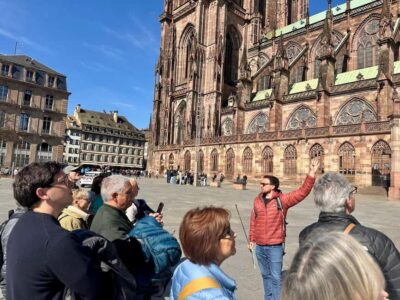
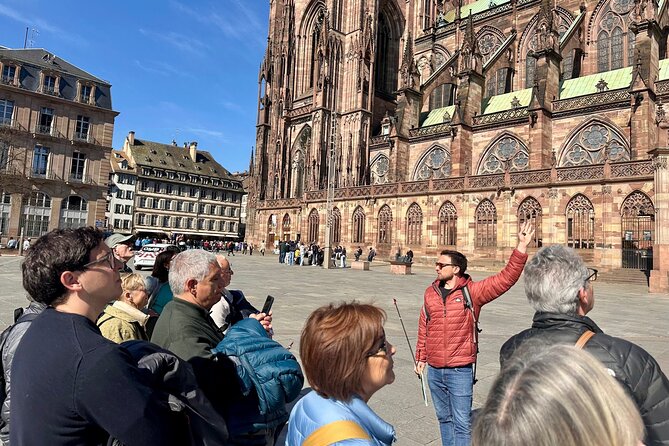
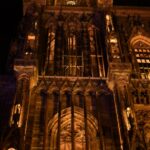
Then you hit the cathedral, Cathedrale Notre Dame de Strasbourg. From the outside, you get a real sense of scale. The tower reaches 142 meters, and it was the tallest in the world for centuries. That might sound like a trivia line, but it changes how you read the building. You see why everything around it feels smaller and why the city grew around this kind of statement.
The facade sculptures are also a highlight. You are not only noticing Gothic drama. You are seeing a narrative, with biblical stories told in stone. And then there’s the rose window. It’s described as an explosion of color and geometry, and the key detail I’d watch for is the material effect: the pink sandstone shifts tone depending on daylight. If the weather gives you a decent break, that changing color is a fun way to see the cathedral as a living landmark, not a static postcard.
How long you pause here is short, around 15 minutes. That is good for keeping the tour moving, but it does mean you will mainly take in exterior views.
Maison Kammerzell and Palais Rohan, power and craft in one corridor
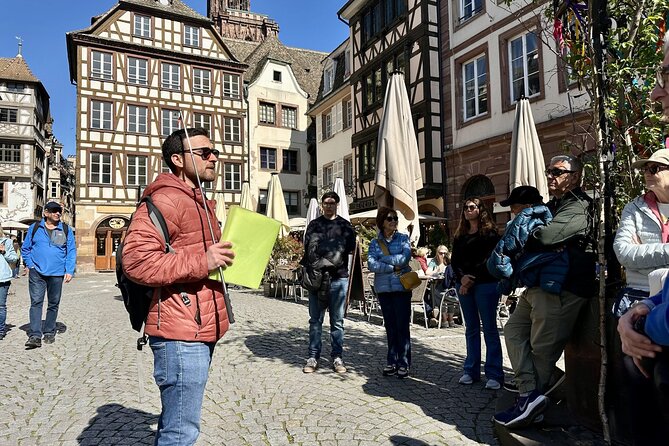
Right across from the cathedral is Maison Kammerzell, a 15th-century house with half-timbered architecture and serious decoration. This stop is quick, about 10 minutes, but it’s the kind of building you can’t ignore once you start looking closely.
The house is known for carved wood sculptures, stained glass windows, and high, pointed ceilings. Even from outside, you can spot the “loaded” look that makes it feel like a medieval showpiece. It is also described as one of the best preserved medieval houses in the city and a fine example of German Renaissance style. That mix is part of Strasbourg’s identity: you are standing in France, but you are also seeing the Central European influence that shaped local design.
Next up is Palais Rohan, an 18th-century classicist building that used to be the residence of prince-bishops. This is a useful contrast after the cathedral. Gothic energy is detail, height, and story. Classicism is order, symmetry, and controlled elegance. Looking at the symmetrical facade helps you understand how religious and political power liked to present itself in different eras.
From the outside, you can spot carved stone details and wide windows that reflect that aristocratic past. The stop is about 15 minutes, and it is another exterior-focused moment. If you love architecture, it is still worth it because you start recognizing how different styles behave in the same street scene.
Place du Marché aux Cochons de Lait and why the river matters
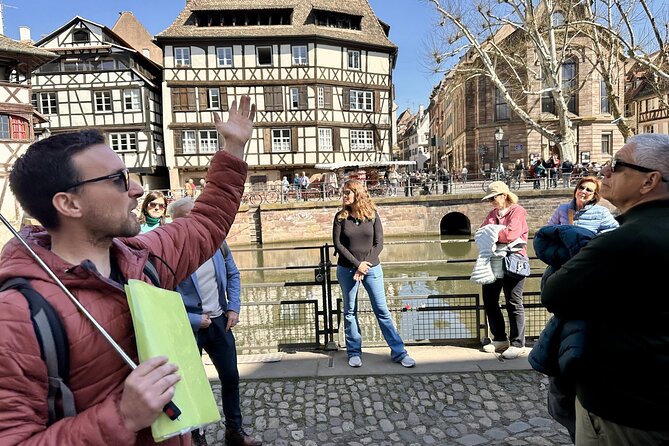
At Place du Marché aux Cochons de Lait, you get a small cobbled square bordering the Ill River. The buildings around it are pastel-hued, and the vibe is relaxed enough that you can slow down just a bit without feeling behind schedule.
This stop is practical because it frames two different Strasbourg experiences. First, you get a view toward Rohan Palace. Second, you can look out toward tourist boats that cross the canals and river. Even if you do not ride a boat, you start to understand how water connects the city.
It’s only about 10 minutes, so treat it like a reset. Take a couple of photos, check the angle of the river, and mentally store the direction. When you reach later viewpoints, you’ll have an easier time matching what you see to what you walked through.
More centuries, footnoted:
Barrage Vauban, terrace views that pay off your steps
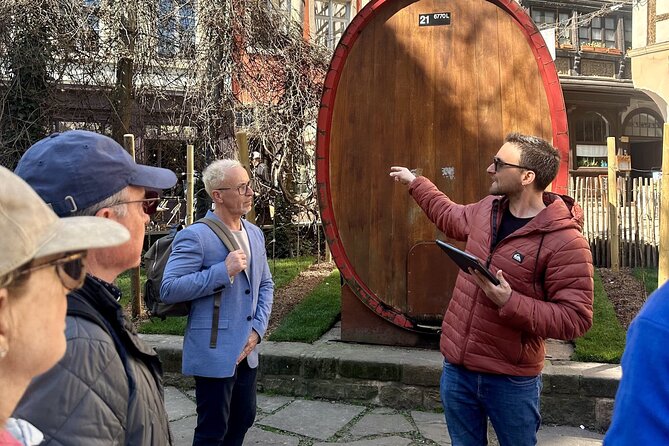
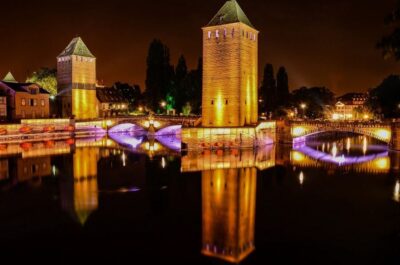
Then you reach Barrage Vauban, a 17th-century defensive structure that works like an arched dam controlling water flow. From the outside, it looks like a striking piece of engineering, not just an old bridge-like structure.
The tour includes time for a terrace view. From there, you get a spectacular look over Petite France and the towers of covered bridges. This is one of the moments where Strasbourg suddenly feels bigger than the streets you walked. You’re looking at canals, rooftops, and the shape of the neighborhood.
This is also where the tour’s “guided for value” design shows. If you are exploring on your own, you might pass by the dam, take one quick picture, and move on. With a guide, you know what you’re seeing, and you know where to stand for the best view. Plan for around 15 minutes at this stop.
Place Gutenberg back into Place Kléber, city life between photos
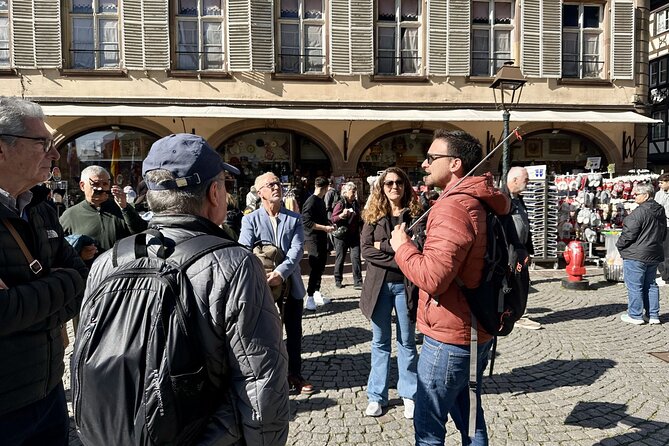
After Barrage Vauban, the walk loops toward the center again. You return to Place Kléber for a second pass. Here you see the largest and most modern square in the center, surrounded by classic buildings and shops. It’s described as the heart of urban life, and that’s true in the sense that people use it, not just admire it.
There’s also the statue of General Kléber, and at Christmas the huge Christmas tree of Strasbourg is installed here. Even if you are not visiting in winter, the point is the same: this square is where local life compresses into one easy-to-find location.
Next is Place Gutenberg, dedicated to the inventor of the printing press, with his statue in the center. Around the square are neoclassical buildings and half-timbered houses, which keeps the theme of overlapping eras alive. Like Place Kléber, it can also turn into a market zone at certain seasons, including a Christmas wheel and market setup. In summer or a normal week, it’s still a lively meeting point where you can orient yourself if you continue exploring afterward.
This section is about stepping back into the city’s rhythm. You’ve looked at big religious and civic statements. Now you’re seeing daily Strasbourg scale.
La Petite France, the neighborhood that makes the whole tour click
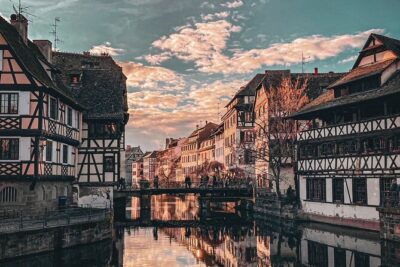
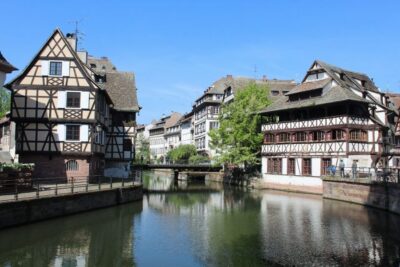
La Petite France is the end of the walking tour, and it’s the part people remember. It’s described as the most picturesque neighborhood with half-timbered houses, sloping ceilings, and flowery balconies. Canals run through it, giving the whole area a storybook feel.
The guide framing helps. You’re not just seeing pretty buildings. You’re learning that different trades lived here, including millers, tanners, and fishermen. That detail makes the neighborhood feel less like a theme set and more like a working district that evolved.
The tour gives about 15 minutes here, with free time to take in the streets from outside. It’s also an ideal ending because you can choose your next move immediately. If you want to keep walking, the streets pull you. If you want a café stop, you’re in a very tourist-friendly area for it.
Tickets and entry reality check, what is free versus paid
A key planning factor is admissions. Some stops are free with no entry ticket required, while a few are marked as not included.
What to expect from the stop set:
- You pause for Cathedrale Notre Dame de Strasbourg from the outside, but admission is not included.
- Maison Kammerzell is also not included.
- Palais Rohan is not included.
Other stops like Place Kléber, Place du Marché aux Cochons de Lait, and Barrage Vauban are free to enjoy from the outside, with terrace viewing included as part of the stop.
How you should use that: go into the tour knowing you will likely see the key sights exterior-first. If you want to pay for interior access, you can decide during the tour based on time and your interest level.
If you love architecture and want maximum inside time, you might pair this with separate tickets later the same day or the next morning.
The guide experience in English, and why the style matters
The tour’s biggest “feel” factor is the guide. The feedback consistently points to guides who combine strong city storytelling with real warmth. Names you may see tied to this experience include Stefania, Stef, and Laila (also spelled Leila in one set of notes).
A few practical takeaways from how these guides are described:
- They tend to keep explanations engaging, not stiff.
- They often use humor to make the details stick.
- Even in cold, windy, rainy conditions, the group still gets heard, thanks to a sound system.
- In at least one case, the guide impressed the group by remembering names quickly after an introduction.
You should also expect a presentation style that works for a mixed group of ages and interests. That’s not guaranteed for every guide, but it’s the consistent pattern in feedback tied to this tour.
Pacing, weather, and comfort for a 2-hour walk
This is a walking tour, about 2 hours, so pace matters. The stops are short enough that you are moving through a lot of important ground, but long enough to actually absorb what you came for.
The tour specifically notes good weather. That’s realistic for Strasbourg, especially with wind off the river. If the day looks questionable, do yourself a favor:
- Bring a warm layer and rain protection.
- Wear shoes with grip for cobbled areas.
- Keep your phone charged for photos, since the rose window and canals can look different minute to minute.
Also, because some stops include terrace time, you’ll want to move confidently when you get to viewpoints.
Is the $22.93 price actually good value?
For $22.93 per person, you are paying for a very efficient combination: a local guide, English interpretation, and a curated route that hits multiple top-tier sights plus the river viewpoints that many people skip.
Compared to DIY wandering, the value comes from three things:
- Time saved. In two hours, you’re covering major landmarks without needing to plan the order.
- Interpretation. Exterior viewing becomes meaningful when you know why details matter.
- Flow. Ending in Petite-France is a smart design, because it continues your trip naturally.
The one tradeoff is that some entrances are not included. If you plan to go inside all paid sights, your total day cost will rise. If you are happy with exterior views and use interior access as optional bonuses, the tour price stays a strong deal for what you see.
Who should book this tour, and who might want a different option
This tour fits best if you:
- Are in Strasbourg for the first time and want a fast orientation
- Like architecture and city design, not just museums
- Want one guided plan that links together cathedral, riverside, and the famous neighborhood
It may feel fact-heavy if you want a lighter, more snack-and-stroll vibe. One set of feedback suggested kids might find the historical facts less fun than the adults did. If you’re traveling with young kids, you might still enjoy it if they are patient, but keep expectations realistic.
Also, if you strongly prefer uninterrupted interior visits, consider building the plan around paid sites separately. This walk is built for outside highlights and views.
Should you book the Strasbourg Historic Two-Hour Walking Tour with Local Guide?
I recommend booking it when you want Strasbourg to make sense quickly. The route is efficient, the sights are exactly the kind that anchor a first trip, and the ending in Petite-France is an excellent payoff. The guide-led storytelling is a big part of why it works, especially if you get a guide like Stefania or Laila who brings energy, humor, and clear city context.
Book it if:
- You have about two hours to spare
- You want a strong start for the rest of your day
- You like guided walking with exterior architecture and scenic viewpoints
Skip or adjust if:
- You hate walking in cooler or wet weather
- You only want paid interior access and no outside viewing
- You are traveling with kids who need shorter attention spans
If you can handle a brisk, organized walk, this is a solid way to get oriented, take great photos, and leave with a clear sense of why Strasbourg looks the way it does.
FAQ
How long is the Strasbourg Historic Two-Hour Walking Tour?
It lasts about 2 hours.
What is the price per person?
The price is $22.93 per person.
Is the tour offered in English?
Yes, it is offered in English.
Is there a mobile ticket?
Yes, the tour uses a mobile ticket.
Where does the tour start and where does it end?
It starts at Sapin de Noël de Strasbourg, 15 Rue des Grandes Arcades, Strasbourg, and it ends in Petite-France, Strasbourg.
Are there any entrance fees during the tour?
Some stops are free to enjoy from the outside, while others have admission not included, including the Cathedrale Notre Dame de Strasbourg, Maison Kammerzell, and Palais Rohan.
How big is the group?
The tour has a maximum of 30 travelers.
What weather is required?
The experience requires good weather. If it is canceled due to poor weather, you will be offered a different date or a full refund. Service animals are allowed, and most travelers can participate.
Latest Strasbourg entries, notes attached




Alsace Tours, compared.

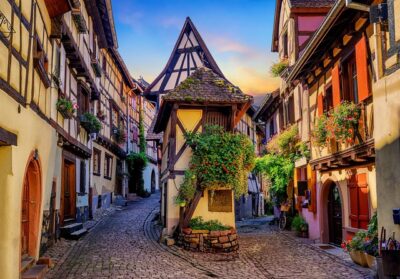
Colmar, Medieval Village & Castle Small Group from Strasbourg
Read our review →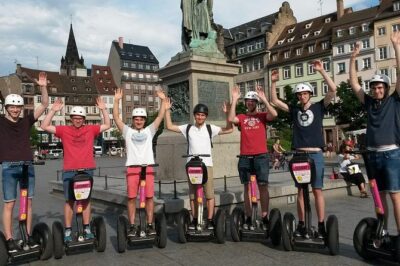
Strasbourg Food Tour – A Taste of Tradition by Do Eat Better
Read our review →
This tour also appears in