
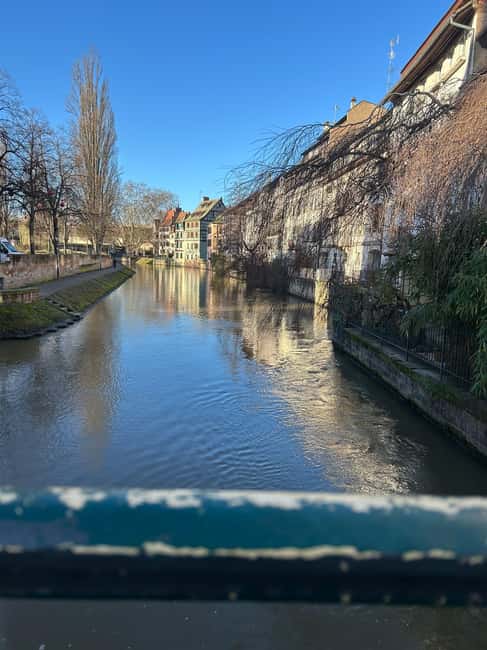
Reviewed · ALSACE TOURS
Walking tour of the city center
One hour in Strasbourg goes fast, in the best way. This small-group walking tour is built for quick cultural hits, with guided stops plus a small tasting of local products as you discover the city center. You get to uncover secrets without feeling rushed at every corner, because the guide threads in photo breaks and clear explanations.
My favorite part is the tight pacing, you cover major sights while still getting enough context to make them click. The one thing to keep in mind is the time limit, this is a guided walk with fixed stops, so if you want a long, slow cathedral visit on your own, this format may feel a bit short.
In This Review
- Key things that make this tour worth your time
- Strasbourg City Center, Guided in Just One Hour
- Meeting at Hotel d’Alsace, Then Getting Oriented at Barrage Vauban
- Petite France for 20 Minutes: How to Learn Without Feeling Lost
- The Cathedral Stop: Clear Explanations in a Short Window
- Saint Thomas Square and Gutenberg Square: The In-Between Stops That Matter
- Place Kléber Finish: Ending at the Right Hub
- Included Tasting: A Small Break That Helps the Whole Tour Click
- Pace, Photos, and Group Size: What You Should Expect While Walking
- Who This Tour Is Best For (and Who Might Want More Time)
- Book It or Skip It? My Practical Take
- FAQ
- How long is the Strasbourg city-center walking tour?
- Where does the tour start?
- Where does the tour end?
- What is included in the $23 price?
- What languages are offered for the live guide?
- Is the tour wheelchair accessible?
Key things that make this tour worth your time
- Small group of up to 10, so questions do not get lost
- Stops that build a map, from Barrage Vauban through Petite France and the Cathedral to Place Kléber
- A included local tasting, so you learn with your taste buds, not just your eyes
- Photo breaks built in, so you can actually capture the moments without interrupting the flow
- English, French, and German live guiding, handy if you want to switch languages during the walk
Strasbourg City Center, Guided in Just One Hour
If you are short on time in Strasbourg, this is the kind of plan that saves you from wandering randomly. The whole experience is about one hour long, and it is intentionally compact: you start at the Vauban dam area, walk into the historic heart, and end at Place Kléber.
For $23 per person, you are not just paying for movement from stop to stop. You are paying for structure, the guide connects what you see to the story of the central sites, and you get a small tasting thrown into the mix. That matters because Strasbourg’s center can feel like a blur if you do not have a narrative to hold onto.
The group size is capped at 10 participants, which is a big deal for a city-center walking tour. You can ask questions, you can hear answers, and you do not spend your time trying to catch up with a crowd. It is also wheelchair accessible, so it is a solid option when mobility is a concern.
Language coverage is another practical win. The live guide offers English, French, and German, and you may see some content shown in its original language. If you want everything explained purely in one language, pick the guide language that matches your comfort level and use questions to fill gaps.
Meeting at Hotel d’Alsace, Then Getting Oriented at Barrage Vauban
Your tour starts in front of the Hotel d’Alsace, at 1 place du Quartier Blanc, right by the entrance area for the Vauban dam. Another way it is described is as being in front of the departmental building opposite the Vauban dam entrance. Either way, the key is simple: look for the guide at the Vauban dam side, not somewhere deeper in the square.
A short guided moment here matters more than you might expect. The Barrage Vauban stop is about 5 minutes of guidance, and it sets the tone for the entire walk. You are not starting with a random photo spot. You are starting with a reference point that helps you understand what you are seeing as you move through the center.
Arrive with one practical mindset: this tour is brief, so your timing should be precise. If you can, give yourself a little buffer to find the exact meeting frontage and get settled before the guide begins introducing themselves. Once you are moving, you will have a rhythm of short on-foot segments and guided explanations, rather than long waiting periods.
More France at boulevard pace:
- Strasbourg: Walking Tour with a Local Guide
★ 4.3 · 607 reviews - Strasbourg: Walking Tour with Local Guide
★ 5.0 · 598 reviews - Strasbourg: Guided Historical Neighborhoods Walking Tour
★ 4.9 · 275 reviews
Petite France for 20 Minutes: How to Learn Without Feeling Lost
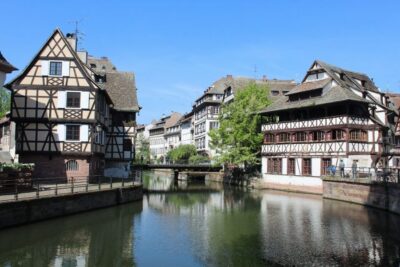
After a short walk, the tour settles into Petite France, Strasbourg for around 20 minutes of guided time. This is one of the big learning blocks of the experience, and it usually works because the guide is not just naming places. The goal is to help you connect the city center’s history to the layout and the atmosphere.
What I like about this setup is the balance. You get enough time to understand why this area is important, but not so much that you end up bored or stuck. Petite France is also a place where your brain naturally wants to slow down for photos and details. The tour handles that with photo breaks and explanation pauses, so you can take pictures and still stay with the narrative.
If you care about “secrets” and small insights, this is where the tour style is most satisfying. You will get little historical threads and central-point context that help the area feel more than postcard scenery. And since the group is limited to 10, you are not just listening while standing in the back.
One consideration: if your personal priority is shopping or lingering in one neighborhood, a 1-hour guided format will not give you that kind of free roam. Think of this stop as a guided orientation and story layer, not a long self-guided wander.
The Cathedral Stop: Clear Explanations in a Short Window
Next comes Notre Dame Cathedral, Strasbourg, another 20-minute guided segment. For many people, this is the emotional anchor of the walk. The cathedral stop works well in a short tour because a live guide can point out what to notice quickly, so you are not staring at a huge landmark hoping everything will make sense on its own.
This is also a practical win for planning. If you are visiting Strasbourg in limited time, a cathedral that usually invites slow visiting can feel intimidating without a guide. Here, you get a structured visit that keeps you moving, with explanations and built-in chances for photos.
The tradeoff is obvious: it is not a long, sit-down, unhurried cathedral experience. You are there for guided time, then you keep walking. If you are the type who wants extra time to explore chapels, take your time reading every sign, or step away for a quiet break, you may want to come back later on your own.
But if your main goal is to understand the cathedral as part of Strasbourg’s story, this tour format is a smart use of time. One hour total means you can still fit other activities after, without feeling like you missed the big central sights.
Saint Thomas Square and Gutenberg Square: The In-Between Stops That Matter
The walk is described as including several central points beyond the headline stops, specifically Saint Thomas Square and Gutenberg Square. Even if you are not looking for them on your own, these in-between pauses are useful because they help you read the city center like a connected map.
Here is why I think these “connector” stops are valuable. Strasbourg’s center is dense. If you jump from one major landmark to another with no narrative bridges, your brain files the experience as separate images. When your guide threads in squares as part of the storyline, you start seeing patterns in how the center functions and how its places relate to each other.
You should expect the tour to keep switching between short walking segments and guided explanations. The time plan keeps you moving, with quick transitions of a few minutes on foot between the larger guided blocks. That structure can be great for stamina, but it also means you should keep your expectations realistic. This is not a stop-and-chat café tour. It is a guided walk with short breaks for photos and context.
Other Strasbourg bookings in the margin notes
Place Kléber Finish: Ending at the Right Hub
The tour concludes at Place Kléber, about 5 minutes of guided time at the end. This choice is practical because Place Kléber is a central meeting point for the city center. Ending here usually makes it easier to continue your day, whether you are heading to another neighborhood, lining up public transport plans, or grabbing a final bite.
The last guided segment at Place Kléber is not wasted time. It helps you close the loop, tying what you learned earlier back into a final central viewpoint. It also helps you get your bearings fast, which is a big deal after a compact one-hour walk.
One small caution: because you end at Place Kléber, you should plan your next activity with that location in mind. If you were hoping to finish back near your starting point, this tour does not do that. The whole point is that the route ends in a different central spot so you can keep moving.
Included Tasting: A Small Break That Helps the Whole Tour Click
One of the best value pieces here is the small tasting of local products, included in the $23 price. This might sound minor, but it changes the feel of the tour. A tasting gives you a sensory pause during a walking-heavy experience, and it also reinforces the “discovery” theme.
Since the tour includes history and cultural context, the tasting works like a bridge between information and lived experience. You walk through places, hear why they matter, and then you get a small, local taste that makes the city feel more real in your hands and mouth.
Keep it simple in your planning: if you have strong dietary needs, you should contact the provider in advance to confirm what is offered. The tour data says a small tasting is included, but it does not list ingredients or dietary options.
Pace, Photos, and Group Size: What You Should Expect While Walking
This tour is clearly designed for focus. You get guided time at key stops, plus photo breaks interspersed throughout, but you are still walking between points on short segments. That is why it fits well into a tight schedule.
Also, you are with a small group limited to 10 participants, which tends to make the experience more personal. You are not fighting for space in front of a landmark, and you can hear the guide. It is especially helpful when you ask questions, because you are not buried under a large group’s noise.
If you are traveling with friends, this group size is also friendly. You can stay together, split pictures efficiently, and not worry about someone getting swallowed by the back of the crowd.
The one practical downside is that the tour content is guided and time-bound. Some content may appear in its original language, so if you are only comfortable with one language, you should choose your language preference carefully. And if you want to linger at a specific spot, the schedule will not pause for that.
Who This Tour Is Best For (and Who Might Want More Time)
This experience is ideal if you want a fun, cultural city-center introduction to Strasbourg without turning your day into a checklist marathon. It is also a smart option if you like learning through a guided storyline, because the walk is organized around history and central points rather than a random route.
You will likely love it if:
- you have limited time and want major sights covered efficiently
- you like photo stops without chaos
- you appreciate a guide who keeps things clear and lively
It may be less ideal if:
- you want long independent time inside the cathedral or deep exploration of one area
- you dislike short, structured walking tours
- you need fully language-uniform explanations for every piece of content
Based on what people highlight about the guiding style, you can also expect a personable, energetic approach. Guides like Emilie, praised for being dynamic, funny, and easy to talk to, are exactly the kind of energy that makes a short walk feel satisfying instead of rushed.
Book It or Skip It? My Practical Take
If your Strasbourg plan includes just one guided city-center activity, I would strongly consider booking this. It hits the right value formula: major central stops, a tight one-hour format, a small local tasting, and small-group guiding that makes questions easy. With an average rating of 4.8 and 82 reported bookings, the demand is not random.
I would book it especially if you want to leave with a mental map of the center, not just photos. The route is designed to connect places, from the Vauban dam area to Petite France, through the Cathedral, and ending at Place Kléber where your next move is simple.
Skip it if you are the type who likes to spend half a day inside one landmark. This tour is not built for that. It is built for a focused, guided highlight walk that respects your schedule.
FAQ
How long is the Strasbourg city-center walking tour?
It lasts about 1 hour.
Where does the tour start?
You meet in front of the Hotel d’Alsace at 1 place du Quartier Blanc, by the entrance to the Vauban dam area.
Where does the tour end?
The tour ends at Place Kléber.
What is included in the $23 price?
The price includes the tour itself and a small tasting of local products.
What languages are offered for the live guide?
The guide can speak English, French, and German.
Is the tour wheelchair accessible?
Yes, the tour is listed as wheelchair accessible.
Latest Strasbourg entries, notes attached





Alsace Tours, compared.

Colmar, Medieval Village & Castle Small Group from Strasbourg
Read our review →
Strasbourg Food Tour – A Taste of Tradition by Do Eat Better
Read our review →
This tour also appears in